

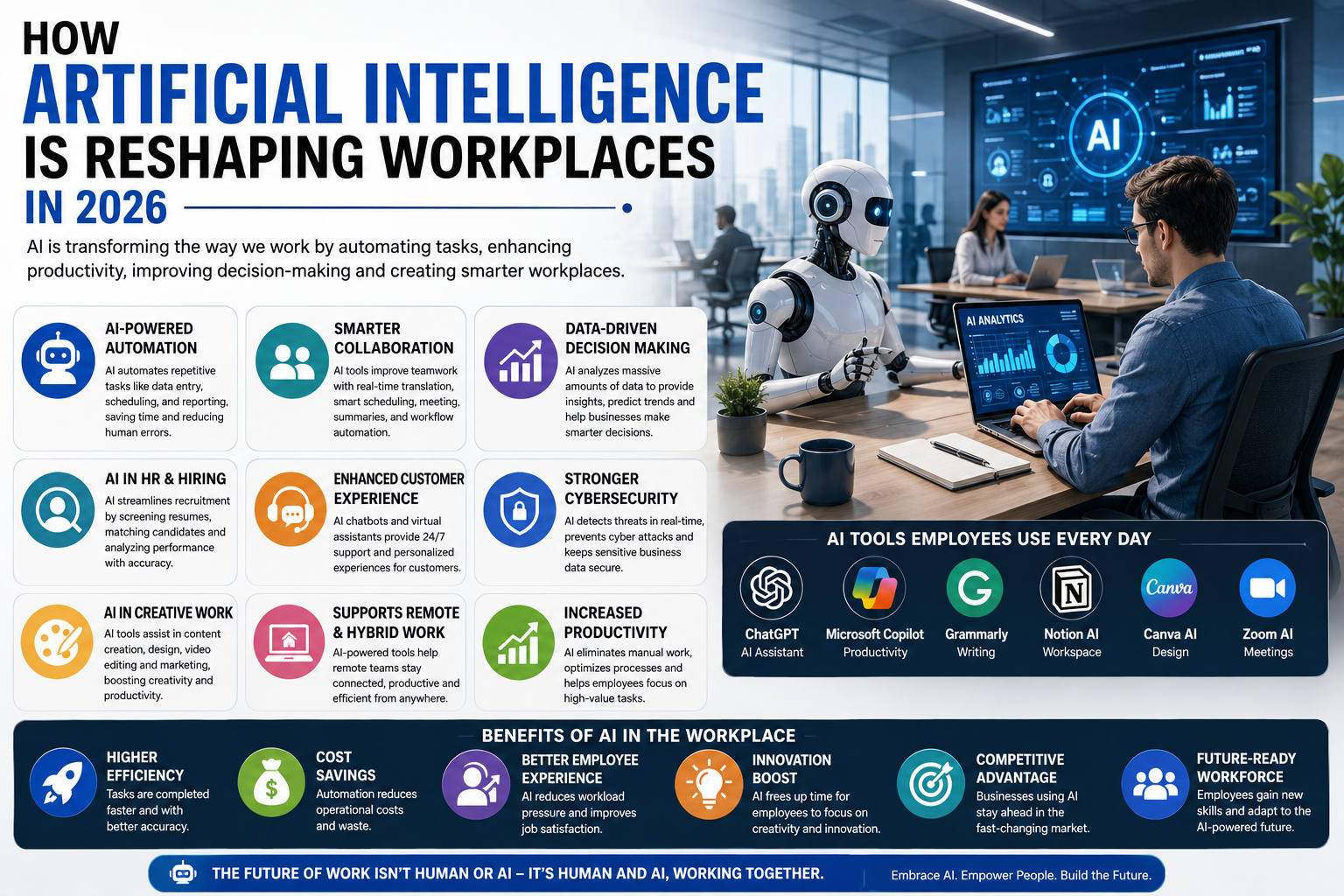
Artificial Intelligence has become one of the most transformative technologies in the modern business world. In 2026, AI is no longer limited to large technology companies. Businesses of all sizes are using AI-powered systems to improve productivity, automate repetitive tasks, enhance decision-making, and create smarter workplaces.
From virtual assistants and automated customer support to intelligent data analysis and AI-powered hiring systems, workplaces are evolving rapidly. Employees are collaborating with AI tools daily, making work faster, more efficient, and more flexible.
The future workplace is becoming increasingly digital, connected, and automated. Companies that embrace artificial intelligence are gaining competitive advantages by improving efficiency, reducing costs, and enhancing employee experiences.
In this article, we will explore how artificial intelligence is reshaping workplaces in 2026 and what the future of work looks like in the AI era.
The Rise of AI in Modern Workplaces
Over the past decade, businesses have invested heavily in automation and digital transformation. Artificial intelligence has become a key part of this evolution.
AI systems can now:
- Analyze large amounts of data
- Automate repetitive tasks
- Improve communication
- Predict customer behavior
- Support business decisions
- Enhance workplace productivity
As AI tools become more affordable and accessible, organizations across industries are integrating them into daily operations.
AI-Powered Workplace Automation
Automation is one of the biggest ways AI is changing workplaces.
Repetitive Tasks Are Being Automated
AI systems now handle many time-consuming administrative tasks such as:
- Data entry
- Invoice processing
- Appointment scheduling
- Email sorting
- Payroll management
- Report generation
This reduces human workload and allows employees to focus on more creative and strategic activities.
Increased Operational Efficiency
Automation helps businesses:
- Save time
- Reduce human errors
- Improve workflow speed
- Lower operational costs
Companies can complete tasks faster while improving overall productivity.
AI Virtual Assistants at Work
AI-powered virtual assistants are becoming common in offices worldwide.
Functions of Workplace AI Assistants
Modern AI assistants help employees:
- Schedule meetings
- Organize calendars
- Set reminders
- Answer workplace questions
- Manage emails
- Create reports
These tools simplify everyday work activities and improve time management.
Smarter Communication
AI systems can summarize meetings, transcribe conversations, and provide instant language translation, making workplace communication more efficient.
AI in Human Resources and Hiring
Human resource departments are increasingly using AI-powered recruitment systems.
AI Recruitment Tools
AI hiring platforms can:
- Screen resumes automatically
- Match candidates with job requirements
- Analyze interview performance
- Reduce hiring bias
- Improve recruitment speed
This helps companies find suitable talent more efficiently.
Employee Performance Analysis
AI systems can monitor productivity trends and provide performance insights to managers.
Businesses use this data to:
- Improve employee engagement
- Identify training needs
- Optimize team performance
AI and Remote Work Revolution
Remote work has grown significantly, and AI is supporting flexible work environments.
Smart Collaboration Tools
AI-powered collaboration platforms help remote teams by offering:
- Real-time translation
- Automated meeting notes
- Smart scheduling
- Workflow tracking
- Virtual project management
These tools improve teamwork across different locations.
AI-Powered Productivity Monitoring
Companies use AI systems to analyze workflow patterns and improve remote productivity without excessive manual supervision.
AI in Customer Service
Customer support has transformed dramatically through artificial intelligence.
AI Chatbots and Virtual Agents
Businesses use AI chatbots to:
- Answer customer questions instantly
- Process orders
- Handle complaints
- Provide product recommendations
- Offer 24/7 support
This improves customer satisfaction while reducing support costs.
Personalized Customer Experiences
AI analyzes customer behavior and preferences to deliver personalized recommendations and services.
AI and Data-Driven Decision Making
Data has become one of the most valuable business resources.
Predictive Analytics
AI systems analyze business data to predict:
- Market trends
- Customer behavior
- Sales performance
- Financial risks
This helps businesses make smarter strategic decisions.
Faster Insights
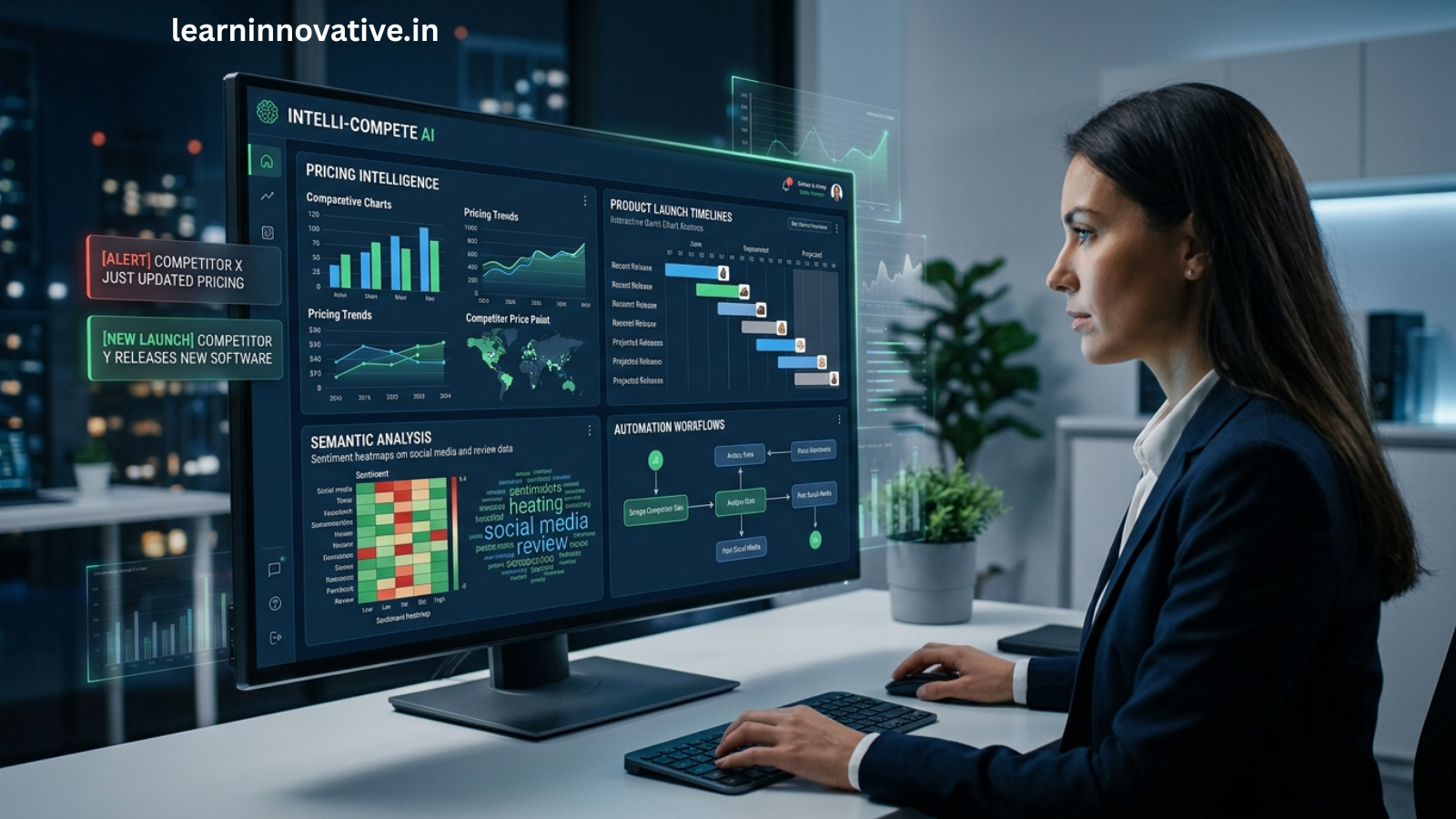
AI tools process large datasets quickly, allowing companies to identify opportunities and solve problems faster than traditional methods.
AI in Cybersecurity
As workplaces become more digital, cybersecurity is increasingly important.
AI-Powered Threat Detection
Artificial intelligence helps organizations:
- Detect suspicious activity
- Identify cyber threats
- Prevent data breaches
- Monitor network security
AI systems can respond to threats faster than traditional security methods.
Fraud Prevention
Banks and financial companies use AI algorithms to detect fraudulent transactions and suspicious financial activities in real time.
AI in Creative Industries
Creative professionals are also benefiting from AI technology.
AI for Content Creation
Modern AI tools help with:
- Writing assistance
- Graphic design
- Video editing
- Audio production
- Marketing content
These tools increase productivity while supporting creativity.
Human Creativity + AI Collaboration
AI does not completely replace creativity but enhances it by helping creators generate ideas and complete tasks faster.
Benefits of AI in Workplaces
Increased Productivity
AI automates repetitive work and speeds up workflows.
Better Decision Making
AI provides data-driven insights for smarter business strategies.
Cost Reduction
Automation reduces operational expenses and improves efficiency.
Improved Employee Experience
AI tools reduce manual workload and improve work-life balance.
Enhanced Customer Service
Businesses can provide faster and more personalized customer support.
Challenges of AI in the Workplace
Despite its advantages, AI also presents several challenges.
Job Displacement Concerns
Automation may replace some repetitive job roles, especially in administrative and routine-based tasks.
However, AI is also creating new career opportunities in:
- Data science
- AI development
- Cybersecurity
- Digital marketing
- Automation management
Privacy and Data Security
AI systems often collect large amounts of employee and customer data, raising concerns about privacy and security.
Ethical Issues
Businesses must ensure AI systems are fair, transparent, and unbiased.
Skills Employees Need in the AI Era
As workplaces evolve, employees need to adapt to new technologies.
Important Future Skills
Workers should focus on developing:
- Digital literacy
- Critical thinking
- Problem-solving
- Creativity
- Emotional intelligence
- Data analysis skills
- AI tool familiarity
Human-centered skills remain valuable even in highly automated workplaces.
Future Workplace Trends Beyond 2026
The workplace of the future will continue evolving rapidly.
Hyper Automation
Businesses will automate even more processes using advanced AI systems.
AI-Powered Smart Offices
Future offices may include:
- Intelligent meeting rooms
- Automated workspaces
- Smart environmental controls
- AI-driven workflow systems
Human-AI Collaboration
Employees will increasingly work alongside AI systems rather than compete against them.
Flexible Work Environments
Hybrid and remote work models will continue growing with AI support technologies.
Conclusion
Artificial intelligence is reshaping workplaces in 2026 by improving automation, productivity, communication, customer service, and decision-making. AI-powered tools are helping businesses operate more efficiently while creating smarter and more flexible work environments.
Although challenges such as job automation and privacy concerns remain important, AI continues to offer enormous opportunities for businesses and employees willing to adapt to technological change.
The future of work will not be driven by humans or AI alone, but by successful collaboration between both. Organizations that embrace AI responsibly will be better prepared for the rapidly evolving digital economy.


Leave a Reply