

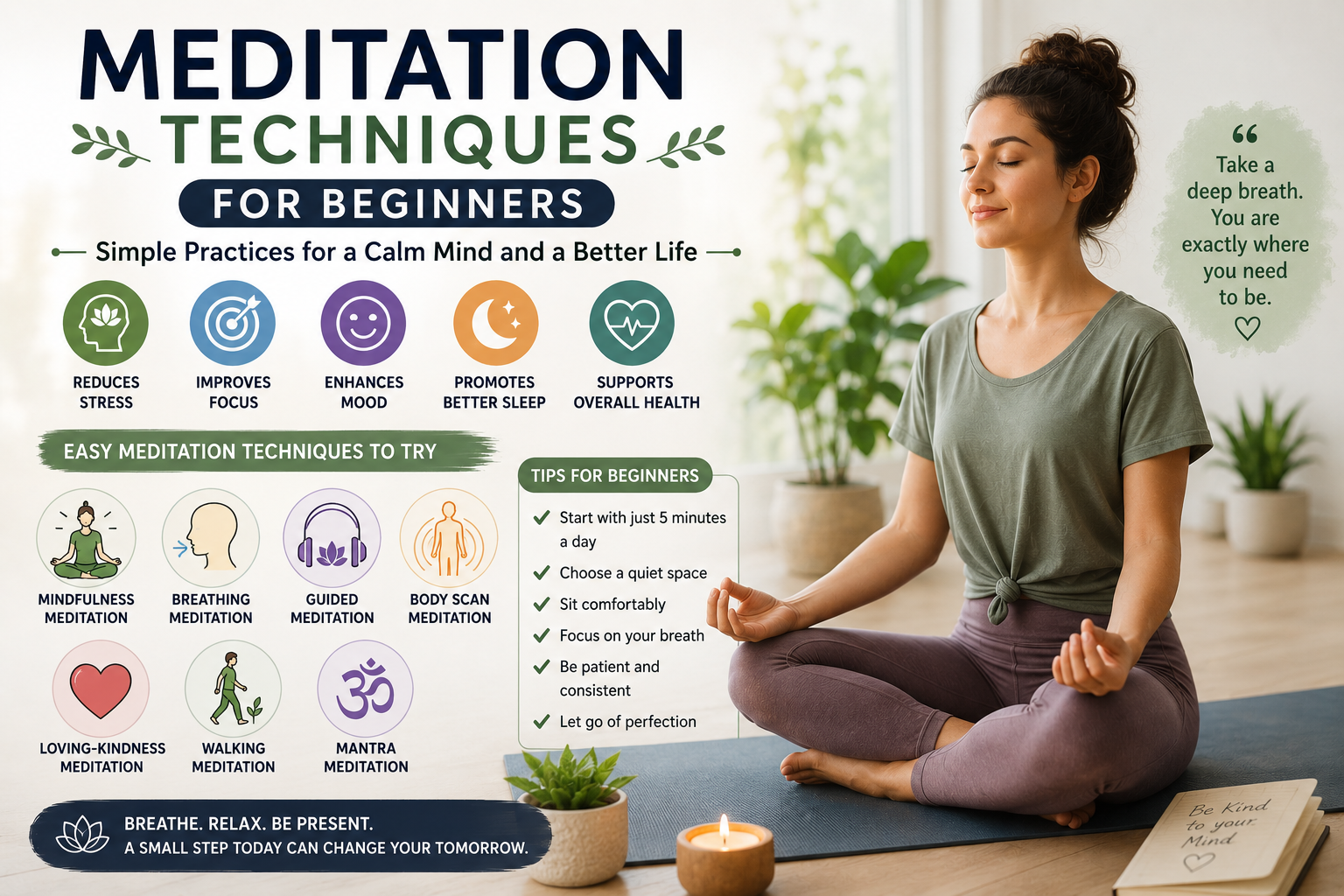
In today’s fast-paced world, stress, anxiety, and constant distractions can make it difficult to maintain mental clarity and emotional balance. Meditation is a simple yet powerful practice that helps calm the mind, improve focus, and promote overall well-being. The best part is that anyone can start meditating, regardless of age or experience level.
If you’re new to meditation, getting started may feel overwhelming. However, meditation doesn’t require special equipment, advanced skills, or hours of practice. By learning a few basic techniques, you can begin experiencing its benefits in just a few minutes each day.
This guide explores the best meditation techniques for beginners and provides practical tips to help you establish a successful meditation routine.
What Is Meditation?
Meditation is a practice that involves focusing your attention and eliminating distractions to achieve a state of mental clarity and relaxation. It has been practiced for thousands of years and is now widely recognized for its positive effects on mental, emotional, and physical health.
Regular meditation can help:
- Reduce stress and anxiety
- Improve concentration and focus
- Enhance emotional well-being
- Promote better sleep
- Increase self-awareness
- Support overall mental health
Benefits of Meditation for Beginners
Before exploring specific techniques, it’s important to understand why meditation is worth incorporating into your daily routine.
Reduces Stress
Meditation helps lower stress levels by calming the nervous system and reducing the production of stress hormones.
Improves Focus
Practicing meditation regularly trains the brain to concentrate better and stay present in the moment.
Enhances Emotional Health
Meditation encourages self-awareness and can help improve mood, resilience, and emotional stability.
Promotes Better Sleep
Many people find that meditation helps quiet racing thoughts, making it easier to fall asleep and stay asleep.
Supports Physical Health
Research suggests meditation may help lower blood pressure, reduce inflammation, and improve overall wellness.
1. Mindfulness Meditation
Mindfulness meditation is one of the most popular and beginner-friendly meditation techniques.
How It Works
The goal is to focus on the present moment without judgment. Instead of trying to stop thoughts, you simply observe them and gently return your attention to the present.
Steps:
- Sit comfortably in a quiet place.
- Close your eyes.
- Focus on your breathing.
- Notice your thoughts without reacting to them.
- Gently return your attention to your breath whenever your mind wanders.
Start with 5 to 10 minutes daily and gradually increase the duration.
2. Breathing Meditation
Breathing meditation focuses entirely on the breath and is ideal for beginners.
Benefits:
- Reduces stress quickly
- Improves concentration
- Calms the nervous system
How to Practice:
- Sit comfortably.
- Close your eyes.
- Take slow, deep breaths.
- Pay attention to each inhale and exhale.
- Count your breaths if it helps maintain focus.
Even a few minutes of conscious breathing can create a sense of calm and relaxation.
3. Guided Meditation
Guided meditation involves following verbal instructions provided by a teacher, recording, or meditation app.
Why Beginners Love It:
- Easy to follow
- Provides structure
- Helps maintain focus
- Reduces uncertainty about what to do
Guided meditations often focus on relaxation, stress relief, sleep improvement, or personal growth.
4. Body Scan Meditation
Body scan meditation helps increase awareness of physical sensations and release tension.
Steps:
- Lie down or sit comfortably.
- Close your eyes.
- Focus on your feet.
- Gradually move your attention upward through each part of your body.
- Notice any tension or discomfort without judgment.
This technique is particularly effective before bedtime and for stress management.
5. Loving-Kindness Meditation
Also known as Metta Meditation, this practice focuses on cultivating compassion and positive emotions.
How It Works:
You silently repeat positive phrases directed toward yourself and others.
Examples include:
- May I be happy.
- May I be healthy.
- May I be peaceful.
- May others be safe and happy.
This meditation can improve relationships, empathy, and emotional well-being.
6. Walking Meditation
Meditation doesn’t always require sitting still. Walking meditation combines mindfulness with gentle movement.
How to Practice:
- Walk slowly and intentionally.
- Focus on each step.
- Notice the sensation of your feet touching the ground.
- Observe your surroundings without distraction.
Walking meditation is an excellent option for people who struggle with seated meditation.
7. Mantra Meditation
Mantra meditation involves repeating a word, phrase, or sound to help focus the mind.
Popular Mantras:
- Peace
- Calm
- Om
- Relax
The repetition helps reduce mental chatter and encourages deeper concentration.
Creating a Daily Meditation Routine
Consistency is more important than duration when starting a meditation practice.
Tips for Success:
Start Small
Begin with just 5 minutes per day. Gradually increase your meditation time as you become more comfortable.
Choose a Quiet Space
Find a location where you can practice without interruptions.
Set a Schedule
Meditate at the same time each day to build a lasting habit.
Be Patient
Meditation is a skill that improves with practice. It’s normal for your mind to wander.
Focus on Progress
Don’t aim for perfection. Simply showing up and practicing regularly is what matters most.
Common Challenges for Beginners
Many beginners encounter obstacles when learning meditation.
Difficulty Concentrating
It’s normal for thoughts to arise during meditation. Gently bring your attention back to your chosen focus.
Restlessness
If sitting still feels uncomfortable, try walking meditation or shorter sessions.
Lack of Time
Even a 5-minute meditation session can provide meaningful benefits.
Unrealistic Expectations
Meditation isn’t about completely emptying the mind. It’s about becoming more aware of your thoughts and reactions.
Best Time to Meditate
While meditation can be practiced anytime, many people prefer:
Morning Meditation
- Starts the day with clarity
- Improves focus and productivity
- Creates a positive mindset
Evening Meditation
- Relieves stress
- Promotes relaxation
- Supports better sleep
Choose a time that fits naturally into your schedule.
Final Thoughts
Meditation is one of the simplest and most effective tools for improving mental health, reducing stress, and enhancing overall well-being. Whether you choose mindfulness meditation, breathing exercises, guided sessions, or walking meditation, the key is consistency.
As a beginner, start with short sessions and focus on building a sustainable habit. Over time, meditation can help you develop greater self-awareness, emotional balance, and inner peace.
Remember, meditation is not about achieving perfection. It is about creating space for calm, clarity, and mindfulness in your everyday life. With patience and regular practice, you can experience the many benefits that meditation has to offer.
Also read How to Lose Belly Fat Naturally











Leave a Reply