

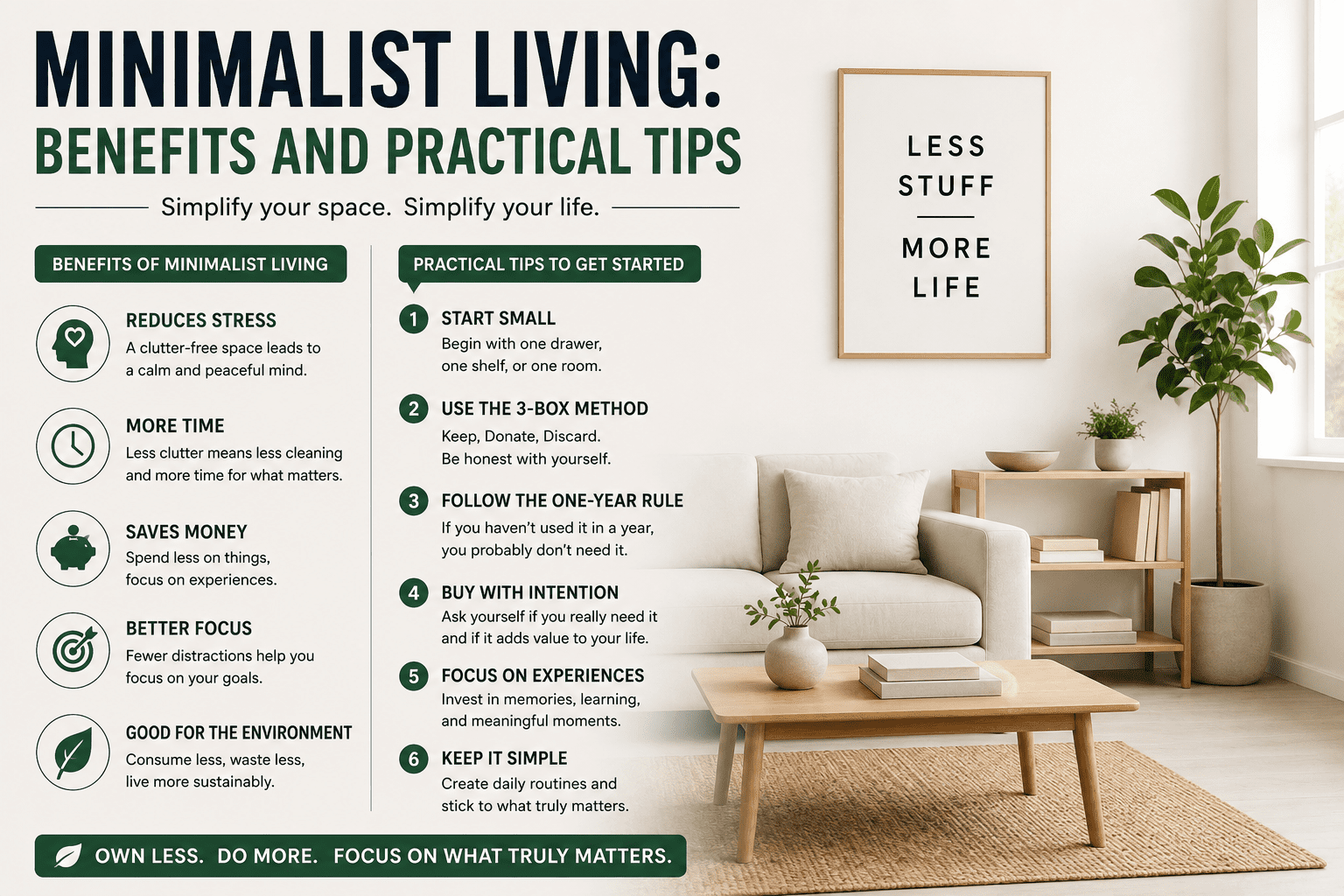
In today’s fast-paced world, many people find themselves overwhelmed by clutter, endless responsibilities, and the constant pressure to acquire more. Minimalist living offers an alternative approach—one that focuses on simplicity, intentionality, and prioritizing what truly adds value to life.
Minimalism is not about living with nothing or depriving yourself of comfort. Instead, it is about removing unnecessary distractions and possessions so you can focus on the things that matter most. Whether your goal is to reduce stress, save money, improve productivity, or create a more peaceful lifestyle, minimalist living can help you achieve it.
In this article, we’ll explore the benefits of minimalist living and provide practical tips to help you embrace a simpler and more fulfilling life.
What Is Minimalist Living?
Minimalist living is a lifestyle centered around intentional choices. It involves eliminating excess possessions, commitments, and distractions that do not contribute positively to your life.
Minimalism encourages people to:
- Own fewer but more meaningful possessions
- Focus on experiences rather than material items
- Reduce unnecessary expenses
- Simplify daily routines
- Create space for personal growth and well-being
The goal is not perfection but greater clarity and purpose.
Benefits of Minimalist Living
Reduced Stress and Anxiety
A cluttered environment often leads to a cluttered mind. Excess belongings can create feelings of overwhelm and make daily tasks more difficult.
By simplifying your surroundings, you can:
- Feel more relaxed
- Improve mental clarity
- Reduce decision fatigue
- Create a peaceful home environment
Many people experience a noticeable sense of calm after decluttering their living spaces.
More Time for What Matters
Managing, cleaning, organizing, and maintaining excess possessions takes time.
Minimalist living helps free up valuable hours that can be spent on:
- Family and relationships
- Personal development
- Hobbies and passions
- Health and fitness
- Career goals
Less time managing things means more time enjoying life.
Financial Benefits
One of the most practical advantages of minimalism is saving money.
When you adopt a minimalist mindset, you become more intentional about purchases and avoid unnecessary spending.
Financial benefits include:
- Reduced impulse buying
- Lower monthly expenses
- Increased savings
- Less debt
- Better financial security
Over time, these savings can contribute to long-term financial freedom.
Improved Focus and Productivity
Clutter can distract your attention and make it difficult to concentrate.
A minimalist environment supports:
- Better focus
- Increased efficiency
- Improved organization
- Enhanced creativity
Whether working from home or studying, a simplified workspace often leads to better performance.
Better Quality Relationships
Minimalism encourages people to prioritize experiences and meaningful connections over material possessions.
Instead of focusing on acquiring more things, you can invest more time and energy into:
- Family relationships
- Friendships
- Community involvement
- Personal connections
These experiences often bring greater happiness than material purchases.
Environmental Benefits
Living with less often results in lower consumption and less waste.
Minimalist habits can contribute to:
- Reduced resource consumption
- Less household waste
- More sustainable purchasing decisions
- A smaller environmental footprint
Even small changes can have a positive impact on the environment.
Practical Tips for Adopting a Minimalist Lifestyle
Start with One Area
Trying to declutter your entire home at once can feel overwhelming.
Begin with a single space such as:
- A closet
- A desk
- A kitchen drawer
- A bookshelf
Small victories create momentum and make the process more manageable.
Use the “Keep, Donate, Discard” Method
When reviewing possessions, create three categories:
Keep
Items you regularly use or genuinely value.
Donate
Items in good condition that could benefit someone else.
Discard
Broken, outdated, or unusable items.
This simple system makes decision-making easier.
Follow the One-Year Rule
Ask yourself:
“Have I used this item within the last year?”
If the answer is no, consider whether it truly deserves space in your life.
While exceptions exist for sentimental or seasonal items, this rule helps identify unnecessary possessions.
Buy with Intention
Before making a purchase, ask yourself:
- Do I really need this?
- Will it add value to my life?
- Do I already own something similar?
- Will I still want it in a few months?
Intentional purchasing reduces clutter and prevents impulse spending.
Create a Capsule Wardrobe
A capsule wardrobe consists of versatile clothing pieces that work well together.
Benefits include:
- Easier outfit selection
- Less clutter
- Reduced shopping expenses
- Simpler daily routines
Quality often becomes more important than quantity.
Simplify Your Digital Life
Minimalism extends beyond physical possessions.
Consider reducing digital clutter by:
- Deleting unnecessary files
- Unsubscribing from unwanted emails
- Organizing digital folders
- Limiting social media use
- Removing unused apps
A cleaner digital environment can improve focus and productivity.
Learn to Say No
Minimalism also involves simplifying commitments.
Avoid overloading your schedule with obligations that don’t align with your priorities.
Saying no to unnecessary commitments creates space for:
- Rest
- Family
- Personal goals
- Meaningful activities
Your time is one of your most valuable resources.
Focus on Experiences Instead of Possessions
Research consistently shows that experiences often provide longer-lasting happiness than material goods.
Consider investing in:
- Travel
- Learning opportunities
- Family activities
- Outdoor adventures
- Personal development
Memories often bring more satisfaction than accumulating possessions.
Establish Simple Daily Routines
A minimalist lifestyle benefits from streamlined routines.
Examples include:
- Morning planning sessions
- Regular decluttering habits
- Meal preparation schedules
- Evening reflection practices
Simple routines reduce stress and improve consistency.
Common Myths About Minimalism
Minimalism Means Owning Almost Nothing
Minimalism is not about reaching a specific number of possessions. It’s about owning what serves a purpose.
Minimalism Is Only for Certain People
Anyone can benefit from simplifying aspects of their life, regardless of age, income, or lifestyle.
Minimalism Is Boring
Minimalism creates space for meaningful experiences, creativity, and personal growth.
You Must Get Rid of Everything
The goal is not deprivation. It’s intentional ownership and thoughtful decision-making.
How to Maintain a Minimalist Lifestyle
Once you’ve simplified your environment, maintain it by:
- Regularly decluttering
- Avoiding impulse purchases
- Reviewing commitments
- Practicing gratitude
- Staying focused on priorities
Minimalism is an ongoing process rather than a one-time project.
Final Thoughts
Minimalist living is about creating a life with greater purpose, clarity, and freedom. By reducing physical clutter, simplifying routines, and focusing on what truly matters, you can enjoy less stress, improved productivity, stronger relationships, and better financial health.
You don’t need to become an extreme minimalist to experience the benefits. Start with small changes, make intentional choices, and gradually create a lifestyle that supports your values and goals. Over time, you’ll discover that sometimes less truly is more.







Leave a Reply