

Technology has transformed the way we work, learn, communicate, and entertain ourselves. Smartphones, laptops, tablets, and smart devices have become essential parts of daily life. While these innovations offer countless benefits, excessive screen time can negatively impact our mental health, physical well-being, relationships, and productivity.
Many people spend hours scrolling through social media, responding to emails, watching videos, or playing games without realizing how much time they spend online. This constant digital exposure can lead to stress, anxiety, poor sleep, reduced focus, and emotional exhaustion.
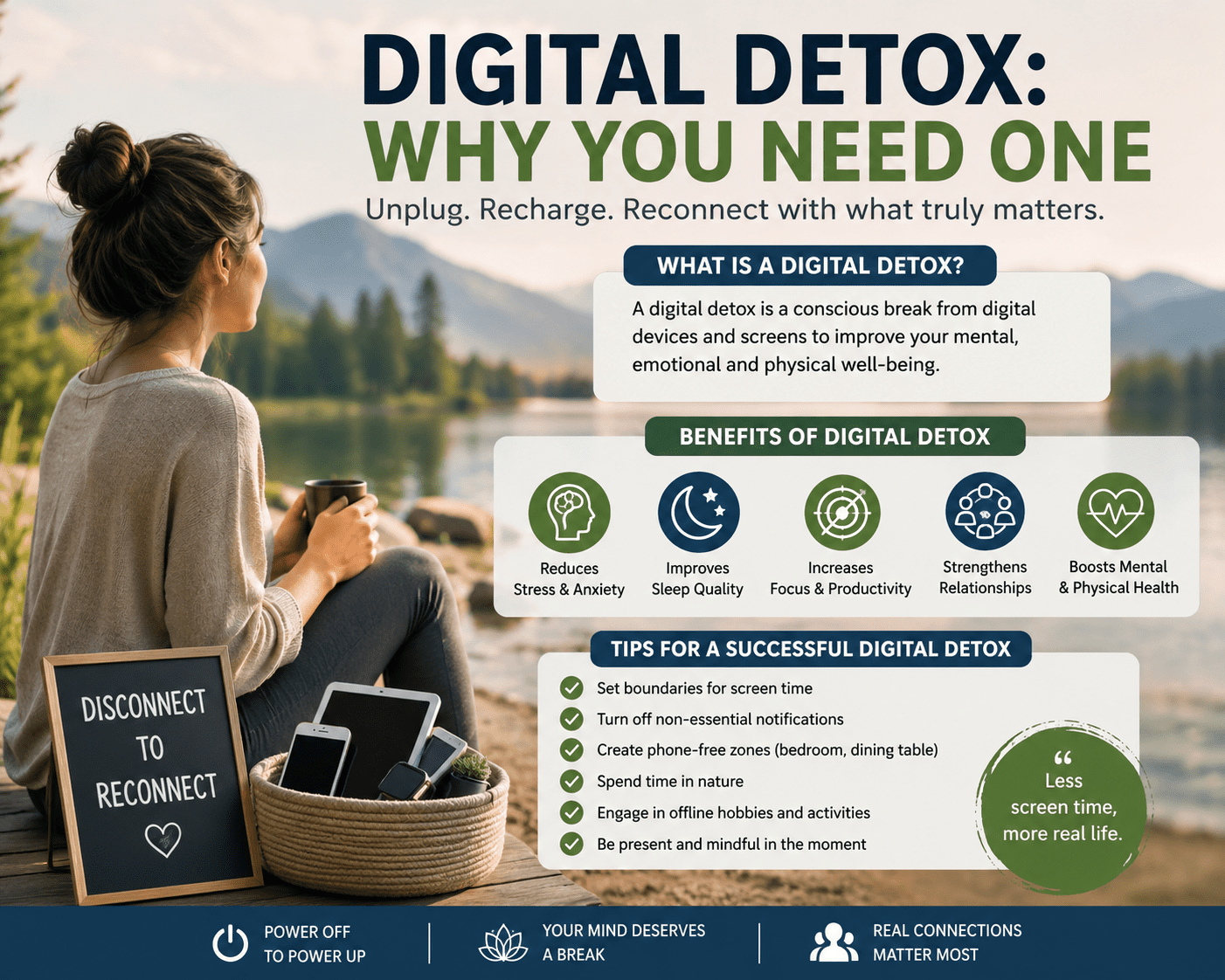
A digital detox is an intentional break from digital devices that helps restore balance, improve well-being, and reconnect with the real world. This guide explains what a digital detox is, why it matters, its benefits, and practical ways to successfully reduce screen time.
What Is a Digital Detox?
A digital detox is the practice of limiting or completely avoiding digital devices such as:
- Smartphones
- Tablets
- Computers
- Televisions
- Smartwatches
- Gaming consoles
- Social media platforms
The goal is not to eliminate technology permanently but to develop healthier habits and regain control over your digital life.
Why Digital Detox Is More Important Than Ever
Today’s average person checks their phone dozens of times each day. Constant notifications, endless scrolling, online meetings, streaming services, and social media updates keep our brains in a continuous state of stimulation.
Excessive screen time can contribute to:
- Mental fatigue
- Information overload
- Anxiety
- Poor concentration
- Sleep disruption
- Reduced productivity
- Social isolation
- Burnout
A digital detox provides your brain with an opportunity to rest and recover.
Signs You May Need a Digital Detox
You may benefit from reducing screen time if you experience any of the following:
1. Constant Phone Checking
You automatically reach for your phone without thinking, even when there are no notifications.
2. Difficulty Concentrating
Frequent digital interruptions make it harder to stay focused on work, studying, or conversations.
3. Poor Sleep
Using screens before bedtime suppresses melatonin production, making it more difficult to fall asleep and enjoy restful sleep.
4. Increased Stress and Anxiety
Constant exposure to news, social media, and notifications can leave you feeling mentally overwhelmed.
5. Reduced Productivity
Multitasking between emails, messages, and social media often leads to lower efficiency and more mistakes.
6. Eye Strain and Headaches
Long hours in front of screens can cause:
- Dry eyes
- Blurred vision
- Neck pain
- Headaches
- Digital eye strain
7. Less Quality Time with Family and Friends
Being physically present but mentally distracted by your phone can weaken personal relationships.
Benefits of a Digital Detox
Reducing digital distractions offers significant physical, mental, and emotional benefits.
Better Mental Health
Limiting screen time can reduce:
- Anxiety
- Stress
- Emotional exhaustion
- Information overload
Many people report feeling calmer and more present after taking a break from digital devices.
Improved Sleep Quality
Reducing evening screen exposure supports healthy melatonin production, making it easier to fall asleep and wake up refreshed.
Increased Productivity
Without constant notifications, you’ll likely:
- Complete tasks faster
- Improve focus
- Make fewer mistakes
- Think more creatively
Stronger Relationships
A digital detox encourages more meaningful conversations and quality time with family and friends.
Better Physical Health
Less screen time often leads to:
- More physical activity
- Improved posture
- Reduced eye strain
- Fewer headaches
Enhanced Creativity
Without constant digital stimulation, your brain has more opportunities for:
- Reflection
- Problem-solving
- Creative thinking
- Innovation
How Excessive Screen Time Affects Mental Health
Digital overload can influence emotional well-being in several ways.
Anxiety
Constant notifications and social comparison can increase feelings of anxiety and worry.
Depression
Excessive social media use has been associated with feelings of loneliness, low self-esteem, and depressive symptoms in some individuals.
Information Overload
Processing vast amounts of digital information every day can leave your brain mentally exhausted.
Reduced Attention Span
Frequent switching between apps, emails, and notifications trains the brain to expect constant stimulation, making sustained focus more difficult.
Practical Steps for a Successful Digital Detox
1. Set Screen Time Limits
Use built-in screen time tracking tools to monitor and reduce daily usage.
2. Turn Off Non-Essential Notifications
Disable unnecessary alerts that interrupt your attention throughout the day.
3. Create Phone-Free Zones
Keep devices out of:
- Bedrooms
- Dining tables
- Family gatherings
- Study areas
4. Schedule Offline Time
Dedicate specific hours each day to activities without digital devices.
Examples include:
- Reading
- Walking
- Gardening
- Cooking
- Exercising
- Meditation
5. Avoid Screens Before Bed
Aim to stop using digital devices at least one hour before bedtime to support better sleep.
6. Replace Digital Habits with Healthy Alternatives
Instead of scrolling through social media, consider:
- Journaling
- Learning a new skill
- Spending time outdoors
- Talking with friends
- Playing board games
- Practicing yoga
7. Spend More Time in Nature
Nature naturally reduces stress while providing a refreshing break from screens.
Even a short daily walk in a park can improve mood and mental clarity.
Creating a Sustainable Digital Wellness Routine
A digital detox doesn’t need to be extreme. Instead, aim for long-term digital wellness by:
- Checking emails at scheduled times
- Limiting social media sessions
- Taking regular screen breaks
- Following the 20-20-20 eye rule
- Practicing mindful technology use
- Prioritizing face-to-face interactions
- Maintaining healthy sleep habits
Small, consistent changes are often easier to maintain than drastic restrictions.
Frequently Asked Questions (FAQs)
What is a digital detox?
A digital detox is a planned break from digital devices such as smartphones, computers, and social media to improve mental, emotional, and physical well-being.
How long should a digital detox last?
It depends on your goals. Some people benefit from a few hours each day, while others choose weekend or week-long detoxes. Even short, regular breaks can make a noticeable difference.
Does a digital detox improve mental health?
Yes. Reducing excessive screen time can help lower stress, improve focus, reduce anxiety, and support better emotional balance.
Can a digital detox improve sleep?
Yes. Avoiding screens before bedtime helps restore your body’s natural sleep cycle and often leads to better-quality sleep.
Is it necessary to quit technology completely?
No. The goal is to use technology intentionally and maintain a healthier balance rather than eliminate it entirely.
Final Thoughts
Technology is an incredible tool, but it should support your life—not control it. A digital detox is not about rejecting modern devices; it’s about creating healthier habits that protect your mental health, strengthen relationships, improve productivity, and enhance your overall quality of life.
By setting boundaries, reducing unnecessary screen time, and making space for offline activities, you can enjoy the benefits of technology while avoiding the downsides of constant digital exposure. Start with small, manageable changes, and you’ll likely notice improved focus, better sleep, lower stress, and a greater sense of balance.
FAQ
Q1: What is a digital detox?
A digital detox is a period during which a person intentionally reduces or avoids using digital devices to improve mental health, focus, and overall well-being.
Q2: What are the benefits of a digital detox?
Benefits include reduced stress, better sleep, improved concentration, stronger relationships, enhanced productivity, and better mental health.
Q3: How do I start a digital detox?
Begin by limiting screen time, turning off unnecessary notifications, creating phone-free zones, scheduling offline activities, and avoiding screens before bedtime.
Q4: Can too much screen time affect mental health?
Yes. Excessive screen time may contribute to anxiety, stress, sleep problems, reduced attention span, and emotional fatigue.
Q5: How often should I do a digital detox?
Short daily breaks, weekly unplugged periods, or occasional weekend detoxes can all be effective. The key is maintaining healthy digital habits over time.
Also read Digital Detox: A Complete Guide










Leave a Reply