

Success rarely happens by accident. Behind every achievement, whether personal or professional, lies a clear goal and a well-defined plan. Goal setting is one of the most powerful tools for turning dreams into reality. It provides direction, motivation, and a framework for measuring progress.
However, simply setting goals isn’t enough. Many people create ambitious goals but struggle to achieve them because they lack effective strategies and consistent action plans. In this article, we’ll explore proven goal-setting strategies that can help you stay focused, motivated, and successful.
Why Goal Setting Is Important
Goals give purpose and direction to your efforts. Without clear goals, it’s easy to become distracted or lose motivation.
Benefits of Goal Setting
- Provides clarity and focus
- Increases motivation
- Improves productivity
- Encourages personal growth
- Helps measure progress
- Builds confidence through achievement
- Enhances decision-making
Research consistently shows that individuals who write down and actively track their goals are more likely to achieve them than those who don’t.
Characteristics of Effective Goals
Not all goals are created equal. Successful goals have specific qualities that make them easier to achieve.
Effective Goals Should Be:
- Clear and specific
- Realistic and achievable
- Measurable
- Time-bound
- Relevant to your priorities
Vague goals often lead to vague results. The more precise your goal, the greater your chances of success.
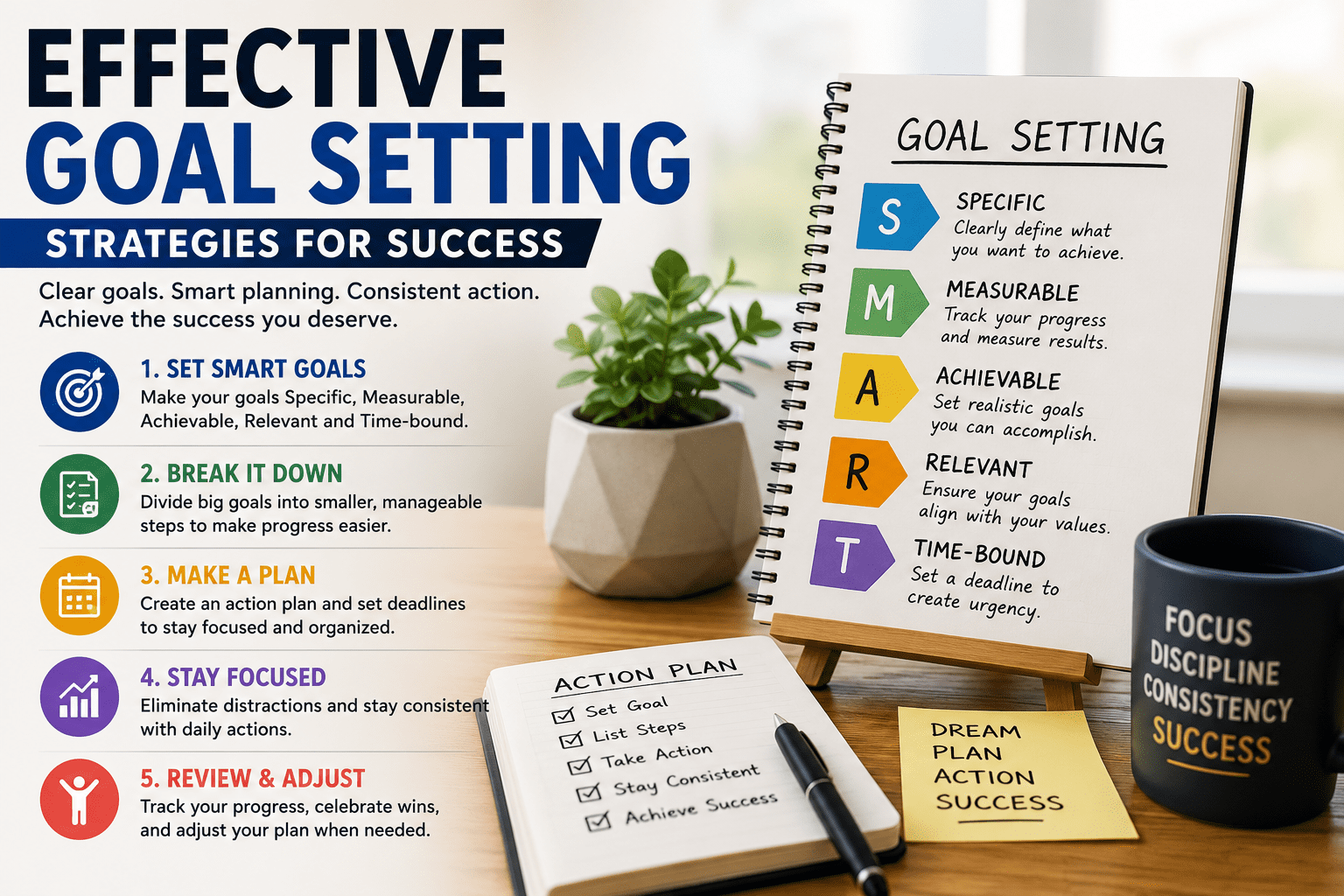
Use the SMART Goal Framework
One of the most popular goal-setting methods is the SMART framework.
S – Specific
Clearly define what you want to achieve.
Instead of:
“I want to get fit.”
Use:
“I want to lose 10 pounds and exercise four times per week.”
M – Measurable
Include criteria to track progress.
Examples:
- Save ₹50,000
- Read 12 books this year
- Walk 10,000 steps daily
A – Achievable
Your goal should be challenging but realistic.
Setting impossible goals can lead to frustration and discouragement.
R – Relevant
Ensure the goal aligns with your long-term objectives and values.
Ask yourself:
“Why is this goal important to me?”
T – Time-Bound
Set a deadline.
Example:
“I will complete my certification course within six months.”
Deadlines create urgency and accountability.
Break Large Goals into Smaller Steps
Big goals can feel overwhelming.
Example:
Large Goal:
Start a successful online business.
Smaller Steps:
- Choose a niche.
- Build a website.
- Create content.
- Develop a marketing strategy.
- Launch products or services.
Breaking goals into smaller tasks makes them more manageable and less intimidating.
Write Down Your Goals
Writing your goals increases commitment and clarity.
Benefits of Written Goals
- Reinforces focus
- Improves memory retention
- Creates accountability
- Provides a visual reminder
Keep your goals somewhere visible, such as a journal, planner, or vision board.
Create an Action Plan
Goals without action plans often remain wishes.
Your Action Plan Should Include:
- Daily tasks
- Weekly milestones
- Required resources
- Potential obstacles
- Deadlines
An action plan transforms goals into actionable steps.
Set Both Short-Term and Long-Term Goals
Balancing short-term and long-term goals helps maintain momentum.
Short-Term Goals
Achievable within days or months.
Examples:
- Finish a book this month
- Save ₹5,000 this month
Long-Term Goals
Require months or years.
Examples:
- Buy a home
- Start a successful company
- Achieve financial independence
Short-term goals serve as stepping stones toward larger ambitions.
Track Your Progress Regularly
Monitoring progress helps you stay motivated and identify areas for improvement.
Ways to Track Goals:
- Journaling
- Goal-tracking apps
- Progress charts
- Weekly reviews
Celebrate milestones to maintain enthusiasm and confidence.
Stay Flexible and Adapt
Life is unpredictable, and circumstances can change.
Sometimes goals need adjustments.
Adapt When Necessary:
- Modify timelines
- Revise strategies
- Learn from setbacks
- Stay focused on the bigger picture
Flexibility helps maintain momentum rather than abandoning goals altogether.
Visualize Success
Visualization is a powerful psychological technique used by athletes, entrepreneurs, and high achievers.
How to Visualize:
Spend a few minutes each day imagining:
- Achieving your goal
- Experiencing success
- Overcoming challenges
- Enjoying the benefits
Visualization strengthens motivation and confidence.
Build Positive Habits
Success is often the result of daily habits rather than occasional efforts.
Examples:
If your goal is fitness:
- Exercise daily
If your goal is learning:
- Read 20 pages each day
If your goal is saving money:
- Track expenses daily
Consistent habits make goal achievement more sustainable.
Eliminate Distractions
Distractions can significantly slow progress.
Common Distractions:
- Excessive social media
- Unnecessary multitasking
- Poor time management
- Lack of planning
Create an environment that supports productivity and focus.
Stay Accountable
Accountability increases the likelihood of achieving goals.
Accountability Methods:
- Share goals with friends or family
- Work with a mentor
- Join support groups
- Use accountability partners
Knowing someone else is monitoring your progress can boost commitment.
Learn from Failures and Setbacks
Every successful person experiences setbacks.
The key is learning from mistakes rather than giving up.
Questions to Ask:
- What went wrong?
- What can I improve?
- What lessons did I learn?
Failures often provide valuable insights that contribute to future success.
Maintain Motivation Over Time
Motivation naturally fluctuates.
Ways to Stay Motivated:
- Review your goals regularly
- Celebrate small wins
- Read inspirational books
- Listen to motivational podcasts
- Surround yourself with positive influences
Remembering your “why” helps sustain long-term commitment.
Common Goal-Setting Mistakes to Avoid
Setting Too Many Goals
Focus on a few meaningful goals rather than overwhelming yourself.
Being Unrealistic
Overly ambitious goals can lead to frustration.
Ignoring Progress Tracking
Without measurement, it’s difficult to know whether you’re moving forward.
Lack of Consistency
Success comes from sustained effort over time.
Long-Term Benefits of Effective Goal Setting
Developing strong goal-setting habits can lead to:
- Greater personal success
- Improved confidence
- Better productivity
- Enhanced self-discipline
- Increased financial stability
- Stronger professional growth
- Greater life satisfaction
The ability to set and achieve goals is one of the most valuable skills you can develop.
Conclusion
Effective goal setting is a critical component of personal and professional success. By using proven strategies such as the SMART framework, creating action plans, building positive habits, tracking progress, and maintaining accountability, you can dramatically increase your chances of achieving your goals.
Remember, success is not about making giant leaps overnight. It’s about taking consistent, purposeful actions every day. Start with one meaningful goal, create a clear plan, and stay committed to the process. Over time, those small efforts will lead to extraordinary results.
Also read Best Books That Can Change Your Life










Leave a Reply