

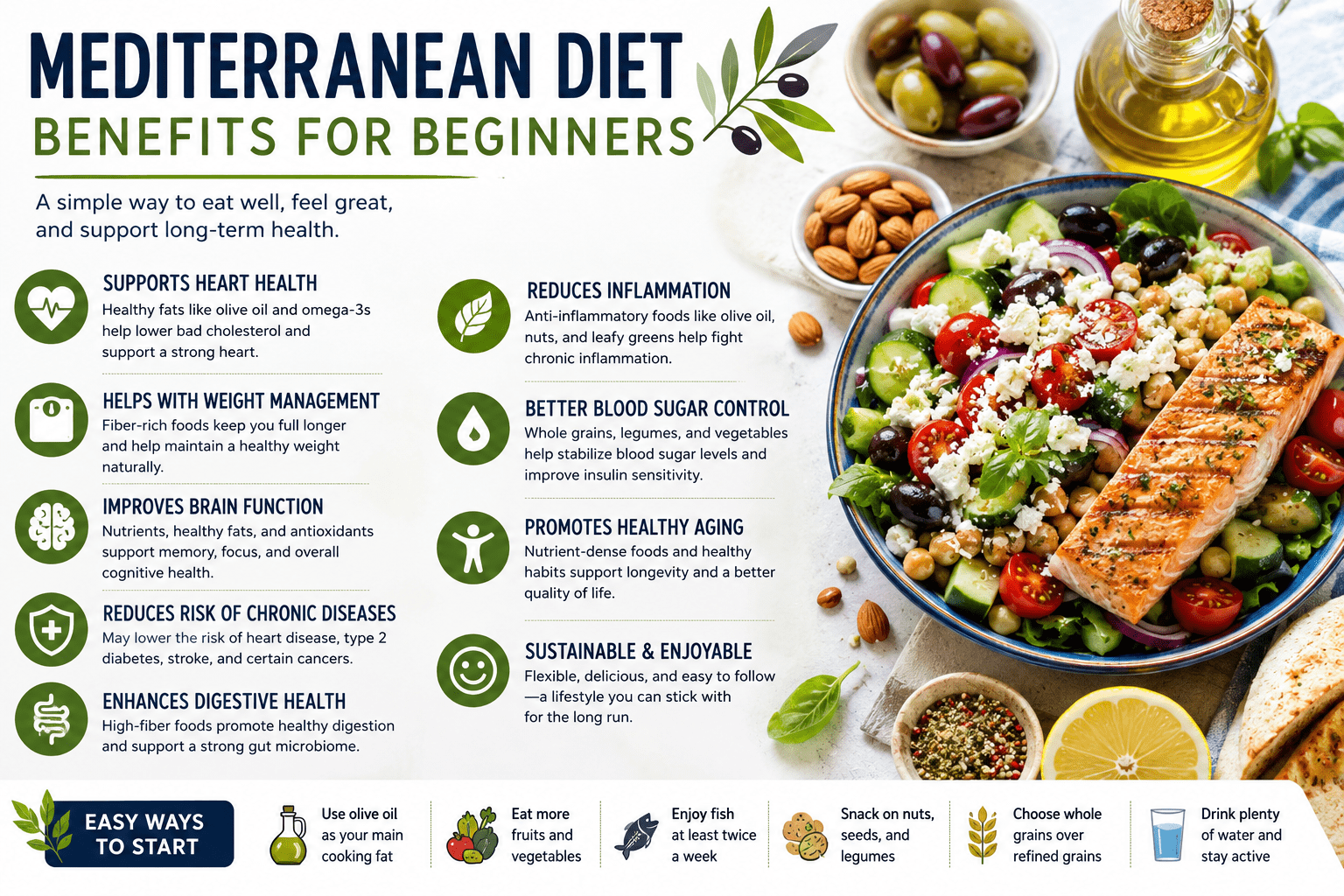
The Mediterranean diet is widely regarded as one of the healthiest eating patterns in the world. Inspired by the traditional dietary habits of countries bordering the Mediterranean Sea, such as Greece, Italy, and Spain, this diet emphasizes fresh fruits, vegetables, whole grains, healthy fats, nuts, legumes, and lean proteins. For beginners looking to improve their health and adopt a sustainable lifestyle, understanding the Mediterranean diet benefits can be the first step toward long-term wellness.
What Is the Mediterranean Diet?
The Mediterranean diet is not a strict meal plan but rather a way of eating that focuses on whole, minimally processed foods. It encourages the consumption of:
- Fresh fruits and vegetables
- Whole grains
- Legumes and beans
- Nuts and seeds
- Olive oil as the primary source of fat
- Fish and seafood
- Moderate amounts of dairy products
- Limited red meat and processed foods
This balanced approach to nutrition has been linked to numerous health benefits and is often recommended by nutritionists and healthcare professionals.
Top Mediterranean Diet Benefits for Beginners
1. Supports Heart Health
One of the most well-known Mediterranean diet benefits is improved cardiovascular health. The diet is rich in healthy fats, especially monounsaturated fats from olive oil, which help reduce bad cholesterol (LDL) levels while increasing good cholesterol (HDL).
Regular consumption of fish rich in omega-3 fatty acids, such as salmon and sardines, further supports heart health by reducing inflammation and lowering blood pressure.
2. Helps with Weight Management
Unlike restrictive diets that focus on calorie counting, the Mediterranean diet promotes healthy eating habits that naturally support weight management. High-fiber foods such as fruits, vegetables, and whole grains help you feel fuller for longer, reducing the likelihood of overeating.
Many beginners find that they can maintain a healthy weight without feeling deprived, making this diet sustainable in the long term.
3. Improves Brain Function
Research suggests that the Mediterranean diet may contribute to better cognitive health. Nutrient-rich foods, antioxidants, and healthy fats support brain function and may reduce the risk of age-related cognitive decline.
Including foods such as olive oil, nuts, berries, and fish in your daily meals can help improve memory, concentration, and overall mental performance.
4. Reduces the Risk of Chronic Diseases
Following a Mediterranean eating pattern may lower the risk of several chronic conditions, including:
- Type 2 diabetes
- Heart disease
- Stroke
- Certain cancers
- Metabolic syndrome
The abundance of antioxidants and anti-inflammatory compounds in Mediterranean foods helps protect the body from cellular damage and disease development.
5. Enhances Digestive Health
Fiber-rich foods play a crucial role in maintaining a healthy digestive system. The Mediterranean diet encourages regular consumption of fruits, vegetables, legumes, and whole grains, which support healthy digestion and promote beneficial gut bacteria.
A healthy gut microbiome is linked to improved immunity, better nutrient absorption, and enhanced overall health.
6. Promotes Healthy Aging
The Mediterranean diet is often associated with longevity. People living in Mediterranean regions have historically enjoyed longer life expectancies and lower rates of age-related illnesses.
The combination of nutrient-dense foods, healthy fats, and active lifestyles contributes to healthier aging and improved quality of life.
7. Supports Better Blood Sugar Control
For beginners concerned about blood sugar levels, the Mediterranean diet can be a beneficial choice. Whole grains, legumes, and vegetables provide slow-releasing carbohydrates that help prevent blood sugar spikes.
This balanced approach may reduce the risk of developing insulin resistance and type 2 diabetes.
8. Reduces Inflammation
Chronic inflammation is linked to many health conditions, including heart disease, arthritis, and obesity. Foods commonly found in the Mediterranean diet, such as olive oil, fish, nuts, and leafy greens, contain anti-inflammatory compounds that help reduce inflammation throughout the body.
9. Encourages Healthy Eating Habits
One of the greatest Mediterranean diet benefits for beginners is its flexibility. Rather than focusing on restrictions, it encourages mindful eating and enjoying a variety of nutritious foods.
This positive relationship with food makes it easier to maintain healthy eating habits over time.
How Beginners Can Start the Mediterranean Diet
Starting the Mediterranean diet doesn’t have to be complicated. Here are some simple tips:
Use Olive Oil
Replace butter and processed cooking oils with extra virgin olive oil whenever possible.
Eat More Vegetables
Fill at least half your plate with colorful vegetables during meals.
Choose Whole Grains
Opt for brown rice, whole wheat bread, oats, and quinoa instead of refined grains.
Include Fish Weekly
Aim to eat fish at least two times per week.
Snack on Nuts
Choose almonds, walnuts, or pistachios instead of processed snacks.
Limit Processed Foods
Reduce consumption of sugary drinks, packaged snacks, and processed meats.
Stay Active
Combine healthy eating with regular physical activity for maximum benefits.
Sample Mediterranean Diet Meal Plan
Breakfast
Greek yogurt with berries, nuts, and a drizzle of honey.
Lunch
Mixed vegetable salad with olive oil dressing and grilled chicken.
Snack
A handful of almonds and fresh fruit.
Dinner
Grilled salmon, quinoa, and roasted vegetables.
Dessert
Fresh fruit or a small serving of yogurt.
Common Mistakes Beginners Should Avoid
- Consuming excessive amounts of processed foods labeled as “Mediterranean.”
- Overeating healthy fats, which can increase calorie intake.
- Neglecting physical activity.
- Focusing solely on weight loss rather than overall health.
- Not drinking enough water.
Final Thoughts
The Mediterranean diet is more than just a diet—it’s a lifestyle that promotes long-term health and well-being. From supporting heart health and weight management to improving brain function and reducing chronic disease risk, the Mediterranean diet offers numerous benefits for beginners. By gradually incorporating more whole foods, healthy fats, and nutrient-rich ingredients into your meals, you can enjoy a sustainable and enjoyable path toward better health.








Leave a Reply