

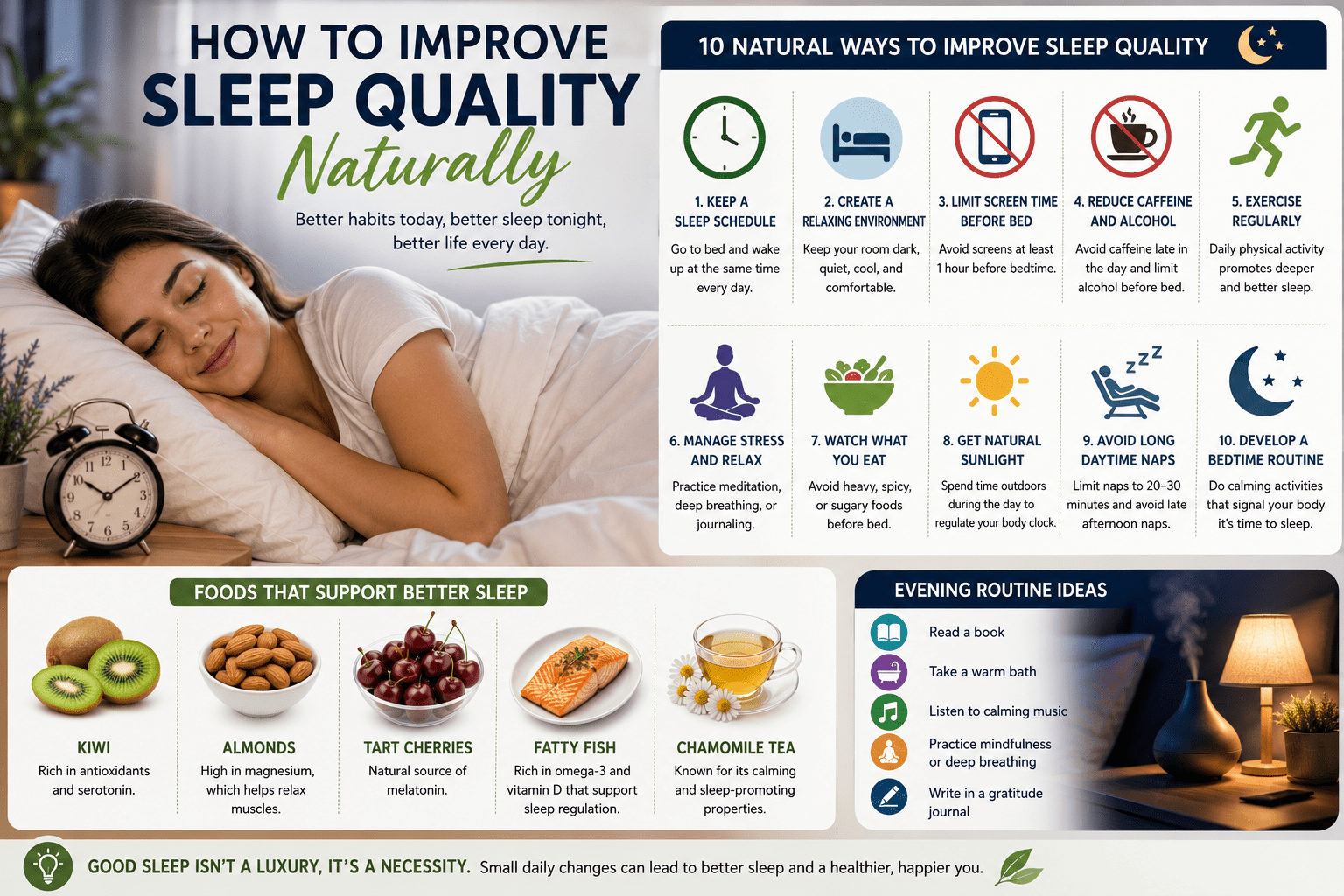
Getting a good night’s sleep is essential for maintaining physical health, mental well-being, and overall quality of life. However, many people struggle with poor sleep due to stress, unhealthy habits, excessive screen time, and irregular schedules. If you’re looking for natural ways to sleep better, there are several effective strategies that can help improve sleep quality without relying on medication.
This guide explores practical and science-backed methods to help you fall asleep faster, stay asleep longer, and wake up feeling refreshed.
Why Sleep Quality Matters
Sleep is more than just a period of rest. During sleep, your body repairs tissues, strengthens the immune system, consolidates memories, and regulates hormones. Poor sleep quality can lead to various health issues, including:
- Fatigue and low energy
- Reduced concentration and productivity
- Mood swings and irritability
- Weakened immune function
- Weight gain
- Increased risk of chronic diseases
Improving your sleep naturally can significantly enhance both your physical and mental health.
Common Causes of Poor Sleep
Before addressing solutions, it’s important to understand what may be affecting your sleep:
- Stress and anxiety
- Excessive caffeine intake
- Irregular sleep schedules
- Excessive screen exposure before bedtime
- Lack of physical activity
- Uncomfortable sleeping environment
- Poor dietary habits
Identifying the root cause can help you make targeted improvements.
1. Maintain a Consistent Sleep Schedule
One of the most effective ways to improve sleep quality naturally is to go to bed and wake up at the same time every day, including weekends.
A consistent sleep schedule helps regulate your body’s internal clock, making it easier to fall asleep and wake up naturally.
Tips:
- Set a fixed bedtime.
- Avoid sleeping in excessively on weekends.
- Create a relaxing evening routine.
2. Create a Sleep-Friendly Environment
Your bedroom environment plays a crucial role in sleep quality.
Optimize Your Bedroom:
- Keep the room cool and comfortable.
- Use blackout curtains to block light.
- Reduce noise with earplugs or white noise machines.
- Invest in a supportive mattress and comfortable pillows.
A dark, quiet, and cool room encourages deeper and more restorative sleep.
3. Limit Screen Time Before Bed
Electronic devices emit blue light, which can interfere with melatonin production—the hormone responsible for sleep.
Best Practices:
- Avoid screens at least one hour before bedtime.
- Use blue-light filters if necessary.
- Replace screen time with reading or relaxation activities.
Reducing evening screen exposure can help you fall asleep more quickly.
4. Reduce Caffeine and Alcohol Intake
Caffeine is a stimulant that can remain in your system for several hours.
Recommendations:
- Avoid coffee, tea, energy drinks, and soft drinks late in the day.
- Limit alcohol consumption before bedtime.
Although alcohol may initially make you sleepy, it often disrupts sleep cycles and reduces sleep quality.
5. Exercise Regularly
Physical activity is one of the most effective natural sleep aids.
Regular exercise can:
- Help you fall asleep faster
- Improve sleep duration
- Reduce stress and anxiety
- Increase deep sleep stages
Aim for at least 30 minutes of moderate exercise most days of the week. However, avoid intense workouts close to bedtime.
6. Manage Stress and Anxiety
Stress is a major contributor to sleep problems.
Relaxation Techniques:
- Deep breathing exercises
- Meditation
- Yoga
- Progressive muscle relaxation
- Journaling
Practicing relaxation techniques before bed can calm your mind and prepare your body for sleep.
7. Watch What You Eat Before Bed
Your evening meals can impact sleep quality.
Foods That Support Better Sleep:
- Bananas
- Almonds
- Oatmeal
- Yogurt
- Herbal teas
Foods to Avoid:
- Heavy meals
- Spicy foods
- Sugary snacks
- Fried foods
Try to finish dinner at least two to three hours before bedtime.
8. Get More Natural Sunlight
Exposure to natural daylight helps regulate your circadian rhythm.
Benefits:
- Supports healthy melatonin production
- Improves daytime alertness
- Enhances nighttime sleep quality
Spend at least 20–30 minutes outdoors during daylight hours whenever possible.
9. Avoid Long Daytime Naps
While short naps can be beneficial, excessive daytime sleeping may interfere with nighttime rest.
Ideal Nap Guidelines:
- Limit naps to 20–30 minutes.
- Avoid napping late in the afternoon.
This helps maintain a healthy sleep-wake cycle.
10. Use Natural Sleep-Promoting Habits
Developing a calming bedtime routine signals your body that it’s time to sleep.
Healthy Bedtime Activities:
- Reading a book
- Taking a warm bath
- Listening to calming music
- Practicing mindfulness meditation
Repeating these habits consistently can improve sleep quality over time.
Natural Sleep-Boosting Foods
Certain foods contain nutrients that support healthy sleep:
Kiwi
Rich in antioxidants and serotonin.
Almonds
Contain magnesium, which promotes relaxation.
Tart Cherries
Natural source of melatonin.
Fatty Fish
Provides vitamin D and omega-3 fatty acids that support sleep regulation.
Chamomile Tea
Known for its calming and sleep-promoting properties.
Signs Your Sleep Quality Is Improving
You may notice positive changes such as:
- Falling asleep faster
- Fewer nighttime awakenings
- Increased energy levels
- Better concentration
- Improved mood
- Reduced daytime fatigue
These improvements often occur gradually as healthy sleep habits become consistent.
Common Mistakes to Avoid
Many people unknowingly sabotage their sleep.
Avoid:
- Using your phone in bed
- Consuming caffeine late in the day
- Going to bed at inconsistent times
- Eating large meals before sleep
- Sleeping in excessively on weekends
Making small adjustments can lead to significant improvements.
Conclusion
Learning how to improve sleep quality naturally can have a profound impact on your health, productivity, and overall happiness. By maintaining a consistent sleep schedule, creating a comfortable sleep environment, managing stress, exercising regularly, and adopting healthy bedtime habits, you can enjoy deeper and more restorative sleep.
Remember that improving sleep is a gradual process. Start by implementing one or two changes at a time, and stay consistent. Over time, these natural sleep strategies can help you wake up refreshed, energized, and ready to take on the day.










Leave a Reply