

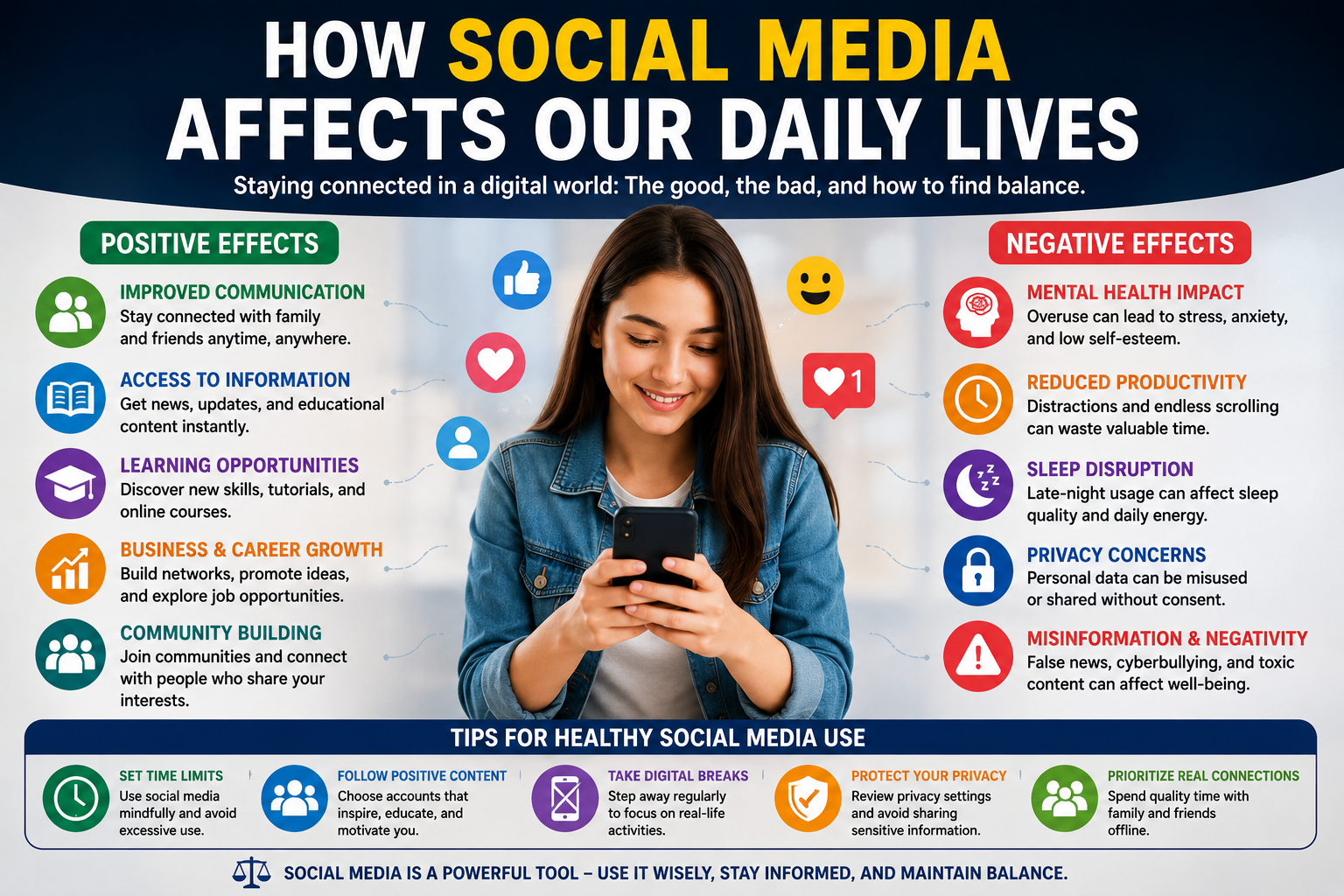
Social media has become an inseparable part of modern life. Platforms such as Facebook, Instagram, YouTube, TikTok, LinkedIn, and X (formerly Twitter) have changed the way people communicate, learn, work, and interact with the world. With billions of users worldwide, social media influences nearly every aspect of daily life.
While social media offers numerous benefits, including instant communication and access to information, it also presents challenges related to mental health, privacy, and productivity. Understanding both the positive and negative effects of social media can help individuals use these platforms more responsibly and effectively.
In this article, we will explore how social media affects our daily lives and the role it plays in modern society.
The Rise of Social Media
Over the past two decades, social media has evolved from simple networking websites into powerful digital platforms that connect people globally.
Today, social media is used for:
- Communication
- Entertainment
- Education
- Business marketing
- News consumption
- Professional networking
- Community building
As technology continues to advance, social media’s influence on daily life continues to grow.
Positive Effects of Social Media
1. Improved Communication
One of the biggest advantages of social media is its ability to connect people instantly.
Social media allows users to:
- Stay in touch with family and friends
- Communicate across different countries
- Share photos and videos
- Participate in group discussions
Communication that once took days can now happen within seconds.
2. Access to Information
Social media provides immediate access to information from around the world.
Users can learn about:
- Current events
- Educational topics
- Industry trends
- Health information
- New technologies
This easy access to knowledge helps people stay informed and updated.
3. Educational Opportunities
Many students and professionals use social media as a learning tool.
Educational content includes:
- Online tutorials
- Expert advice
- Educational videos
- Webinars
- Skill development courses
Platforms like YouTube and LinkedIn Learning have made education more accessible than ever before.
4. Business Growth and Marketing
Social media has transformed the business world.
Companies use social media to:
- Promote products and services
- Engage with customers
- Build brand awareness
- Generate sales leads
- Provide customer support
Small businesses can now reach global audiences without spending large amounts on traditional advertising.
5. Professional Networking
Professionals use social media platforms to build careers and expand networks.
Benefits include:
- Connecting with industry experts
- Discovering job opportunities
- Sharing professional achievements
- Learning about industry developments
Networking opportunities have become easier and more accessible through digital platforms.
6. Community Building
Social media helps people find communities based on shared interests and goals.
Online communities support:
- Hobby enthusiasts
- Entrepreneurs
- Students
- Professionals
- Support groups
These communities provide valuable information, encouragement, and opportunities for collaboration.
Negative Effects of Social Media
Despite its many benefits, social media can also have negative consequences when used excessively.
1. Mental Health Challenges
Research has shown that excessive social media use may contribute to:
- Anxiety
- Stress
- Depression
- Low self-esteem
Many users compare their lives to carefully curated content shared by others, which can create unrealistic expectations and feelings of inadequacy.
2. Reduced Productivity
Social media can be a major source of distraction.
Common productivity issues include:
- Frequent notification interruptions
- Endless scrolling
- Procrastination
- Reduced focus
Spending excessive time on social media can interfere with work, studies, and personal responsibilities.
3. Sleep Disruption
Many people use social media before bedtime.
This habit can:
- Delay sleep
- Reduce sleep quality
- Increase mental stimulation
- Cause fatigue the next day
Limiting screen time before sleep can improve overall well-being.
4. Privacy Concerns
Social media platforms collect significant amounts of user data.
Potential privacy risks include:
- Data breaches
- Identity theft
- Unauthorized data sharing
- Online scams
Users should be cautious about the information they share online.
5. Cyberbullying
Cyberbullying has become a serious issue, particularly among young people.
Negative online behavior may include:
- Harassment
- Threats
- Public humiliation
- False rumors
Such experiences can have long-lasting emotional and psychological effects.
6. Spread of Misinformation
Social media allows information to spread rapidly, but not all content is accurate.
Misinformation can:
- Mislead users
- Create confusion
- Influence public opinion incorrectly
- Spread harmful rumors
It is important to verify information from reliable sources before accepting it as fact.
How Social Media Affects Relationships
Social media has changed how people build and maintain relationships.
Positive Impact
- Easier communication
- Staying connected with distant relatives
- Sharing life experiences
- Strengthening friendships
Negative Impact
- Reduced face-to-face interaction
- Misunderstandings through digital communication
- Relationship conflicts caused by excessive usage
- Increased feelings of loneliness despite online connectivity
Maintaining a balance between online and offline interactions is essential for healthy relationships.
Social Media and Youth
Young people are among the most active social media users.
Benefits for youth include:
- Educational resources
- Creativity and self-expression
- Social connections
- Learning opportunities
However, challenges include:
- Peer pressure
- Screen addiction
- Cyberbullying
- Exposure to inappropriate content
Parents and educators play an important role in promoting responsible social media use.
Tips for Healthy Social Media Usage
To enjoy the benefits of social media while minimizing its drawbacks, consider the following tips:
Set Time Limits
Limit daily social media usage to avoid excessive screen time.
Follow Positive Content
Choose accounts that educate, inspire, and motivate rather than create negativity.
Protect Your Privacy
Use strong passwords and review privacy settings regularly.
Verify Information
Check facts before sharing or believing online content.
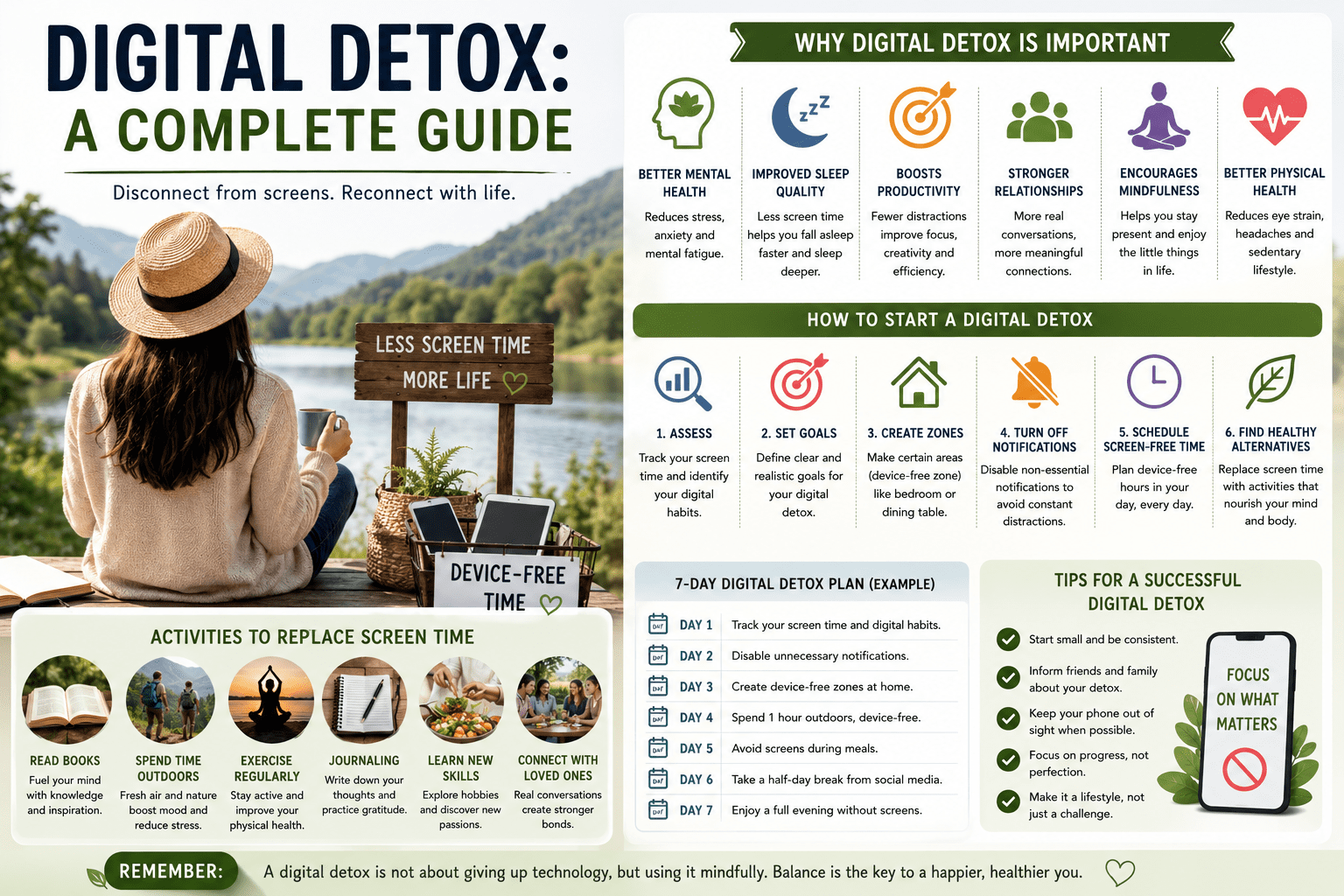
Take Digital Breaks
Occasionally disconnect from social media to focus on real-life activities and relationships.
Prioritize Real-Life Connections
Spend quality time with family and friends away from screens.
The Future of Social Media
Social media continues to evolve with advancements in technology.
Future trends may include:
- Artificial Intelligence integration
- Virtual reality experiences
- Enhanced personalization
- Improved content recommendations
- Greater emphasis on digital safety
As platforms evolve, users will need to adapt and use these technologies responsibly.
Final Thoughts
Social media has significantly transformed the way we communicate, learn, work, and interact with others. It offers countless benefits, including instant communication, educational opportunities, professional networking, and business growth. However, excessive or irresponsible use can also lead to challenges such as mental health concerns, reduced productivity, privacy risks, and misinformation.
The key to maximizing the benefits of social media lies in maintaining balance. By using social media thoughtfully and responsibly, individuals can enjoy its advantages while protecting their mental well-being, relationships, and productivity.
As digital technology continues to shape our world, understanding how social media affects our daily lives will become increasingly important for creating a healthier and more connected society.
Also read How AI Is Changing Education








Leave a Reply