
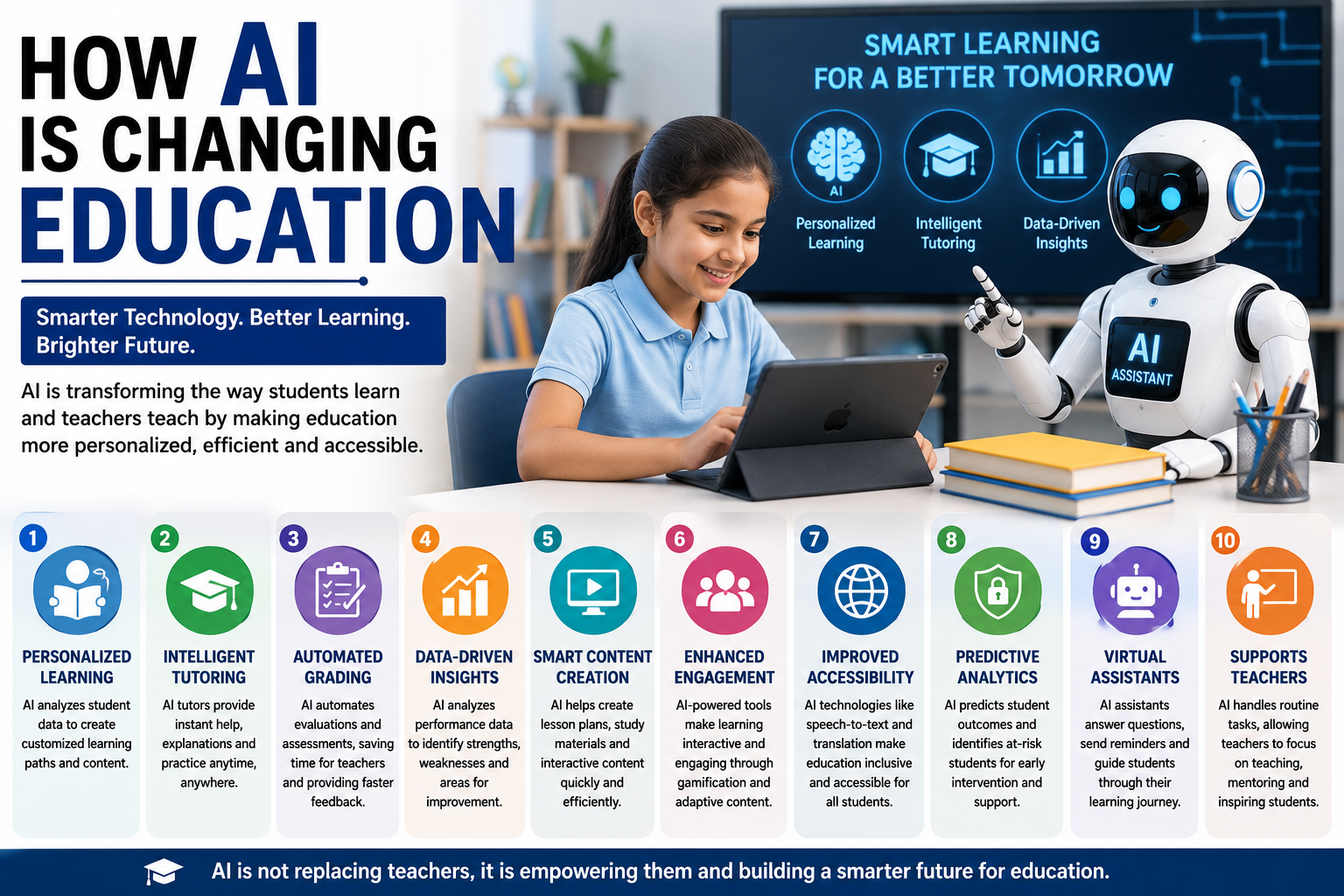
Artificial Intelligence (AI) is transforming nearly every industry, and education is no exception. From personalized learning experiences to automated grading systems, AI is revolutionizing how students learn and how educators teach. As technology continues to advance, educational institutions worldwide are adopting AI-powered tools to improve learning outcomes, increase efficiency, and make education more accessible.
The integration of AI in education is not about replacing teachers. Instead, it is about enhancing the learning experience, supporting educators, and providing students with better opportunities to succeed. In this article, we will explore how AI is changing education and shaping the future of learning.
What Is Artificial Intelligence in Education?
Artificial Intelligence refers to computer systems that can perform tasks that typically require human intelligence, such as learning, reasoning, problem-solving, and decision-making.
In education, AI technologies are used to:
- Personalize learning experiences
- Automate administrative tasks
- Provide intelligent tutoring
- Analyze student performance
- Improve accessibility
- Enhance classroom engagement
These capabilities help create more effective and efficient learning environments.
The Growing Role of AI in Education
As digital learning becomes more common, AI-powered tools are helping educational institutions address challenges such as:
- Large class sizes
- Diverse learning needs
- Administrative workload
- Student engagement issues
- Access to quality education
AI enables schools, colleges, and online learning platforms to deliver more customized and data-driven educational experiences.
1. Personalized Learning Experiences
One of the most significant ways AI is changing education is through personalized learning.
Traditional classrooms often follow a one-size-fits-all approach, but every student learns differently.
AI systems can:
- Analyze learning patterns
- Identify strengths and weaknesses
- Recommend personalized study materials
- Adjust lesson difficulty levels
This allows students to learn at their own pace and receive support tailored to their individual needs.
Benefits of Personalized Learning
- Improved understanding of concepts
- Higher student engagement
- Better academic performance
- Increased learning confidence
Students can focus on areas where they need improvement while progressing quickly through topics they already understand.
2. Intelligent Tutoring Systems
AI-powered tutoring systems provide students with instant assistance outside the classroom.
These systems can:
- Answer questions
- Explain difficult concepts
- Offer practice exercises
- Provide immediate feedback
Unlike traditional tutoring, AI tutors are available 24/7, allowing students to access help whenever they need it.
This additional support can significantly improve learning outcomes and reduce frustration.
3. Automated Grading and Assessment
Grading assignments and exams can be time-consuming for educators.
AI can automate many assessment tasks, including:
- Multiple-choice tests
- Quizzes
- Homework evaluation
- Basic written assignments
Benefits include:
- Faster feedback for students
- Reduced administrative burden
- Increased grading consistency
- More time for teaching and mentoring
Teachers can focus on higher-value educational activities instead of repetitive administrative work.
4. Enhanced Student Engagement
Keeping students engaged is one of the biggest challenges in education.
AI-powered educational platforms use interactive elements such as:
- Gamification
- Adaptive quizzes
- Interactive simulations
- Virtual learning assistants
These features make learning more enjoyable and encourage active participation.
Engaged students are more likely to retain information and achieve better academic results.
5. Smart Content Creation
AI can assist educators in creating educational materials quickly and efficiently.
AI tools can help generate:
- Lesson plans
- Practice questions
- Study guides
- Educational presentations
- Learning summaries
This reduces preparation time and allows teachers to focus more on delivering high-quality instruction.
6. Improved Accessibility for Students
AI is making education more inclusive and accessible.
Examples include:
Speech Recognition
Students can interact with educational systems using voice commands.
Real-Time Translation
AI can translate educational content into multiple languages, helping students from diverse backgrounds.
Text-to-Speech Technology
Visually impaired students can access written materials through audio formats.
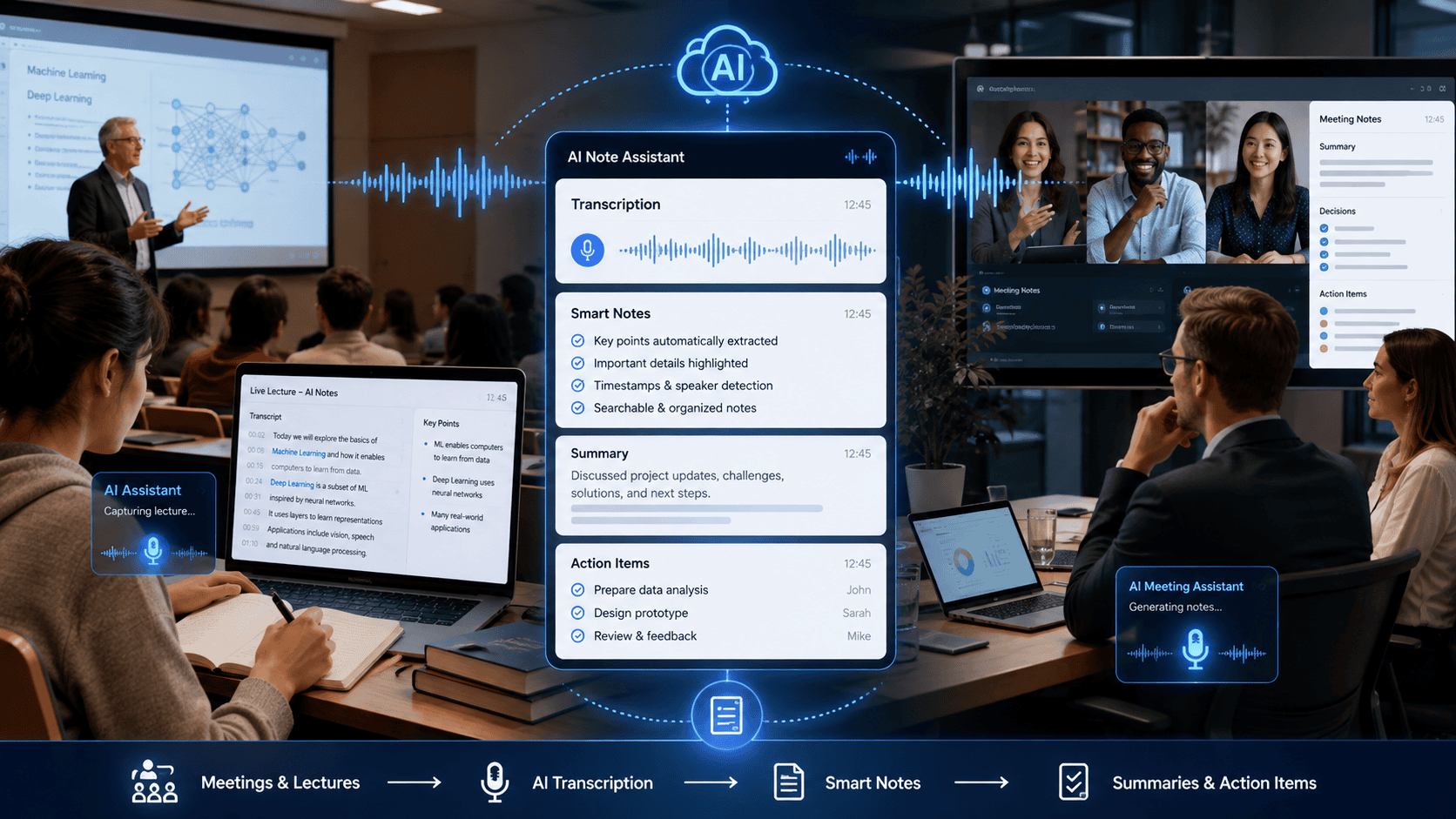
Speech-to-Text Tools
Students with hearing difficulties can convert spoken lectures into written text.
These innovations ensure that more learners can access educational opportunities.
7. Predictive Analytics for Student Success
AI can analyze student performance data and identify patterns that may indicate academic challenges.
Educational institutions can use predictive analytics to:
- Identify at-risk students
- Monitor academic progress
- Recommend interventions
- Improve retention rates
By detecting potential issues early, educators can provide timely support and help students stay on track.
8. Virtual Learning Assistants
Virtual assistants powered by AI can support both students and teachers.
These assistants can:
- Answer common questions
- Provide reminders
- Schedule activities
- Recommend learning resources
Students receive instant support, while teachers spend less time handling routine inquiries.
9. AI-Powered Online Learning Platforms
Online learning has grown rapidly in recent years, and AI plays a major role in improving digital education.
AI-enhanced platforms can:
- Track learning progress
- Recommend courses
- Personalize content
- Adapt learning paths
This creates a more effective and engaging online learning experience for students worldwide.
10. Supporting Teachers Rather Than Replacing Them
One common misconception is that AI will replace teachers.
In reality, AI serves as a supportive tool.
Teachers continue to provide:
- Emotional support
- Critical thinking guidance
- Mentorship
- Classroom management
- Human interaction
AI handles repetitive and data-driven tasks, allowing educators to focus on what they do best—teaching and inspiring students.
Challenges of AI in Education
Despite its many benefits, AI adoption in education also presents challenges.
Data Privacy Concerns
Educational institutions must protect student information and ensure responsible data usage.
Technology Access Gaps
Not all students have equal access to devices and internet connectivity.
Training Requirements
Teachers need proper training to effectively use AI-powered tools.
Ethical Considerations
Schools must ensure AI systems are fair, transparent, and free from bias.
Addressing these challenges is essential for successful AI integration.
The Future of AI in Education
The future of education will likely involve even deeper integration of AI technologies.
Potential developments include:
- Advanced virtual tutors
- Immersive learning experiences
- AI-driven career guidance
- Personalized educational pathways
- Intelligent classroom management systems
As AI continues to evolve, it will create new opportunities for students and educators alike.
Benefits of AI in Education at a Glance
AI offers numerous advantages, including:
- Personalized learning
- Faster assessments
- Improved accessibility
- Enhanced engagement
- Better student support
- Reduced administrative workload
- Data-driven decision-making
These benefits contribute to more effective and inclusive education systems.
Final Thoughts
Artificial Intelligence is reshaping education by making learning more personalized, accessible, and efficient. From intelligent tutoring systems and automated grading to predictive analytics and virtual learning assistants, AI is helping educators meet the needs of modern learners.
While challenges such as data privacy and technology access must be addressed, the potential benefits of AI in education are enormous. Rather than replacing teachers, AI empowers them to deliver better learning experiences and focus on meaningful interactions with students.
As educational technology continues to advance, AI will play an increasingly important role in preparing students for the future. Schools, colleges, and learners who embrace these innovations will be better positioned to thrive in the digital age.
Also read Best Daily Habits for a Successful Life

Leave a Reply