

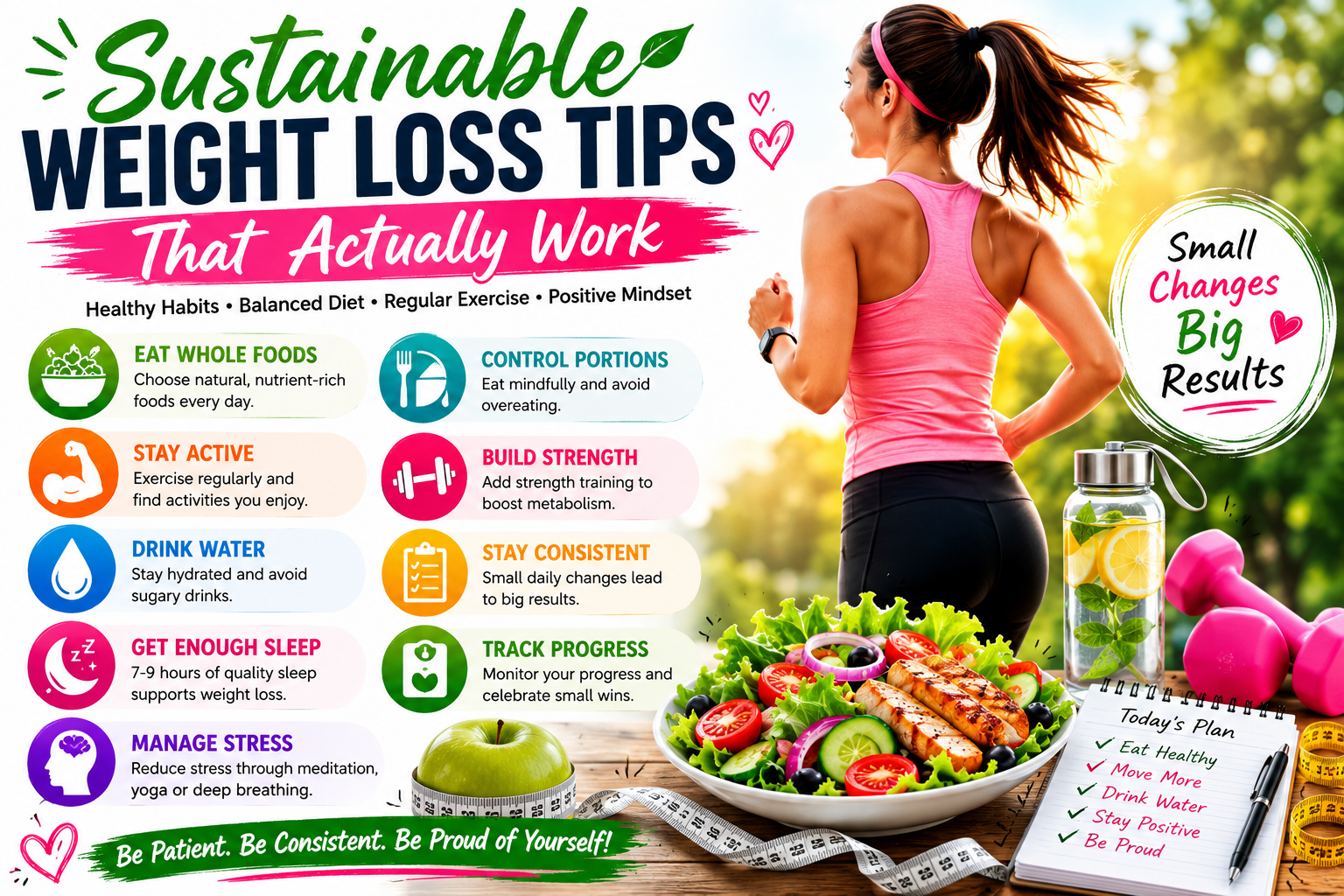
Losing weight is one of the most common health goals worldwide, yet many people struggle to maintain their results. Crash diets, extreme workout plans, and quick-fix supplements may produce short-term results, but they often lead to frustration and weight regain. The key to lasting success is adopting sustainable weight loss habits that fit into your lifestyle.
This guide explores practical, science-backed weight loss tips that actually work and can help you achieve and maintain a healthy weight over the long term.
What Is Sustainable Weight Loss?
Sustainable weight loss refers to losing weight gradually through healthy lifestyle changes that can be maintained for years rather than weeks. Instead of focusing on rapid results, sustainable weight loss emphasizes consistency, balanced nutrition, regular physical activity, and healthy habits.
Benefits of Sustainable Weight Loss
- Better long-term results
- Improved overall health
- Reduced risk of chronic diseases
- Increased energy levels
- Better mental well-being
- Improved metabolism
- Lower chance of weight regain
Health experts generally recommend losing about 0.5 to 1 kilogram (1–2 pounds) per week for safe and sustainable progress.
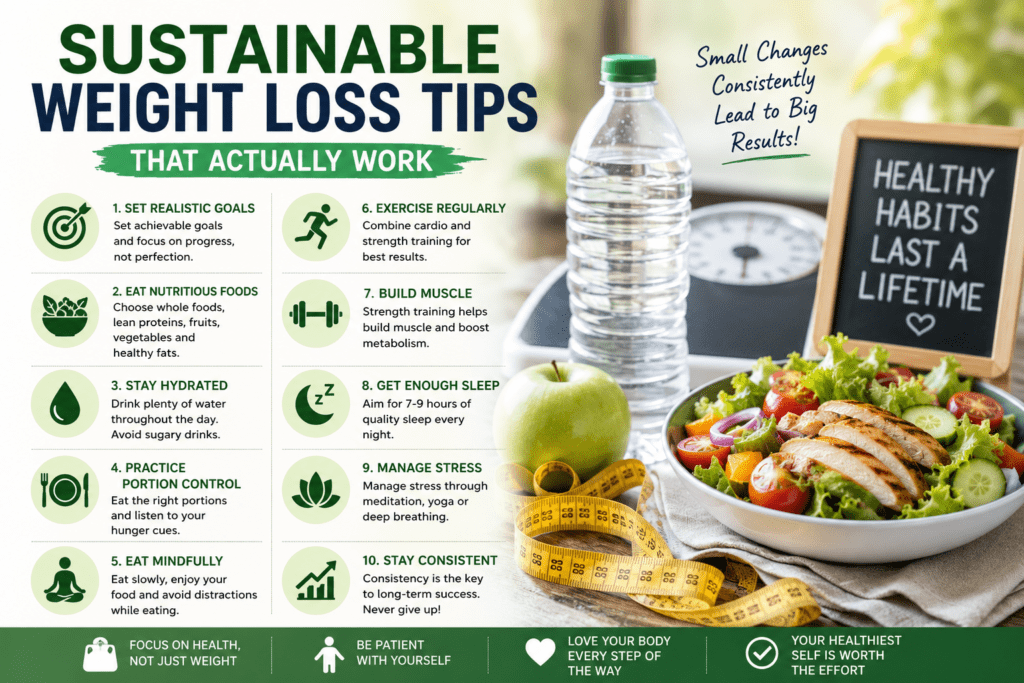
1. Set Realistic Weight Loss Goals
One of the biggest mistakes people make is expecting dramatic results in a short period.
Smart Goal Examples:
- Lose 5 kg over three months.
- Exercise 4 times per week.
- Eat vegetables with every meal.
- Drink more water daily.
Realistic goals help you stay motivated and avoid disappointment.
2. Focus on Nutrition, Not Dieting
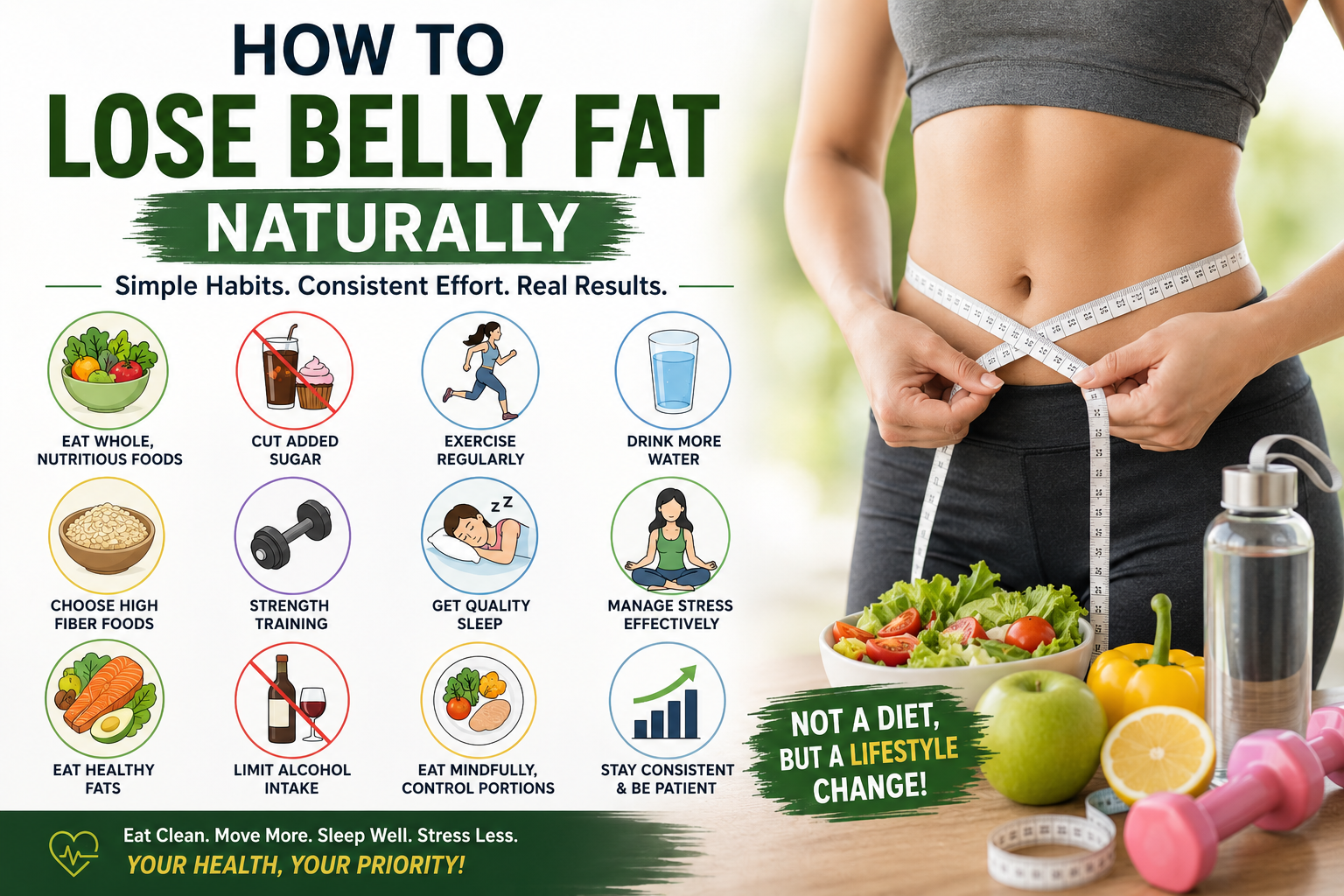
Many diets fail because they are too restrictive. Instead of following temporary diet plans, focus on creating healthy eating habits.
Prioritize Whole Foods
Choose foods such as:
- Fruits
- Vegetables
- Whole grains
- Lean proteins
- Healthy fats
- Nuts and seeds
Whole foods are generally more filling and nutrient-dense than processed foods.
3. Increase Protein Intake
Protein plays a crucial role in weight management.
Benefits of Protein:
- Reduces hunger
- Increases satiety
- Supports muscle growth
- Boosts metabolism
Healthy Protein Sources:
- Eggs
- Fish
- Chicken breast
- Greek yogurt
- Lentils
- Beans
- Tofu
- Cottage cheese
Including protein in every meal can help control cravings throughout the day.
4. Stay Hydrated
Many people confuse thirst with hunger, leading to unnecessary snacking.
Hydration Tips:
- Drink water before meals.
- Carry a reusable water bottle.
- Replace sugary drinks with water.
- Start your day with a glass of water.
Proper hydration supports digestion, metabolism, and overall health.
5. Practice Portion Control
You don’t necessarily need to eliminate your favorite foods. Learning portion control is often more effective.
Portion Control Strategies:
- Use smaller plates.
- Avoid eating directly from packages.
- Measure serving sizes when necessary.
- Eat slowly and mindfully.
These simple habits can significantly reduce calorie intake without feeling deprived.
6. Eat Mindfully
Mindful eating helps you recognize hunger and fullness signals.
How to Practice Mindful Eating:
- Eat without distractions.
- Chew food thoroughly.
- Enjoy the taste and texture of food.
- Stop eating when comfortably full.
Mindful eating often reduces overeating and emotional eating.
7. Move Your Body Regularly
Exercise supports weight loss and improves overall health.
Effective Activities:
- Walking
- Running
- Cycling
- Swimming
- Strength training
- Yoga
- Hiking
Find activities you enjoy so that exercise becomes a sustainable habit rather than a chore.
8. Prioritize Strength Training
Many people focus only on cardio, but strength training is equally important.
Benefits:
- Builds lean muscle mass
- Increases resting metabolism
- Improves body composition
- Supports long-term fat loss
Aim for strength training sessions at least 2–3 times per week.
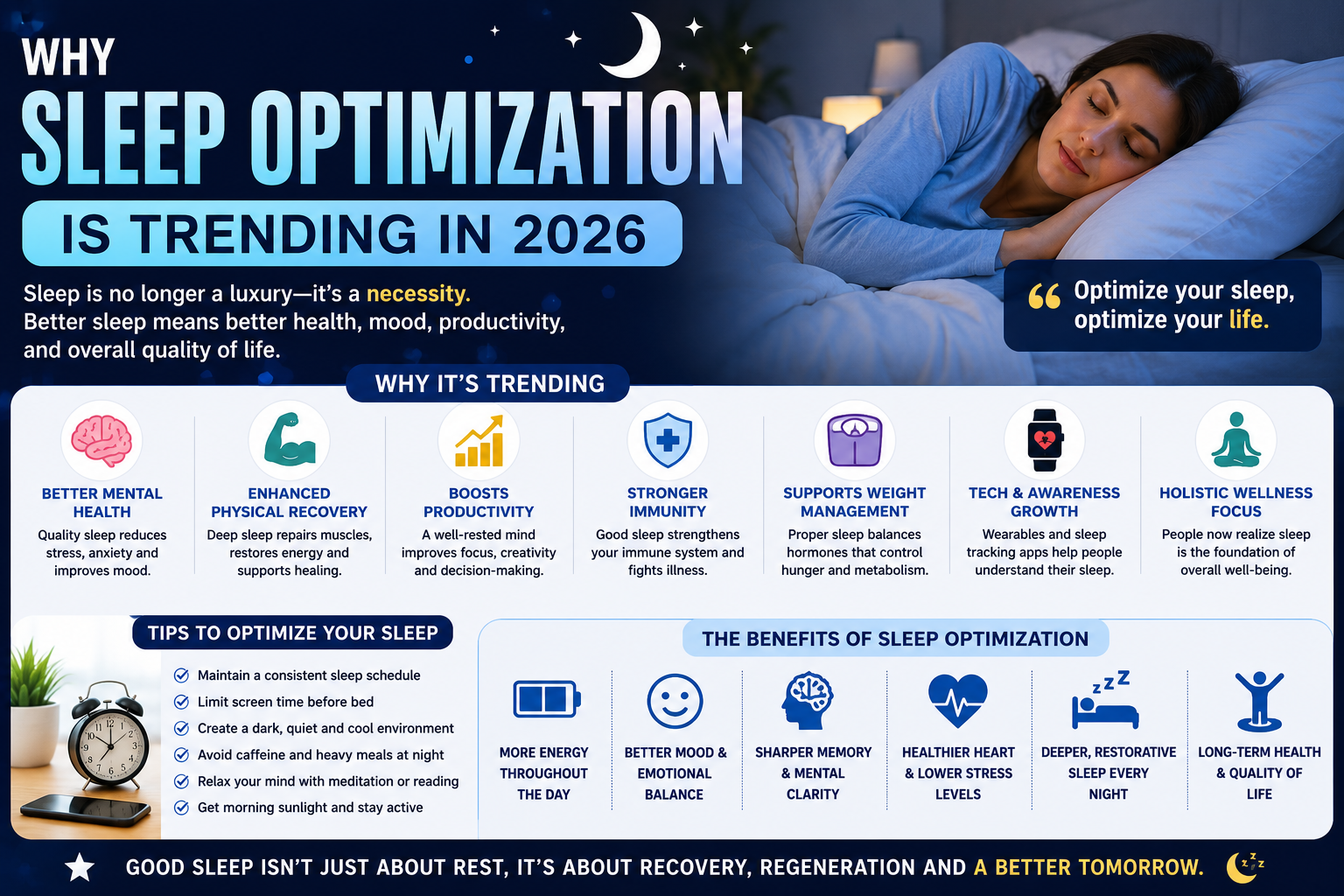
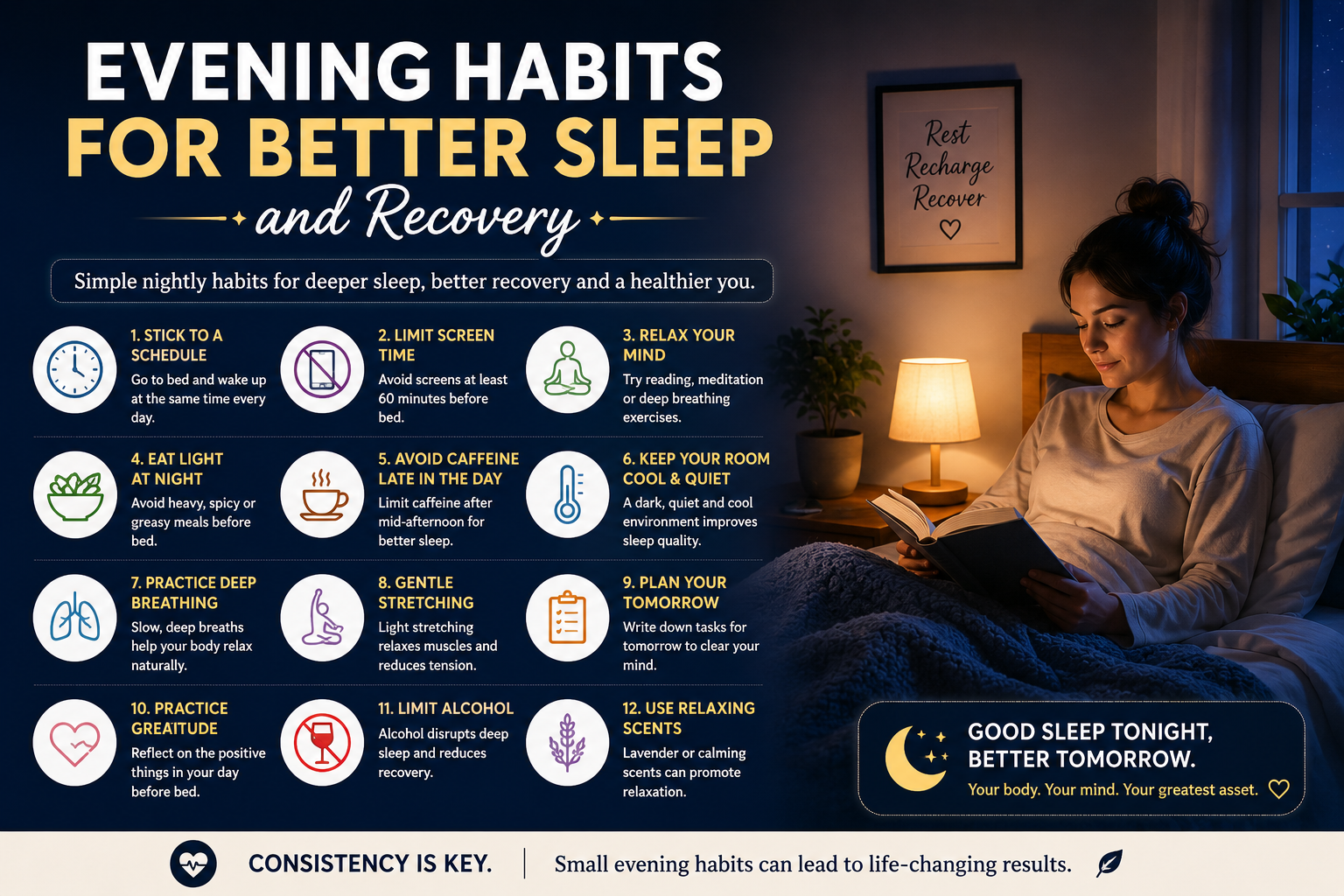
9. Get Enough Sleep
Sleep is often overlooked in weight loss plans.
Lack of Sleep Can:
- Increase hunger hormones
- Reduce energy levels
- Increase cravings for unhealthy foods
- Slow recovery from exercise
Most adults should aim for 7–9 hours of quality sleep per night.
10. Reduce Added Sugar
Excess sugar contributes to weight gain and other health problems.
Common Sources:
- Soft drinks
- Energy drinks
- Candy
- Cakes and pastries
- Sweetened coffee beverages
Replace sugary snacks with healthier alternatives such as fruit, nuts, or yogurt.
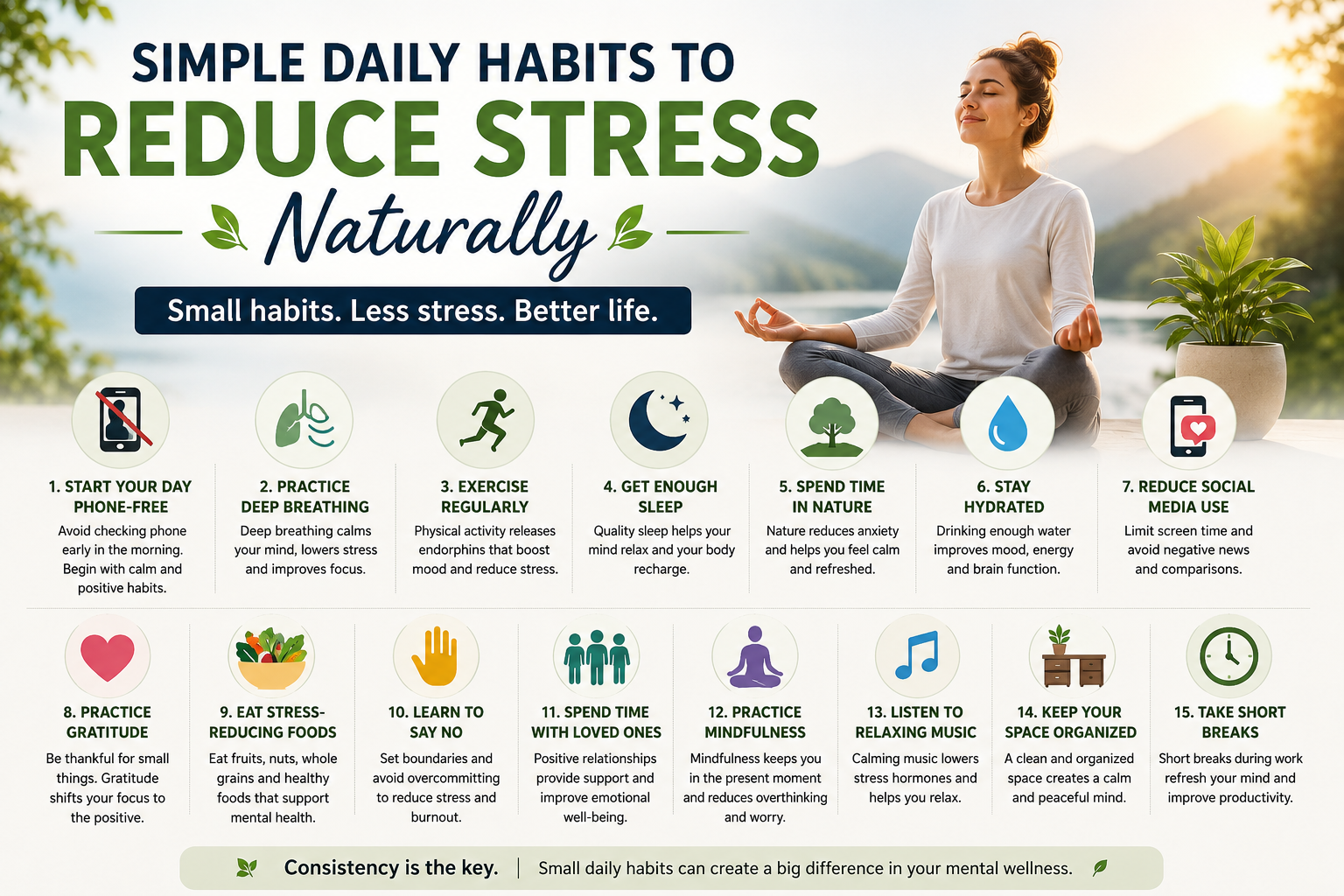
11. Manage Stress Effectively
Chronic stress can lead to emotional eating and weight gain.
Stress Management Techniques:
- Meditation
- Deep breathing exercises
- Yoga
- Walking outdoors
- Journaling
- Spending time with loved ones
Managing stress supports both mental and physical health.
12. Track Your Progress
Monitoring your habits can increase accountability.
Track:
- Food intake
- Exercise sessions
- Body measurements
- Energy levels
- Sleep quality
Remember that progress is not always reflected on the scale. Improvements in fitness, strength, and health are equally important.
13. Avoid Extreme Diets
Fad diets often promise rapid weight loss but can be difficult to maintain.
Common Problems:
- Nutrient deficiencies
- Loss of muscle mass
- Slower metabolism
- Weight regain
Sustainable habits consistently outperform quick fixes in the long run.
14. Create a Supportive Environment
Your surroundings influence your choices.
Helpful Strategies:
- Keep healthy foods visible.
- Limit junk food at home.
- Exercise with friends.
- Join a fitness community.
- Share your goals with family.
A supportive environment makes healthy choices easier.
Sample Daily Weight Loss Routine
Morning
- Drink water
- Eat a protein-rich breakfast
- Take a short walk
Afternoon
- Balanced lunch with vegetables and protein
- Stay hydrated
- Stretch or move regularly
Evening
- Strength training or exercise
- Healthy dinner
- Avoid late-night snacking
- Get quality sleep
Common Weight Loss Mistakes
Avoid these common pitfalls:
- Skipping meals
- Following crash diets
- Relying solely on cardio
- Ignoring sleep
- Drinking calories
- Setting unrealistic expectations
- Comparing yourself to others
Small, consistent improvements often produce the best results.
Final Thoughts
Sustainable weight loss is not about perfection or extreme restrictions. It is about creating healthy habits that you can maintain for life. By focusing on balanced nutrition, regular exercise, proper sleep, hydration, stress management, and realistic goals, you can achieve lasting results and improve your overall health.
Remember, the most effective weight loss plan is the one you can consistently follow. Start small, stay patient, and focus on long-term progress rather than quick fixes.
Also read Best Morning Routine for Better Health




Leave a Reply