

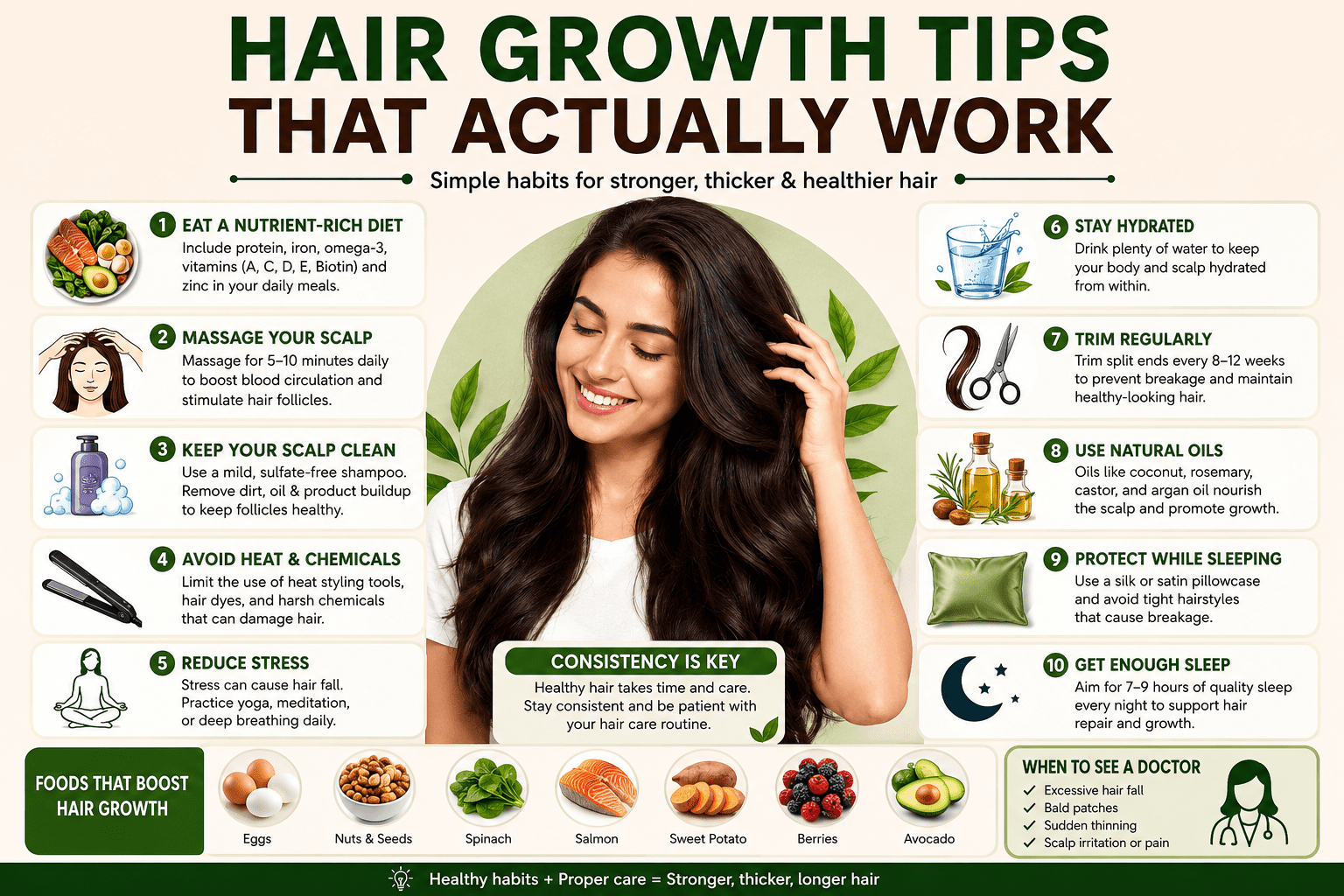
Healthy, thick hair is often associated with confidence and overall well-being. While countless products promise miraculous results, many fail to deliver. The truth is that effective hair growth requires a combination of proper nutrition, scalp care, healthy habits, and consistency.
If you’re struggling with hair thinning, excessive shedding, or slow hair growth, this guide covers scientifically backed hair growth tips that actually work and can help you achieve healthier, stronger hair over time.
Understanding Hair Growth
Before exploring solutions, it’s important to understand how hair grows.
Hair growth occurs in three main stages:
1. Anagen Phase (Growth Stage)
This is the active growth period that can last between 2 and 7 years.
2. Catagen Phase (Transition Stage)
Hair follicles shrink and prepare for rest.
3. Telogen Phase (Resting Stage)
Hair naturally sheds before new hair begins growing.
Disruptions in this cycle can lead to hair loss and slower growth.
Common Causes of Hair Loss
Several factors may affect hair growth:
- Nutritional deficiencies
- Stress and anxiety
- Hormonal imbalances
- Genetics
- Poor scalp health
- Excessive heat styling
- Chemical treatments
- Certain medications
- Lack of sleep
Identifying the root cause is essential for finding the most effective solution.
1. Eat a Protein-Rich Diet
Hair is primarily made of keratin, a type of protein. Without adequate protein intake, hair growth may slow down.
Best Protein Sources
- Eggs
- Fish
- Chicken
- Lean meats
- Greek yogurt
- Lentils
- Beans
- Tofu
Including sufficient protein in your diet supports stronger and healthier hair growth.
2. Increase Iron Intake
Iron deficiency is one of the most common causes of hair thinning, especially among women.
Iron-Rich Foods
- Spinach
- Red meat
- Pumpkin seeds
- Lentils
- Chickpeas
- Fortified cereals
Combining iron-rich foods with vitamin C can improve absorption.
3. Get Essential Vitamins and Minerals
Several nutrients play a crucial role in maintaining healthy hair.
Important Hair Growth Nutrients
Biotin
Supports keratin production.
Vitamin D
May help stimulate hair follicles.
Zinc
Supports hair tissue growth and repair.
Vitamin E
Improves scalp circulation.
Omega-3 Fatty Acids
Promote scalp health and reduce inflammation.
A balanced diet often provides these nutrients naturally.
4. Massage Your Scalp Regularly
Scalp massage increases blood flow to hair follicles, which may encourage healthier hair growth.
How to Do It
- Use fingertips
- Massage gently for 5–10 minutes daily
- Apply light pressure
- Use circular motions
Regular scalp massage can improve circulation and reduce tension.
5. Keep Your Scalp Healthy
A healthy scalp creates the ideal environment for hair growth.
Scalp Care Tips
- Wash hair regularly
- Remove excess oil buildup
- Avoid harsh shampoos
- Exfoliate occasionally
- Treat dandruff promptly
Healthy follicles are more likely to produce strong hair strands.
6. Avoid Excessive Heat Styling
Frequent use of heat tools can weaken hair and cause breakage.
Heat Styling Tools to Limit
- Hair dryers
- Flat irons
- Curling irons
- Hot brushes
When using heat, always apply a heat protectant product.
7. Reduce Stress Levels
Chronic stress can push hair follicles into the shedding phase prematurely.
Effective Stress Management Methods
- Meditation
- Yoga
- Walking
- Deep breathing exercises
- Journaling
- Regular exercise
Reducing stress benefits both hair health and overall wellness.
8. Stay Hydrated
Dehydration can negatively affect scalp and hair health.
Hydration Benefits
- Supports nutrient delivery
- Maintains scalp moisture
- Improves hair elasticity
Aim to drink enough water throughout the day.
9. Trim Split Ends Regularly
Trimming does not directly increase growth speed, but it prevents breakage.
Benefits of Regular Trims
- Healthier appearance
- Less splitting
- Reduced breakage
- Better hair manageability
Consider trimming every 8–12 weeks.
10. Use Gentle Hair Care Products
Harsh chemicals may damage hair and irritate the scalp.
Look for Products That Are
- Sulfate-free
- Paraben-free
- Moisturizing
- Suitable for your hair type
Choosing the right products can help preserve hair strength.
11. Protect Hair While Sleeping
Hair can become damaged from friction against pillowcases.
Helpful Tips
- Use a silk or satin pillowcase
- Avoid tight hairstyles at night
- Tie long hair loosely
These simple habits can reduce breakage significantly.
12. Avoid Tight Hairstyles
Constant tension on hair follicles may lead to traction alopecia.
Hairstyles to Limit
- Tight ponytails
- Tight buns
- Braids with excessive tension
Opt for looser styles whenever possible.
13. Exercise Regularly
Physical activity improves circulation throughout the body, including the scalp.
Benefits of Exercise for Hair
- Better blood flow
- Reduced stress
- Improved hormone balance
- Enhanced overall health
Even 30 minutes of exercise daily can make a difference.
14. Consider Natural Oils
Certain oils may help nourish the scalp and hair.
Popular Hair Oils
- Coconut oil
- Rosemary oil
- Argan oil
- Castor oil
- Jojoba oil
Use oils moderately and patch-test before applying to the scalp.
15. Get Enough Sleep
Sleep is essential for tissue repair and hormone regulation.
Sleep Recommendations
- Aim for 7–9 hours nightly
- Maintain a consistent schedule
- Reduce screen time before bed
Quality sleep supports healthy hair growth cycles.
Hair Growth Myths to Avoid
Many myths continue to circulate online.
Myth 1: Hair Grows Faster After Shaving
Shaving does not affect follicle activity or growth rate.
Myth 2: Frequent Haircuts Increase Growth
Haircuts reduce breakage but do not accelerate growth from the scalp.
Myth 3: Expensive Products Guarantee Results
Healthy hair growth depends more on overall care than product price.
When to See a Professional
Consult a healthcare provider or dermatologist if you experience:
- Sudden hair loss
- Bald patches
- Severe shedding
- Scalp inflammation
- Persistent thinning
Professional evaluation can help identify underlying medical causes.
Conclusion
Achieving healthier, thicker hair requires patience and consistency. While no product can magically transform your hair overnight, proven habits such as eating a nutrient-rich diet, maintaining scalp health, reducing stress, staying hydrated, and protecting hair from damage can significantly improve hair growth over time.
By following these hair growth tips that actually work, you can create the best possible environment for stronger, healthier, and more resilient hair.
Also read Best Anti-Aging Ingredients for Skin: Science-Backed Solutions for Youthful Skin


Leave a Reply