

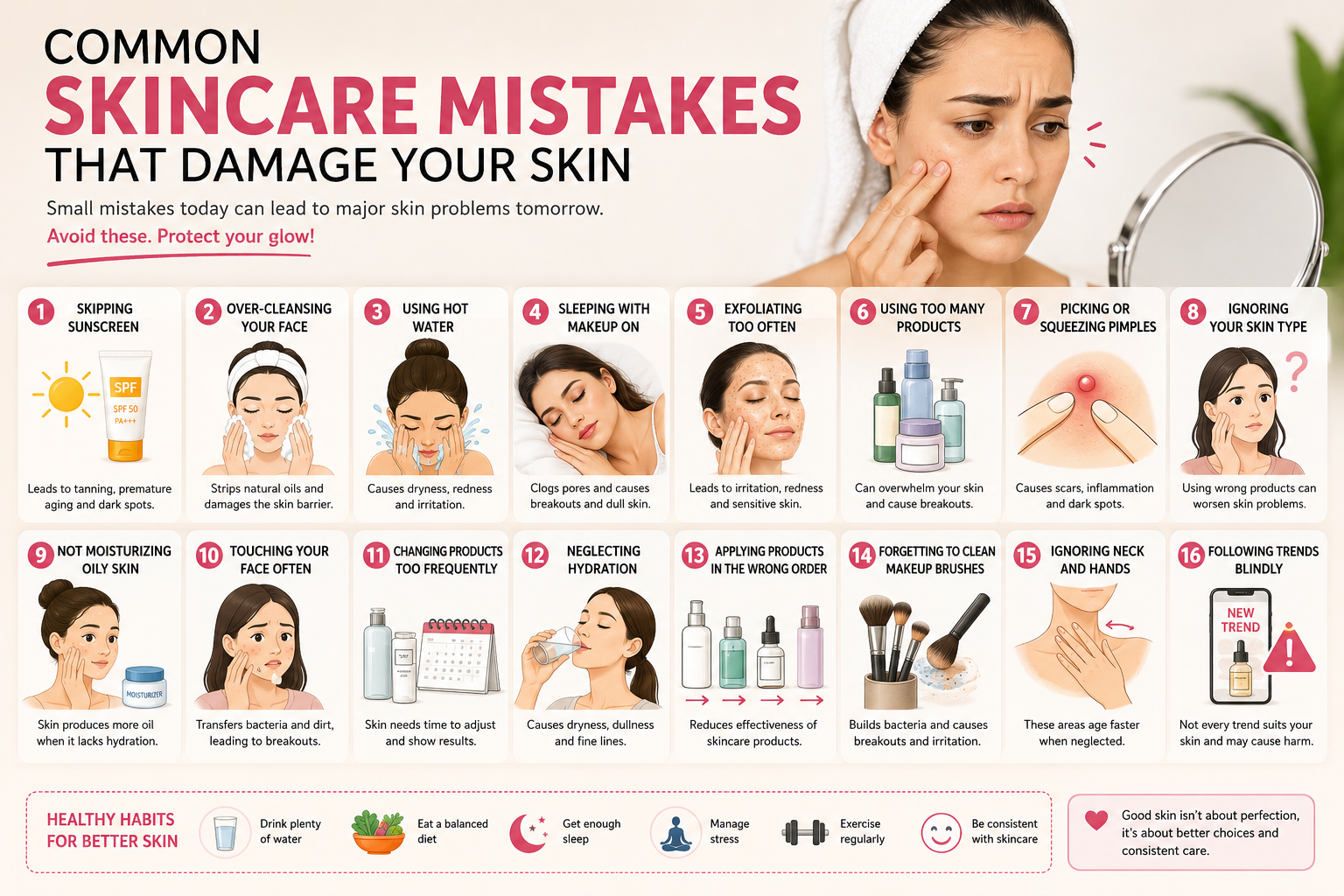
Healthy, glowing skin isn’t just about using expensive skincare products. Many people unknowingly make skincare mistakes that can lead to dryness, irritation, acne, premature aging, and other skin concerns. Even with the best intentions, following incorrect skincare practices can do more harm than good.
Understanding the common skincare mistakes that damage your skin is the first step toward achieving a healthier and more radiant complexion. In this article, we’ll discuss the most frequent skincare errors and provide practical tips to help you maintain beautiful, healthy skin.
Why Proper Skincare Matters
Your skin is the body’s largest organ and serves as a protective barrier against environmental pollutants, bacteria, and harmful UV rays. A proper skincare routine helps maintain this barrier, keeps your skin hydrated, and prevents common skin issues.
However, improper skincare habits can weaken your skin’s natural defenses and accelerate skin damage over time.
1. Skipping Sunscreen Daily
One of the biggest skincare mistakes people make is not wearing sunscreen every day.
Why It’s Harmful
Exposure to ultraviolet (UV) rays can cause:
- Premature aging
- Fine lines and wrinkles
- Hyperpigmentation
- Sunspots
- Increased risk of skin cancer
What to Do Instead
Apply a broad-spectrum sunscreen with SPF 30 or higher every morning, even on cloudy days. Reapply every two hours if you spend extended periods outdoors.
2. Over-Cleansing Your Face
Many people believe washing their face multiple times a day keeps their skin cleaner. In reality, excessive cleansing can damage your skin barrier.
Effects of Over-Cleansing
- Dryness
- Redness
- Irritation
- Increased oil production
- Sensitivity
Best Practice
Wash your face twice daily—once in the morning and once before bed—using a gentle cleanser suitable for your skin type.
3. Using Hot Water on Your Face
Hot showers may feel relaxing, but hot water can strip your skin of its natural oils.
Potential Problems
- Dry skin
- Increased redness
- Flaky patches
- Weakened skin barrier
Better Alternative
Use lukewarm water when cleansing your face to preserve your skin’s natural moisture.
4. Sleeping with Makeup On
After a long day, removing makeup may seem like a chore, but sleeping with makeup can cause significant skin damage.
Consequences
- Clogged pores
- Acne breakouts
- Dull skin
- Premature aging
Solution
Always remove makeup thoroughly before bedtime using a gentle makeup remover or cleansing balm.
5. Exfoliating Too Often
Exfoliation helps remove dead skin cells, but excessive exfoliation can cause irritation and inflammation.
Signs of Over-Exfoliation
- Redness
- Burning sensation
- Tight skin
- Increased sensitivity
Recommended Frequency
Exfoliate 1–3 times per week depending on your skin type and the exfoliating product you use.
6. Using Too Many Skincare Products
The latest skincare trends often encourage people to layer multiple products. However, more products don’t necessarily mean better results.
Risks
- Skin irritation
- Product interactions
- Breakouts
- Overwhelmed skin barrier
Keep It Simple
A basic routine consisting of cleanser, moisturizer, sunscreen, and targeted treatments is often sufficient.
7. Picking or Squeezing Pimples
Popping pimples may provide temporary satisfaction, but it can lead to long-term skin issues.
Possible Damage
- Scarring
- Infection
- Increased inflammation
- Dark spots
Better Approach
Use acne treatments containing salicylic acid or benzoyl peroxide and allow blemishes to heal naturally.
8. Ignoring Your Skin Type
Using products that don’t match your skin type is a common mistake.
Examples
- Heavy creams on oily skin may clog pores.
- Harsh cleansers on dry skin can worsen dryness.
- Strong active ingredients may irritate sensitive skin.
Know Your Skin Type
Identify whether your skin is oily, dry, combination, sensitive, or normal and choose products accordingly.
9. Not Moisturizing Oily Skin
Many people with oily skin avoid moisturizers because they think it will make their skin greasier.
Why This Is Wrong
When skin becomes dehydrated, it often produces even more oil to compensate.
What to Use
Choose lightweight, oil-free, non-comedogenic moisturizers designed for oily skin.
10. Frequently Touching Your Face
Your hands come into contact with countless bacteria and germs throughout the day.
Effects on Skin
- Acne breakouts
- Skin irritation
- Spread of bacteria
Prevention
Avoid touching your face unnecessarily and wash your hands regularly.
11. Changing Products Too Frequently
Many people expect instant results from skincare products.
The Problem
Most skincare products require several weeks of consistent use before showing visible improvements.
Recommendation
Give new products at least 4–8 weeks before deciding whether they work for your skin.
12. Neglecting Hydration
Hydration is essential for healthy skin.
Signs of Dehydrated Skin
- Tightness
- Dull appearance
- Fine lines
- Dry patches
Stay Hydrated
Drink enough water throughout the day and use hydrating skincare ingredients such as hyaluronic acid and glycerin.
13. Applying Products in the Wrong Order
The effectiveness of skincare products often depends on the order in which they are applied.
Correct Order
- Cleanser
- Toner
- Serum
- Eye Cream
- Moisturizer
- Sunscreen (morning only)
Following this sequence helps maximize absorption and effectiveness.
14. Forgetting to Clean Makeup Brushes
Dirty makeup brushes can harbor bacteria, oil, and dead skin cells.
Problems Caused
- Acne breakouts
- Skin irritation
- Uneven makeup application
Cleaning Schedule
Wash brushes at least once a week using a gentle cleanser or brush cleaner.
15. Ignoring Neck and Hands
Many people focus only on facial skincare while neglecting the neck and hands.
Why It Matters
These areas also show signs of aging and sun damage.
Simple Tip
Extend your skincare products, including sunscreen and moisturizer, to your neck and hands.
16. Following Social Media Trends Blindly
Not every viral skincare trend is suitable for your skin.
Potential Risks
- Allergic reactions
- Skin irritation
- Barrier damage
Smart Approach
Research ingredients and consult a skincare professional when trying new treatments.
Healthy Habits for Better Skin
In addition to avoiding skincare mistakes, these habits can improve overall skin health:
Eat a Balanced Diet
Include fruits, vegetables, healthy fats, and lean proteins.
Get Enough Sleep
Aim for 7–9 hours of quality sleep every night.
Exercise Regularly
Physical activity promotes healthy blood circulation and supports skin renewal.
Manage Stress
Stress can trigger acne, inflammation, and other skin conditions.
Final Thoughts
Many common skincare mistakes that damage your skin are easy to avoid once you recognize them. Skipping sunscreen, over-cleansing, over-exfoliating, using the wrong products, and neglecting hydration can all contribute to skin problems over time.
The key to healthy skin is consistency, simplicity, and understanding your skin’s unique needs. By adopting proper skincare habits and avoiding these common mistakes, you can achieve clearer, healthier, and more radiant skin for years to come.











Leave a Reply