

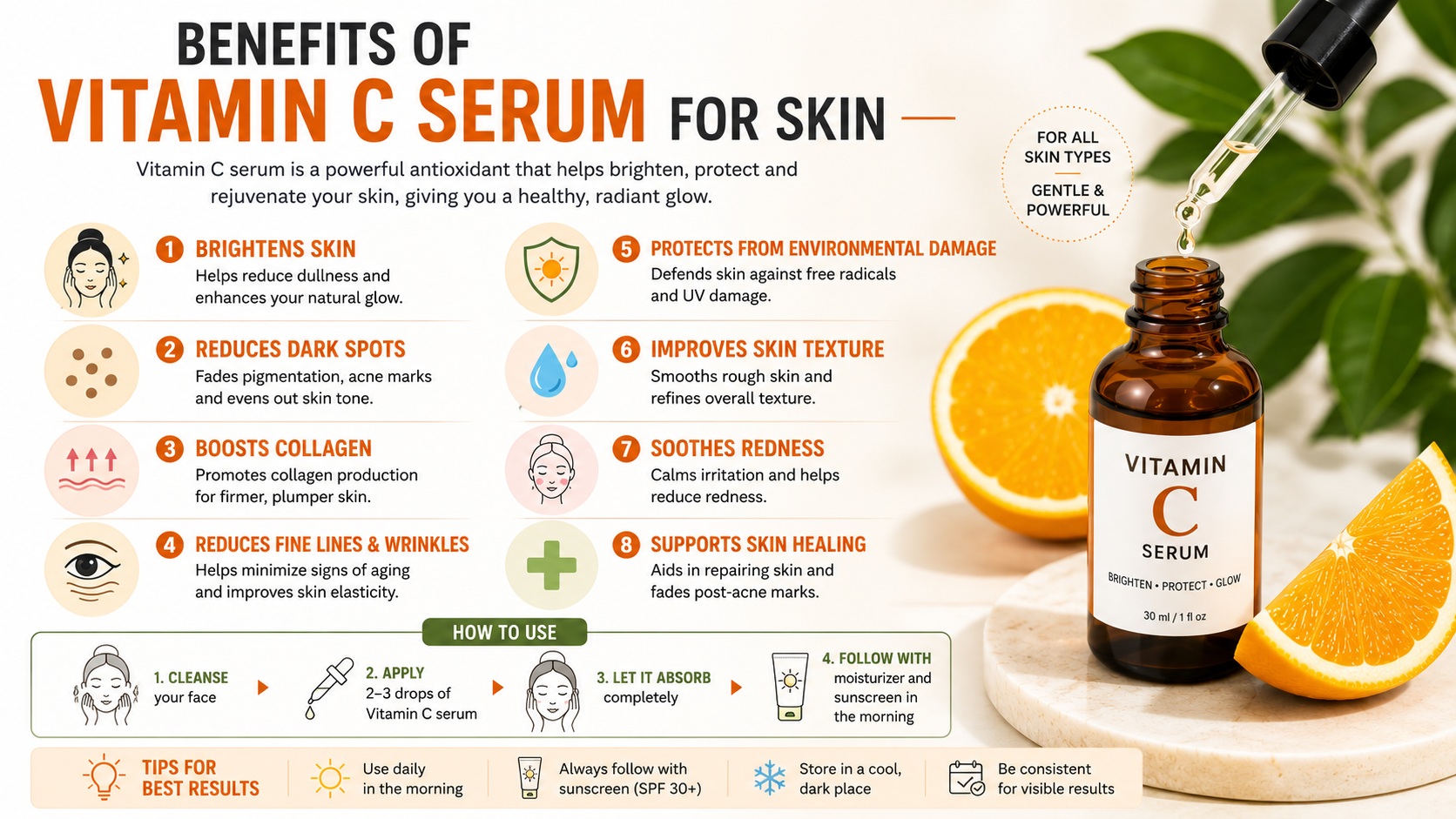
Vitamin C serum has become one of the most popular skincare products in recent years, and for good reason. Dermatologists and skincare experts often recommend it as a powerful ingredient for achieving brighter, healthier, and younger-looking skin. Packed with antioxidants, Vitamin C helps protect the skin from environmental damage while improving overall skin tone and texture.
Whether you’re dealing with dull skin, dark spots, fine lines, or uneven complexion, adding a Vitamin C serum to your skincare routine can provide noticeable benefits. In this article, we’ll explore the many benefits of Vitamin C serum for skin and explain why it deserves a place in your daily skincare regimen.
What Is Vitamin C Serum?
Vitamin C serum is a lightweight skincare product formulated with concentrated Vitamin C, also known as ascorbic acid or its derivatives. It is typically applied after cleansing and before moisturizing to deliver potent antioxidants directly into the skin.
Vitamin C is naturally present in the skin, but environmental stressors such as pollution, UV rays, and aging can reduce its levels over time. Using a Vitamin C serum helps replenish these levels and supports healthy skin function.
Why Vitamin C Is Important for Skin
Vitamin C plays a crucial role in maintaining healthy skin. It supports collagen production, protects against free radical damage, and helps repair skin tissues.
Key Functions of Vitamin C
- Acts as a powerful antioxidant
- Supports collagen synthesis
- Brightens skin tone
- Reduces pigmentation
- Protects against environmental damage
- Promotes skin healing
These properties make Vitamin C one of the most effective skincare ingredients available today.
1. Brightens Dull Skin
One of the most well-known benefits of Vitamin C serum is its ability to brighten the skin.
How It Works
Vitamin C inhibits excess melanin production, helping to reduce dullness and reveal a more radiant complexion.
Benefits
- Enhances natural glow
- Improves skin radiance
- Makes skin appear healthier
- Creates a more even complexion
Regular use can result in visibly brighter skin within a few weeks.
2. Reduces Dark Spots and Hyperpigmentation
Dark spots caused by sun exposure, acne scars, or aging can make the skin look uneven.
How Vitamin C Helps
Vitamin C interferes with melanin production, gradually fading discoloration and dark patches.
Common Types of Pigmentation It May Improve
- Sunspots
- Age spots
- Post-acne marks
- Uneven skin tone
Consistent application can help create a smoother, more uniform complexion.
3. Boosts Collagen Production
Collagen is the protein responsible for maintaining skin firmness and elasticity.
Why Collagen Matters
As we age, collagen production naturally declines, leading to:
- Fine lines
- Wrinkles
- Sagging skin
- Loss of firmness
Vitamin C supports the body’s natural collagen synthesis process, helping keep skin looking youthful and firm.
4. Minimizes Fine Lines and Wrinkles
Vitamin C is often included in anti-aging skincare routines because of its ability to improve skin texture and elasticity.
Anti-Aging Benefits
- Softens fine lines
- Reduces wrinkle appearance
- Improves skin firmness
- Supports skin renewal
While it won’t completely erase wrinkles, it can significantly improve their appearance over time.
5. Protects Against Environmental Damage
Every day, your skin is exposed to pollutants, smoke, and harmful UV rays that generate free radicals.
What Are Free Radicals?
Free radicals are unstable molecules that damage skin cells and accelerate aging.
How Vitamin C Helps
As a powerful antioxidant, Vitamin C neutralizes free radicals and protects the skin from oxidative stress.
This protection helps maintain healthier, younger-looking skin.
6. Improves Skin Texture
Rough or uneven skin texture can make your complexion appear tired and aged.
Benefits for Texture
- Smooths rough patches
- Refines skin surface
- Enhances softness
- Promotes healthier-looking skin
With regular use, skin often feels noticeably smoother and more supple.
7. Helps Reduce Redness
Vitamin C contains anti-inflammatory properties that may help calm irritated skin.
Skin Concerns It May Help
- Mild redness
- Environmental irritation
- Uneven skin tone
- Post-inflammatory marks
A calmer complexion often appears brighter and healthier.
8. Supports Wound Healing
Vitamin C plays a role in skin repair and regeneration.
Healing Benefits
- Supports tissue repair
- Encourages skin renewal
- Helps improve the appearance of acne marks
- Promotes healthier recovery after minor skin damage
This makes Vitamin C especially beneficial for individuals recovering from blemishes or skin irritation.
9. Enhances Sun Protection
Vitamin C should never replace sunscreen, but it can enhance your skin’s defense against UV damage.
Why Combine Vitamin C with Sunscreen?
When used together:
- Vitamin C provides antioxidant protection
- Sunscreen blocks harmful UV rays
- Skin receives stronger overall protection
This combination is considered one of the most effective morning skincare strategies.
10. Hydrates and Nourishes Skin
Many modern Vitamin C serums include hydrating ingredients such as:
- Hyaluronic acid
- Glycerin
- Aloe vera
These ingredients help maintain moisture levels while delivering the brightening benefits of Vitamin C.
Hydration Benefits
- Softer skin
- Reduced dryness
- Improved skin barrier function
- Healthy glow
How to Use Vitamin C Serum Correctly
To maximize results, proper application is important.
Morning Routine
- Cleanse your face.
- Apply toner if desired.
- Use 2–3 drops of Vitamin C serum.
- Allow it to absorb completely.
- Apply moisturizer.
- Finish with sunscreen.
Frequency
Most people can use Vitamin C serum once daily in the morning. Those with sensitive skin may start with every other day.
Choosing the Best Vitamin C Serum
When selecting a Vitamin C serum, consider the following:
Concentration
- Beginners: 10%–15%
- Experienced users: 15%–20%
Packaging
Choose products in dark or opaque bottles to protect Vitamin C from light and air exposure.
Additional Ingredients
Look for complementary ingredients such as:
- Hyaluronic Acid
- Vitamin E
- Ferulic Acid
- Niacinamide
These ingredients can enhance effectiveness and stability.
Possible Side Effects
Vitamin C is generally safe for most skin types, but some users may experience:
- Mild tingling
- Temporary redness
- Slight irritation
Perform a patch test before applying a new product to your entire face.
Who Should Use Vitamin C Serum?
Vitamin C serum is suitable for most skin types and is especially beneficial for people who want to:
- Brighten dull skin
- Reduce dark spots
- Prevent premature aging
- Improve skin texture
- Achieve a healthier glow
It can be used by both men and women as part of a daily skincare routine.
Final Thoughts
The benefits of Vitamin C serum for skin make it one of the most valuable additions to any skincare routine. From brightening the complexion and reducing dark spots to boosting collagen production and protecting against environmental damage, Vitamin C offers a wide range of advantages for healthier, more radiant skin.
When used consistently and paired with sunscreen, Vitamin C serum can help transform dull, tired skin into a brighter, smoother, and more youthful-looking complexion. If you’re looking for a simple yet powerful skincare upgrade, Vitamin C serum is an excellent place to start.






Leave a Reply