

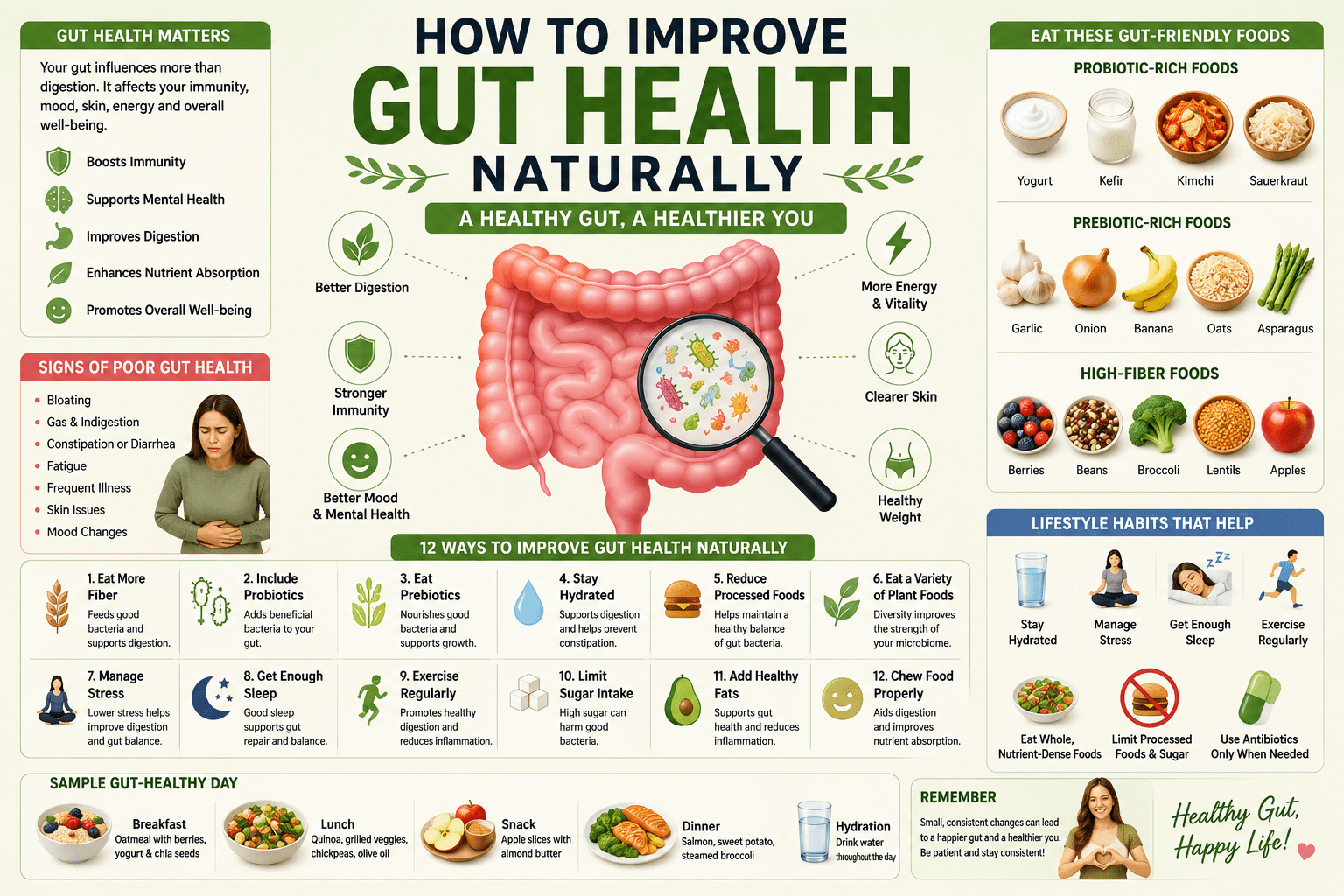
Gut health plays a vital role in overall well-being. Your digestive system does much more than process food—it influences your immune system, mental health, energy levels, metabolism, and even skin health. In recent years, researchers have discovered that maintaining a healthy gut microbiome is one of the most important factors for long-term health.
The good news is that improving gut health naturally doesn’t require expensive supplements or complicated diets. Simple lifestyle and dietary changes can make a significant difference in supporting a balanced digestive system.
In this guide, you’ll learn practical and science-backed ways to improve gut health naturally and promote better digestion.
What Is Gut Health?
Gut health refers to the balance and function of microorganisms living in your digestive tract, commonly known as the gut microbiome.
The gut contains trillions of bacteria, fungi, and other microbes that help:
- Digest food
- Absorb nutrients
- Support immunity
- Produce essential vitamins
- Protect against harmful bacteria
- Influence mood and brain function
A healthy microbiome contains a diverse range of beneficial bacteria that work together to maintain digestive health.
Signs of Poor Gut Health
An unhealthy gut may contribute to various symptoms, including:
- Frequent bloating
- Gas and indigestion
- Constipation
- Diarrhea
- Food sensitivities
- Fatigue
- Difficulty sleeping
- Skin issues
- Frequent illness
- Unexplained weight changes
If these symptoms persist, it’s important to consult a healthcare professional.
1. Eat More Fiber-Rich Foods
Fiber is one of the most important nutrients for gut health.
Benefits of Fiber
- Feeds beneficial gut bacteria
- Promotes regular bowel movements
- Supports digestive health
- Helps maintain healthy cholesterol levels
High-Fiber Foods
- Oats
- Whole grains
- Apples
- Pears
- Berries
- Lentils
- Chickpeas
- Beans
- Broccoli
- Carrots
Aim to include fiber-rich foods in every meal.
2. Include Probiotic Foods
Probiotics are beneficial bacteria that support a healthy gut microbiome.
Natural Sources of Probiotics
- Yogurt with live cultures
- Kefir
- Kimchi
- Sauerkraut
- Miso
- Tempeh
- Fermented vegetables
Regular consumption of probiotic-rich foods may improve digestion and support immune function.
3. Eat More Prebiotic Foods
Prebiotics are fibers that feed beneficial gut bacteria.
Best Prebiotic Foods
- Garlic
- Onions
- Leeks
- Bananas
- Asparagus
- Oats
- Chicory root
- Apples
Combining prebiotics and probiotics can help create a healthier gut environment.
4. Stay Hydrated
Water is essential for digestion and gut function.
Benefits of Hydration
- Supports nutrient absorption
- Helps prevent constipation
- Maintains healthy digestion
- Promotes regular bowel movements
Most adults should drink adequate water throughout the day based on activity level and climate.
5. Reduce Processed Foods
Highly processed foods can negatively affect gut bacteria diversity.
Foods to Limit
- Sugary snacks
- Soft drinks
- Fast food
- Refined carbohydrates
- Artificial sweeteners in excess
Replacing processed foods with whole foods can help improve gut microbiome balance.
6. Eat a Variety of Plant Foods
Research suggests that greater dietary diversity supports a more diverse microbiome.
Include Different:
- Fruits
- Vegetables
- Legumes
- Nuts
- Seeds
- Whole grains
Aim to consume a wide range of colorful plant foods each week.
7. Manage Stress Levels
The gut and brain are closely connected through the gut-brain axis.
Effects of Chronic Stress
- Digestive discomfort
- Changes in gut bacteria
- Increased inflammation
- Poor digestion
Stress-Reduction Techniques
- Meditation
- Deep breathing
- Yoga
- Walking
- Mindfulness exercises
Reducing stress can significantly improve digestive health.
8. Get Enough Sleep
Sleep plays a crucial role in maintaining a healthy gut microbiome.
Benefits of Quality Sleep
- Supports gut bacteria balance
- Reduces inflammation
- Improves digestion
- Enhances immune function
Aim for 7–9 hours of quality sleep each night.
9. Exercise Regularly
Physical activity benefits both gut health and overall wellness.
Benefits of Exercise
- Promotes healthy digestion
- Supports microbiome diversity
- Reduces inflammation
- Helps manage stress
Even moderate activities such as walking can positively impact gut health.
10. Limit Unnecessary Antibiotic Use
Antibiotics can be lifesaving when needed, but overuse may disrupt beneficial gut bacteria.
Tips
- Only use antibiotics when prescribed
- Follow medical advice carefully
- Focus on restoring gut health after antibiotic treatment
Always consult a healthcare provider regarding medication use.
11. Add Healthy Fats to Your Diet
Healthy fats may support gut health and reduce inflammation.
Healthy Fat Sources
- Avocados
- Olive oil
- Nuts
- Seeds
- Fatty fish
These foods also support heart and brain health.
12. Reduce Excess Sugar Intake
High sugar consumption may encourage the growth of harmful bacteria.
Healthier Alternatives
- Fresh fruits
- Natural sweeteners in moderation
- Whole-food snacks
Reducing added sugar benefits both gut and overall health.
Foods That Promote Gut Health
Excellent Gut-Friendly Foods
- Yogurt
- Kefir
- Kimchi
- Sauerkraut
- Oats
- Bananas
- Garlic
- Onions
- Apples
- Berries
- Leafy greens
- Lentils
- Beans
- Almonds
- Chia seeds
Including these foods regularly can help support a balanced microbiome.
Sample One-Day Gut Health Meal Plan
Breakfast
Oatmeal topped with berries, chia seeds, and yogurt.
Lunch
Grilled chicken with mixed vegetables and brown rice.
Snack
Apple slices with almond butter.
Dinner
Salmon, roasted vegetables, and quinoa.
Hydration
Drink water consistently throughout the day.
Common Mistakes That Hurt Gut Health
Eating Too Few Plant Foods
Lack of dietary variety can reduce microbiome diversity.
Excessive Sugar Consumption
Too much sugar may negatively affect beneficial bacteria.
Chronic Stress
Long-term stress can impair digestion.
Poor Sleep Habits
Sleep deprivation may disrupt gut balance.
Sedentary Lifestyle
Physical inactivity can contribute to digestive issues.
Benefits of a Healthy Gut
When your gut is functioning well, you may experience:
- Better digestion
- Increased energy
- Stronger immunity
- Improved mood
- Healthier skin
- Reduced bloating
- Better nutrient absorption
- Enhanced overall wellness
Final Thoughts
Improving gut health naturally is one of the best investments you can make in your overall well-being. By eating more fiber-rich foods, consuming probiotics and prebiotics, staying hydrated, exercising regularly, managing stress, and getting enough sleep, you can support a healthy digestive system and a thriving gut microbiome.
Remember that lasting improvements take time. Focus on small, sustainable habits and consistency rather than quick fixes. Over time, these healthy choices can lead to better digestion, stronger immunity, and improved overall health.











Leave a Reply