

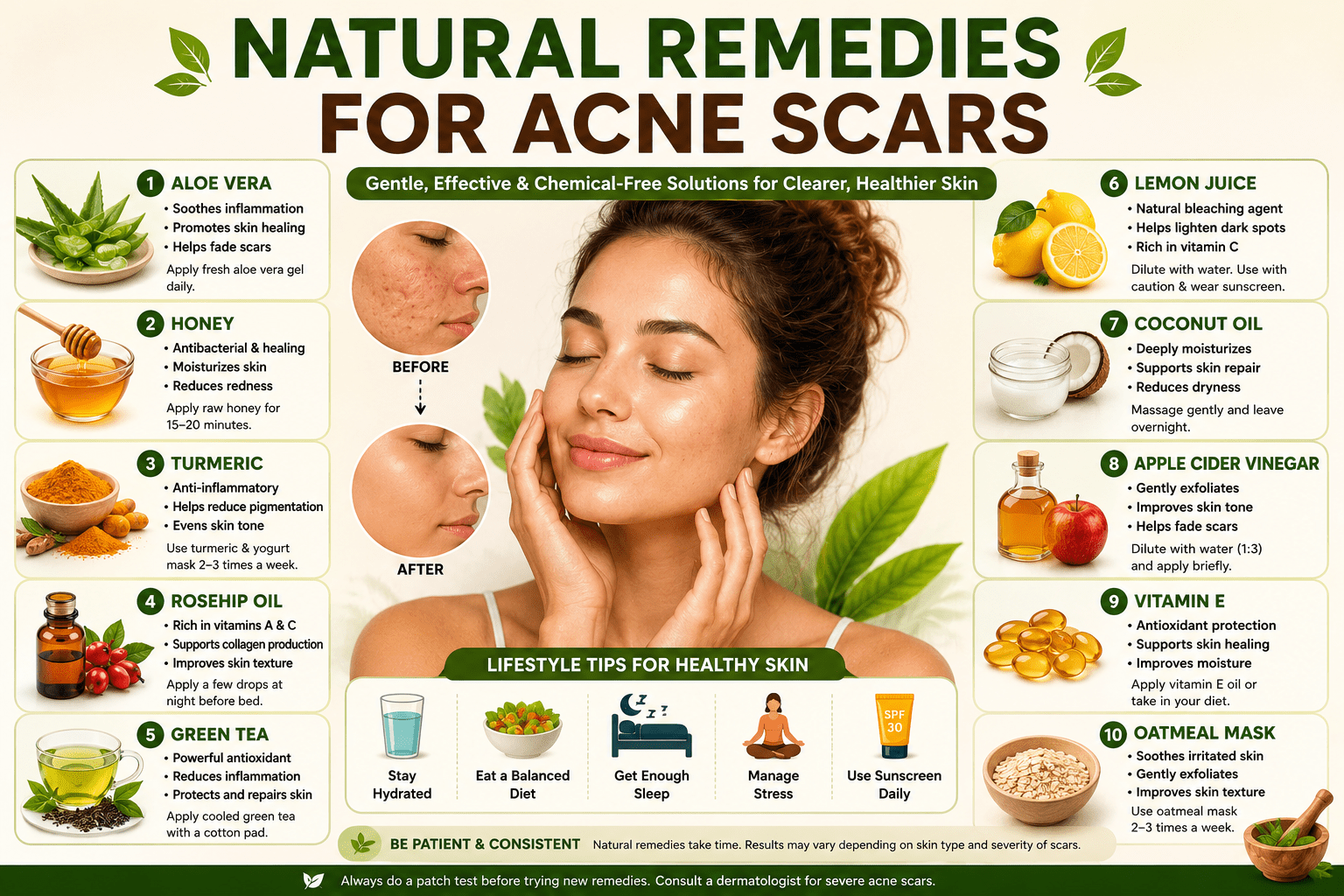
Acne scars can remain long after breakouts have healed, affecting skin texture and confidence. While professional treatments such as laser therapy and chemical peels can be effective, many people prefer natural remedies to improve the appearance of acne scars. Although natural solutions may not completely remove deep scars, they can help reduce discoloration, promote skin healing, and improve overall skin health.
This guide explores some of the most popular and effective natural remedies for acne scars, along with lifestyle habits that support healthier skin.
Understanding Acne Scars
Acne scars form when inflammation damages the skin’s deeper layers. During healing, the body produces collagen to repair the affected area. Too much or too little collagen production can result in visible scars.
Common Types of Acne Scars
Atrophic Scars
These appear as small depressions or pits in the skin.
Hypertrophic Scars
Raised scars caused by excess collagen production.
Post-Inflammatory Hyperpigmentation (PIH)
Dark spots left behind after acne heals, often mistaken for scars.
Understanding the type of scar can help determine the most suitable treatment approach.
Benefits of Natural Remedies
Natural remedies may help:
- Reduce redness and inflammation
- Improve skin hydration
- Support collagen production
- Fade dark spots
- Enhance overall skin texture
Consistency is key, as natural treatments often require several weeks or months to show visible improvements.
1. Aloe Vera Gel
Aloe vera is one of the most widely used natural skincare ingredients due to its soothing and healing properties.
Benefits
- Reduces inflammation
- Hydrates skin
- Supports wound healing
- May help fade pigmentation
How to Use
- Apply pure aloe vera gel directly to affected areas.
- Leave it on overnight or for at least 30 minutes.
- Rinse with lukewarm water.
Use daily for best results.
2. Honey
Honey has antibacterial and moisturizing properties that support skin repair.
Benefits
- Promotes healing
- Reduces redness
- Improves skin hydration
- Helps maintain healthy skin barrier function
How to Use
- Apply raw honey to acne scars.
- Leave for 15–20 minutes.
- Rinse gently with warm water.
Repeat several times per week.
3. Turmeric
Turmeric contains curcumin, a compound known for its anti-inflammatory and antioxidant effects.
Benefits
- Helps reduce pigmentation
- Calms irritated skin
- Supports skin healing
DIY Turmeric Mask
Mix:
- 1 teaspoon turmeric powder
- 1 tablespoon yogurt or honey
Apply for 10–15 minutes before rinsing.
Avoid overuse, as turmeric may temporarily stain the skin.
4. Rosehip Oil
Rosehip oil is rich in vitamins A and C, which support skin regeneration.
Benefits
- Improves skin texture
- Supports collagen production
- Helps fade dark marks
- Provides antioxidant protection
How to Use
Apply a few drops to clean skin before bedtime.
5. Lemon Juice (Use with Caution)
Lemon juice is often recommended for brightening skin due to its vitamin C content.
Potential Benefits
- May lighten hyperpigmentation
- Provides mild exfoliation
Important Warning
Lemon juice can irritate sensitive skin and increase sun sensitivity. Always dilute it and perform a patch test before use.
6. Green Tea Extract
Green tea contains powerful antioxidants that may help improve skin health.
Benefits
- Reduces inflammation
- Protects against environmental damage
- May improve overall skin appearance
How to Use
- Brew green tea and allow it to cool.
- Apply with a cotton pad.
- Leave on the skin before rinsing.
7. Coconut Oil
Coconut oil contains fatty acids that help moisturize and protect the skin.
Benefits
- Supports skin repair
- Reduces dryness
- Provides antioxidant properties
Note
Individuals with oily or acne-prone skin should use coconut oil cautiously, as it may clog pores.
8. Apple Cider Vinegar
Apple cider vinegar contains natural acids that may help exfoliate dead skin cells.
Potential Benefits
- Improves skin tone
- Promotes cell turnover
- Helps fade discoloration
How to Use
Always dilute before applying to the skin.
Mix:
- 1 part apple cider vinegar
- 3 parts water
Apply briefly and rinse thoroughly.
9. Vitamin E
Vitamin E is commonly used in skincare due to its antioxidant properties.
Benefits
- Supports skin healing
- Protects against free radical damage
- Improves skin moisture levels
Vitamin E-rich foods can also support healthy skin from within.
10. Oatmeal Masks
Oatmeal helps soothe irritated skin and gently exfoliate dead cells.
Benefits
- Reduces inflammation
- Improves skin texture
- Calms redness
Simple Oatmeal Mask
Mix:
- Ground oats
- Water or yogurt
Apply for 15 minutes before rinsing.
Lifestyle Habits That Support Scar Healing
Natural remedies work best when combined with healthy skincare practices.
Stay Hydrated
Drinking enough water supports skin repair and overall health.
Eat a Nutrient-Rich Diet
Focus on foods rich in:
- Vitamin C
- Vitamin E
- Zinc
- Omega-3 fatty acids
- Antioxidants
Get Enough Sleep
Sleep supports tissue repair and skin regeneration.
Manage Stress
Chronic stress may worsen inflammation and delay healing.
Protect Your Skin from the Sun
Sun exposure can darken acne scars and slow healing.
Sun Protection Tips
- Wear sunscreen daily
- Use SPF 30 or higher
- Reapply when outdoors
- Wear protective clothing
Sun protection is one of the most effective ways to prevent scars from becoming more noticeable.
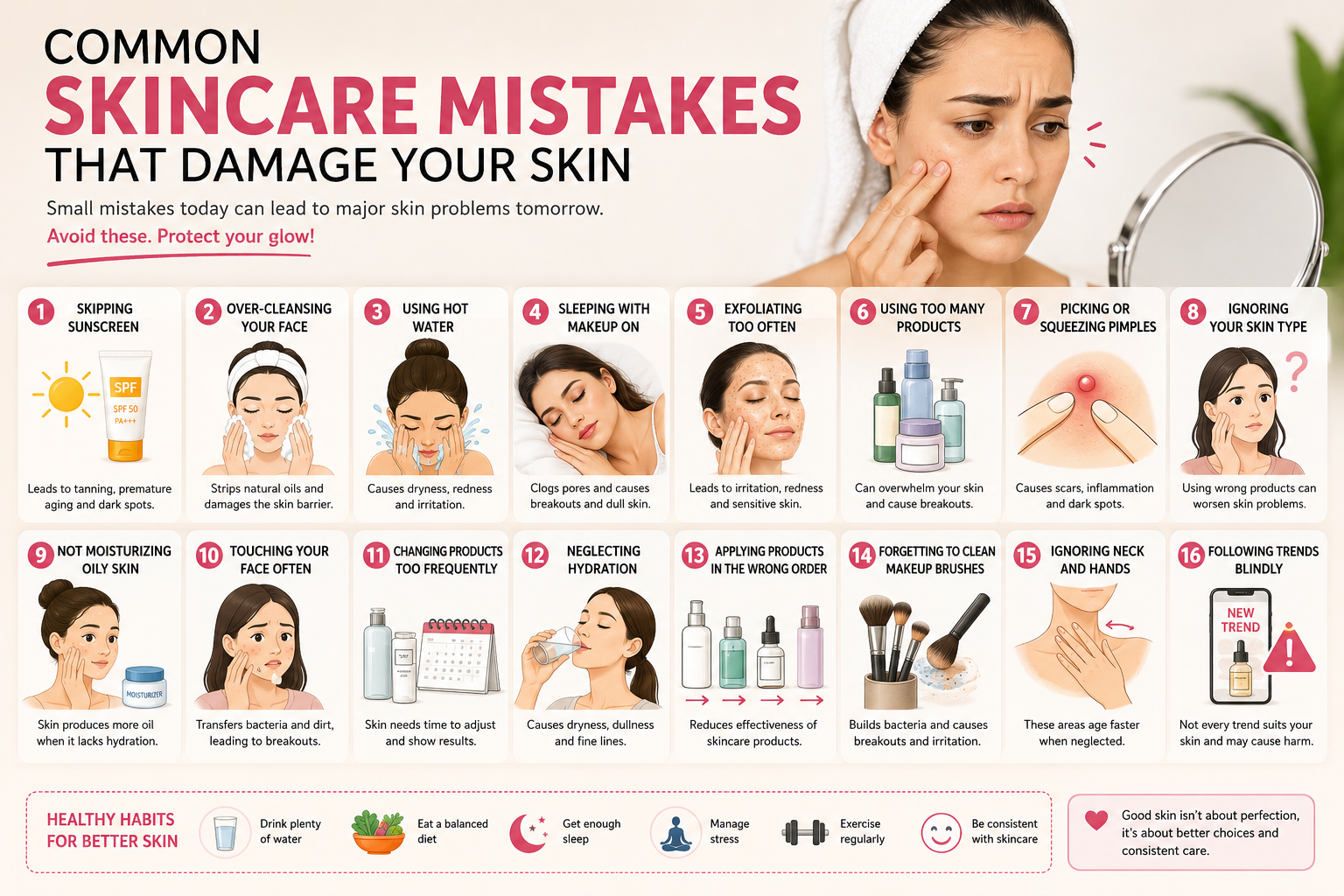
Skincare Habits to Avoid
To prevent worsening acne scars:
- Avoid picking or squeezing pimples
- Limit harsh scrubs
- Avoid excessive exfoliation
- Use gentle cleansers
- Introduce new products gradually
These habits help protect the skin barrier and support recovery.
When to Consider Professional Treatments
Natural remedies may not completely eliminate deep acne scars.
Consider professional treatment if you have:
- Deep pitted scars
- Severe scarring
- Persistent discoloration
- Significant texture irregularities
Dermatologists may recommend treatments such as microneedling, chemical peels, laser therapy, or prescription medications.
Conclusion
Natural remedies for acne scars can help improve skin texture, reduce pigmentation, and support the skin’s natural healing process. Ingredients such as aloe vera, honey, turmeric, rosehip oil, and green tea offer potential benefits when used consistently as part of a healthy skincare routine.
While natural treatments may require patience, combining them with proper hydration, nutrition, sun protection, and gentle skincare habits can significantly improve your skin’s appearance over time.
Also read Hair Growth Tips That Actually Work




Leave a Reply