

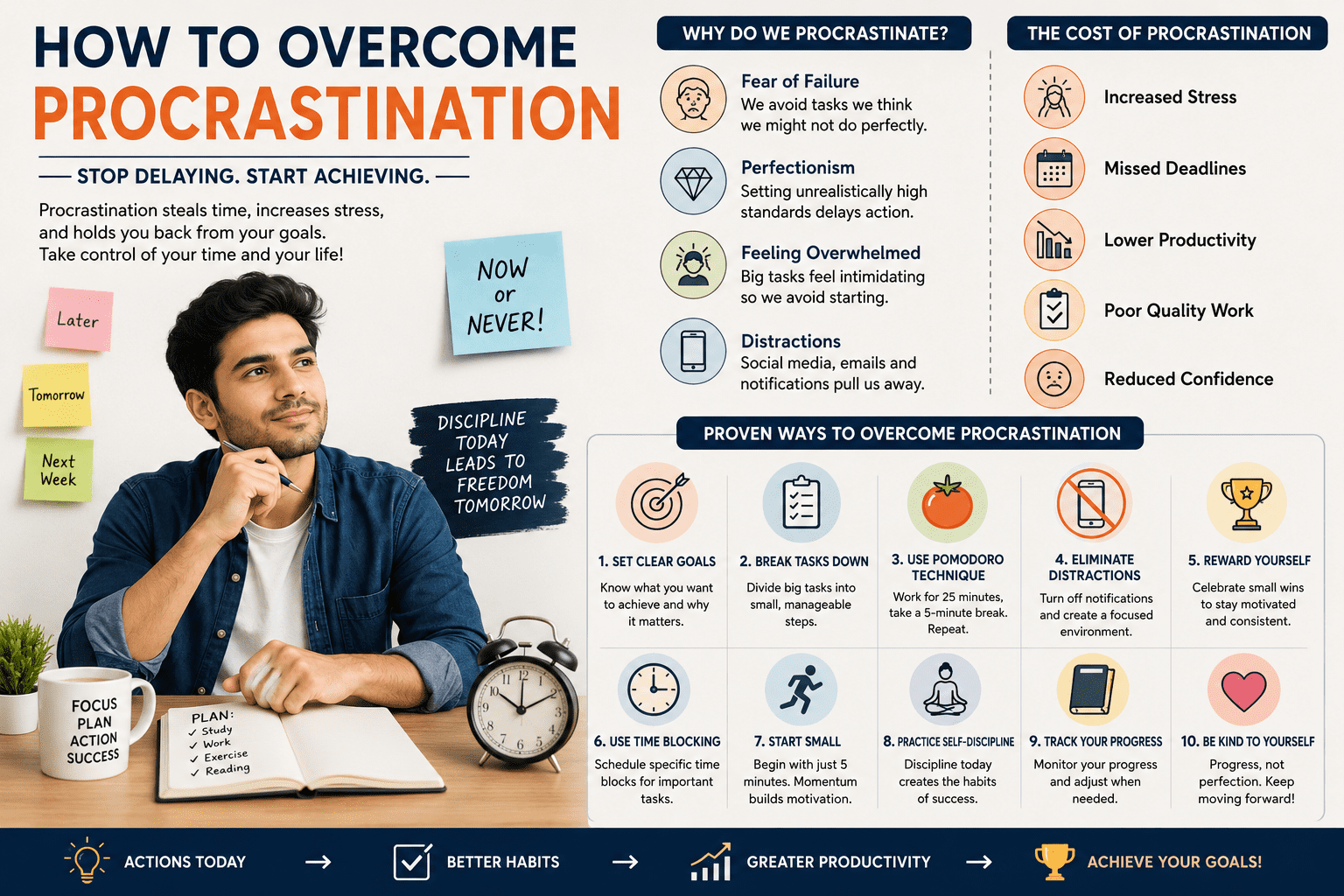
Have you ever delayed an important task, only to feel guilty and stressed later? If so, you’re not alone. Procrastination is a common challenge that affects students, professionals, entrepreneurs, and even highly successful individuals. While putting off tasks may provide temporary relief, it often leads to missed deadlines, lower productivity, increased stress, and reduced confidence.
The good news is that procrastination is not a permanent personality trait—it is a habit that can be changed. By understanding why you procrastinate and adopting practical strategies, you can improve your focus, complete tasks more efficiently, and achieve your goals with less stress.
This comprehensive guide explores the causes of procrastination, its effects, and proven techniques to overcome it.
What Is Procrastination?
Procrastination is the act of delaying or postponing tasks despite knowing there may be negative consequences. It often involves choosing short-term comfort over long-term benefits.
Examples of procrastination include:
- Scrolling social media instead of working
- Watching videos instead of studying
- Delaying important emails
- Putting off exercise
- Avoiding difficult conversations
- Waiting until the last minute to complete projects
Procrastination is usually linked to emotions such as fear, anxiety, perfectionism, or lack of motivation—not simply laziness.
Why Do People Procrastinate?
Understanding the root cause is the first step toward overcoming procrastination.
1. Fear of Failure
Many people delay tasks because they fear making mistakes or producing imperfect results.
2. Perfectionism
Perfectionists often postpone work because they believe everything must be flawless before starting or finishing.
3. Feeling Overwhelmed
Large or complex tasks can seem intimidating, making it difficult to know where to begin.
4. Lack of Motivation
If a task feels boring, repetitive, or unimportant, you’re more likely to delay it.
5. Poor Time Management
Without a clear schedule or priorities, it’s easy to waste valuable time on less important activities.
6. Digital Distractions
Constant notifications, social media, online entertainment, and messaging apps compete for your attention throughout the day.
7. Decision Fatigue
Making too many decisions during the day can reduce mental energy and increase the tendency to postpone important work.
The Hidden Costs of Procrastination
Although procrastination may provide temporary comfort, it often creates long-term problems.
Common consequences include:
- Increased stress
- Missed deadlines
- Lower productivity
- Poor work quality
- Reduced confidence
- Anxiety
- Sleep problems
- Financial losses
- Damaged professional reputation
Breaking the procrastination cycle can improve both your productivity and overall well-being.
Signs You’re Procrastinating Too Much
You may have a procrastination habit if you:
- Frequently delay important tasks
- Miss deadlines regularly
- Feel guilty about unfinished work
- Spend excessive time on social media
- Constantly tell yourself, “I’ll do it later”
- Rush projects at the last minute
- Avoid difficult or uncomfortable tasks
- Feel overwhelmed by simple responsibilities
How to Overcome Procrastination
1. Break Large Tasks into Smaller Steps
Large projects often feel overwhelming.
Instead of focusing on the entire project, divide it into smaller, manageable tasks.
Example:
Instead of:
“Write a 2,000-word article.”
Break it into:
- Research
- Create outline
- Write introduction
- Draft sections
- Edit
- Proofread
Completing small steps builds momentum.
2. Use the Two-Minute Rule
If a task takes less than two minutes, do it immediately.
Examples include:
- Replying to an email
- Organizing your desk
- Scheduling an appointment
- Filing documents
Small wins reduce mental clutter.
3. Set Clear Priorities
Use the Eisenhower Matrix to organize tasks:
- Urgent and Important
- Important but Not Urgent
- Urgent but Less Important
- Neither Urgent nor Important
Focus on high-impact activities first.
4. Eliminate Distractions
Create an environment that supports focus.
Helpful strategies include:
- Turning off notifications
- Closing unnecessary browser tabs
- Using website blockers
- Keeping your phone out of reach
- Working in a quiet space
5. Use Time Blocking
Assign specific blocks of time for focused work.
Example:
- 9:00–10:30 AM: Deep work
- 10:30–10:45 AM: Break
- 10:45–12:00 PM: Emails
- 2:00–3:30 PM: Project work
A structured schedule reduces decision fatigue.
6. Try the Pomodoro Technique
Work for:
- 25 minutes of focused work
- 5-minute break
After four sessions, take a longer 15–30 minute break.
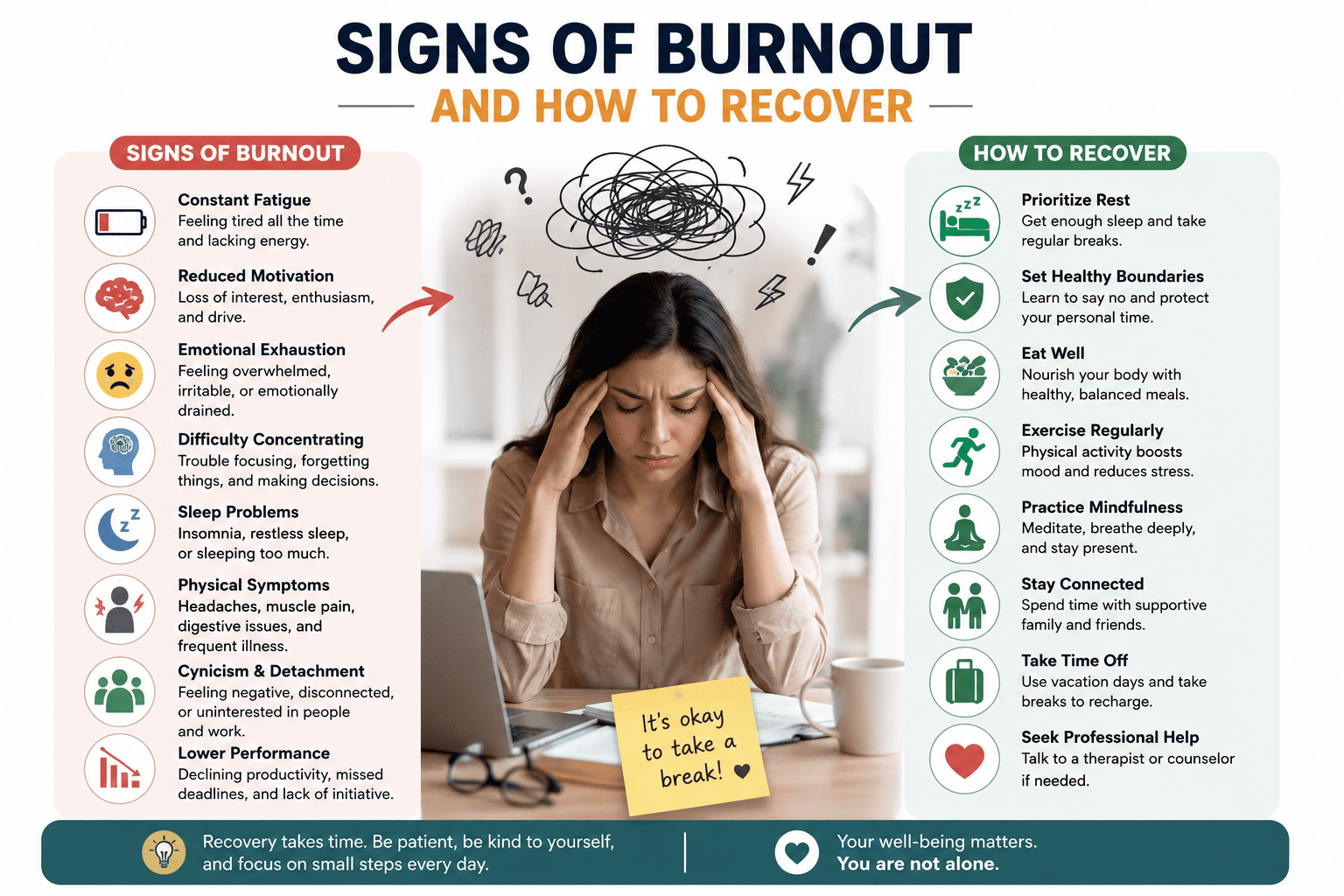
This technique helps maintain concentration while preventing burnout.
7. Stop Waiting for Motivation
Action often creates motivation—not the other way around.
Commit to working for just five minutes. Once you begin, it’s usually easier to continue.
8. Accept Imperfection
Perfectionism often fuels procrastination.
Aim for progress rather than perfection.
A completed task can always be improved later.
9. Reward Yourself
Positive reinforcement encourages consistent progress.
Examples include:
- Taking a short walk
- Enjoying your favorite snack
- Watching an episode of a TV show
- Reading a book
- Spending time with friends
Celebrate milestones, not just completed projects.
10. Build Consistent Habits
Long-term productivity depends on routines rather than motivation.
Healthy habits include:
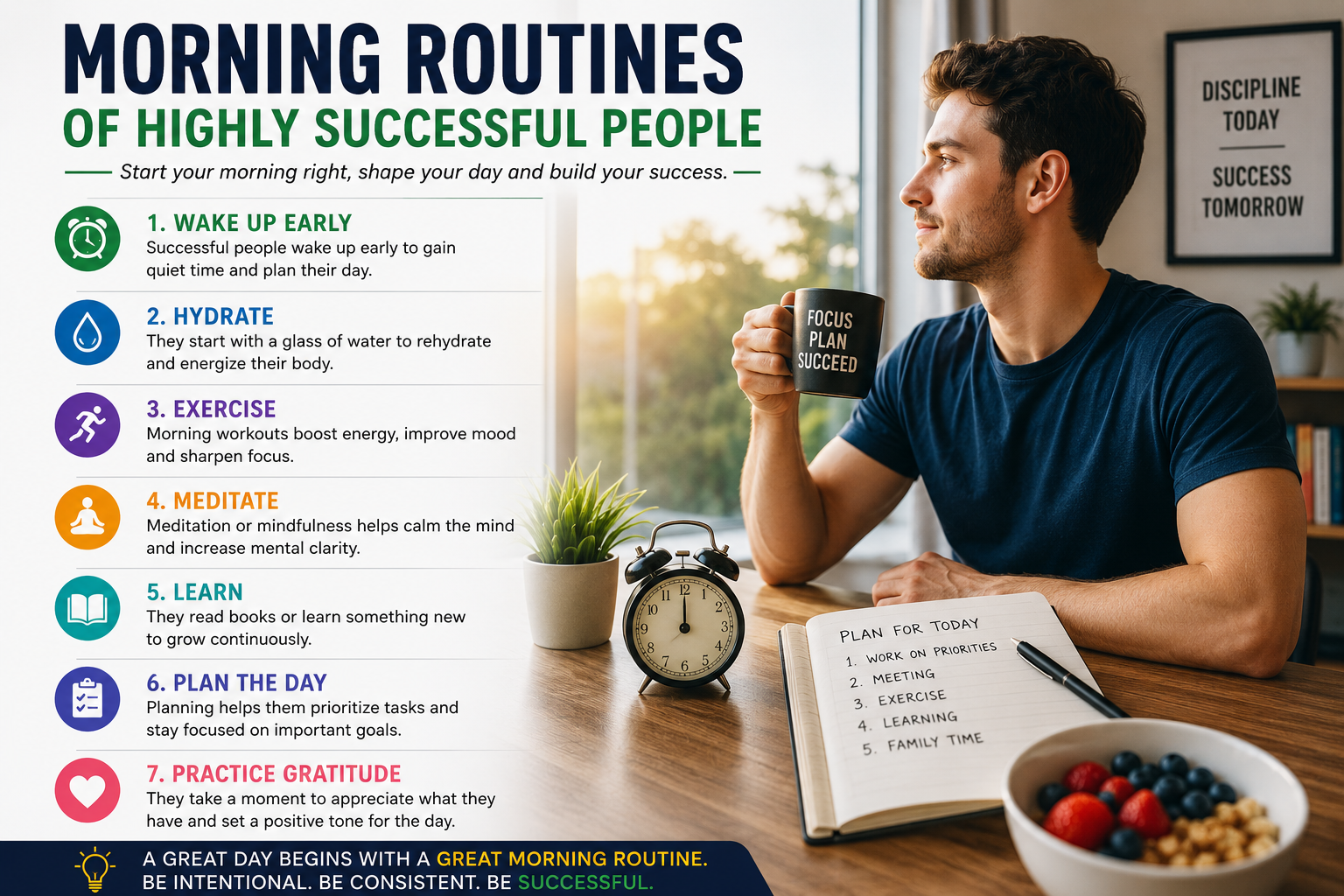
- Planning tomorrow’s tasks today
- Starting work at the same time daily
- Reviewing weekly goals
- Tracking progress
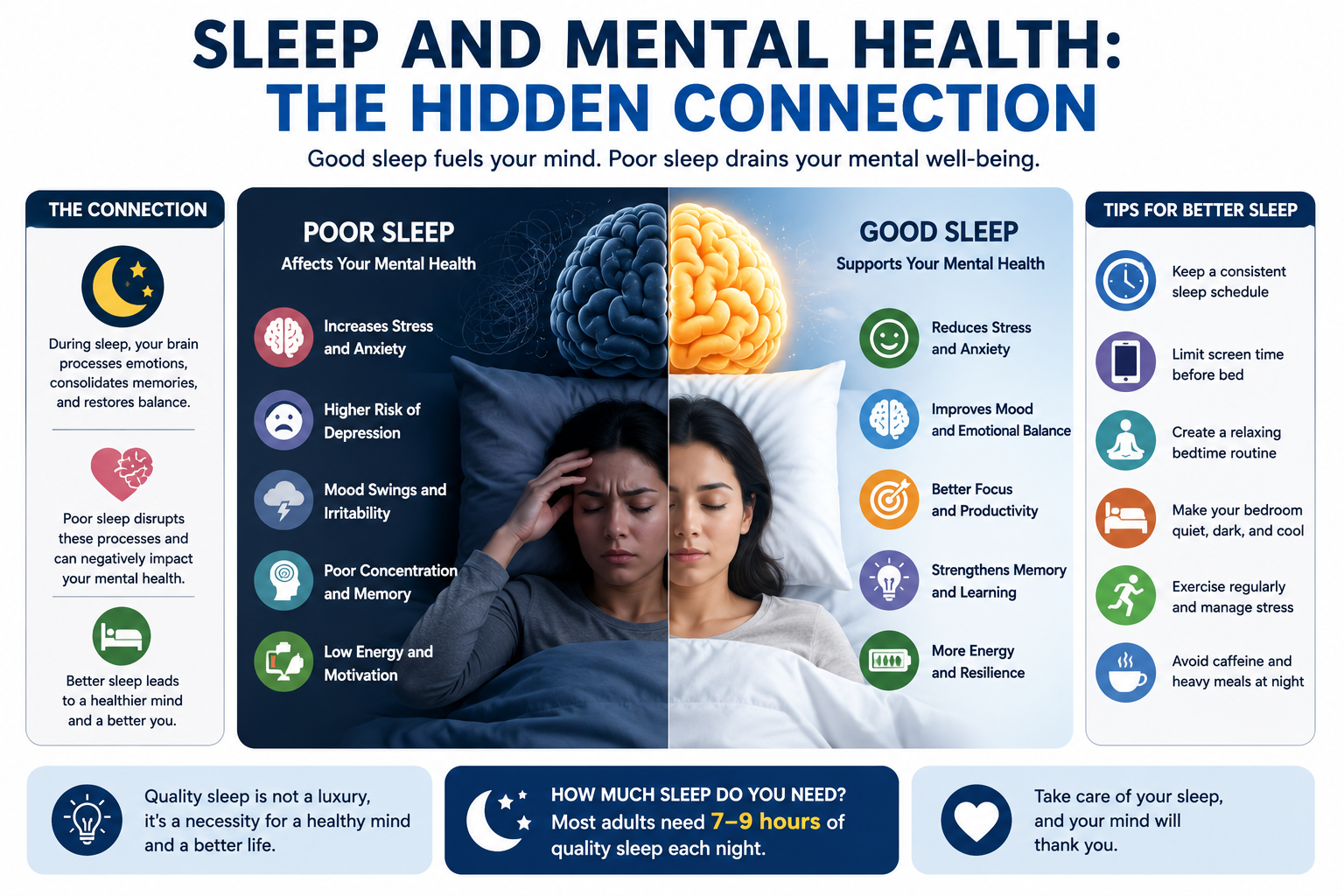
- Maintaining a healthy sleep schedule
Consistency beats occasional bursts of motivation.
Tools That Help Reduce Procrastination
Consider using productivity tools such as:
- Task management apps
- Calendar reminders
- Habit trackers
- Focus timers
- Note-taking apps
- Digital planners
The best tool is one that fits naturally into your daily routine.
Lifestyle Habits That Improve Focus
Healthy daily habits support better concentration and productivity.
Prioritize:
- 7–9 hours of sleep
- Regular exercise
- Balanced nutrition
- Hydration
- Mindfulness or meditation
- Regular breaks
- Time outdoors
A healthy body supports a focused mind.
Common Mistakes to Avoid
Avoid these habits that reinforce procrastination:
- Multitasking
- Waiting for the “perfect” moment
- Setting unrealistic goals
- Comparing yourself to others
- Ignoring breaks
- Overloading your schedule
- Trying to do everything at once
Small, consistent progress is more sustainable.
Frequently Asked Questions (FAQs)
Why do people procrastinate?
People procrastinate for many reasons, including fear of failure, perfectionism, feeling overwhelmed, lack of motivation, poor time management, and digital distractions.
Is procrastination a sign of laziness?
Not necessarily. Procrastination is often driven by emotional factors such as stress, anxiety, or perfectionism rather than a lack of effort or ambition.
What is the fastest way to stop procrastinating?
Start with the smallest possible action. Breaking a task into manageable steps and working for just five minutes can make it easier to build momentum.
Does the Pomodoro Technique help?
Yes. Many people find that alternating focused work sessions with short breaks improves concentration and reduces mental fatigue.
Can better sleep reduce procrastination?
Yes. Quality sleep improves focus, decision-making, and self-control, making it easier to stay productive.
Final Thoughts
Procrastination is a habit—not a permanent trait. While it may offer temporary comfort, delaying important tasks often increases stress, reduces productivity, and prevents personal growth.
The key to overcoming procrastination is taking small, consistent actions. Break large tasks into manageable steps, eliminate distractions, create healthy routines, and focus on progress rather than perfection. Over time, these habits can transform the way you work, helping you become more productive, confident, and successful.
Remember, the hardest part is often getting started. Once you take the first step, momentum becomes your greatest ally.
FAQ
Q1: What causes procrastination?
Procrastination is commonly caused by fear of failure, perfectionism, poor time management, feeling overwhelmed, lack of motivation, and digital distractions.
Q2: How can I stop procrastinating immediately?
Start with a small task, use the two-minute rule, remove distractions, and commit to working for just five minutes to build momentum.
Q3: Is procrastination harmful?
Yes. Chronic procrastination can increase stress, reduce productivity, lower work quality, and negatively affect mental well-being.
Q4: What is the Pomodoro Technique?
The Pomodoro Technique involves working for 25 minutes followed by a 5-minute break, helping improve focus and prevent burnout.
Q5: Can good habits reduce procrastination?
Absolutely. Consistent routines, healthy sleep, exercise, planning, and time management significantly reduce procrastination over time.
Also read Digital Detox: Why You Need One | Benefits, Tips & Complete Guide







Leave a Reply