

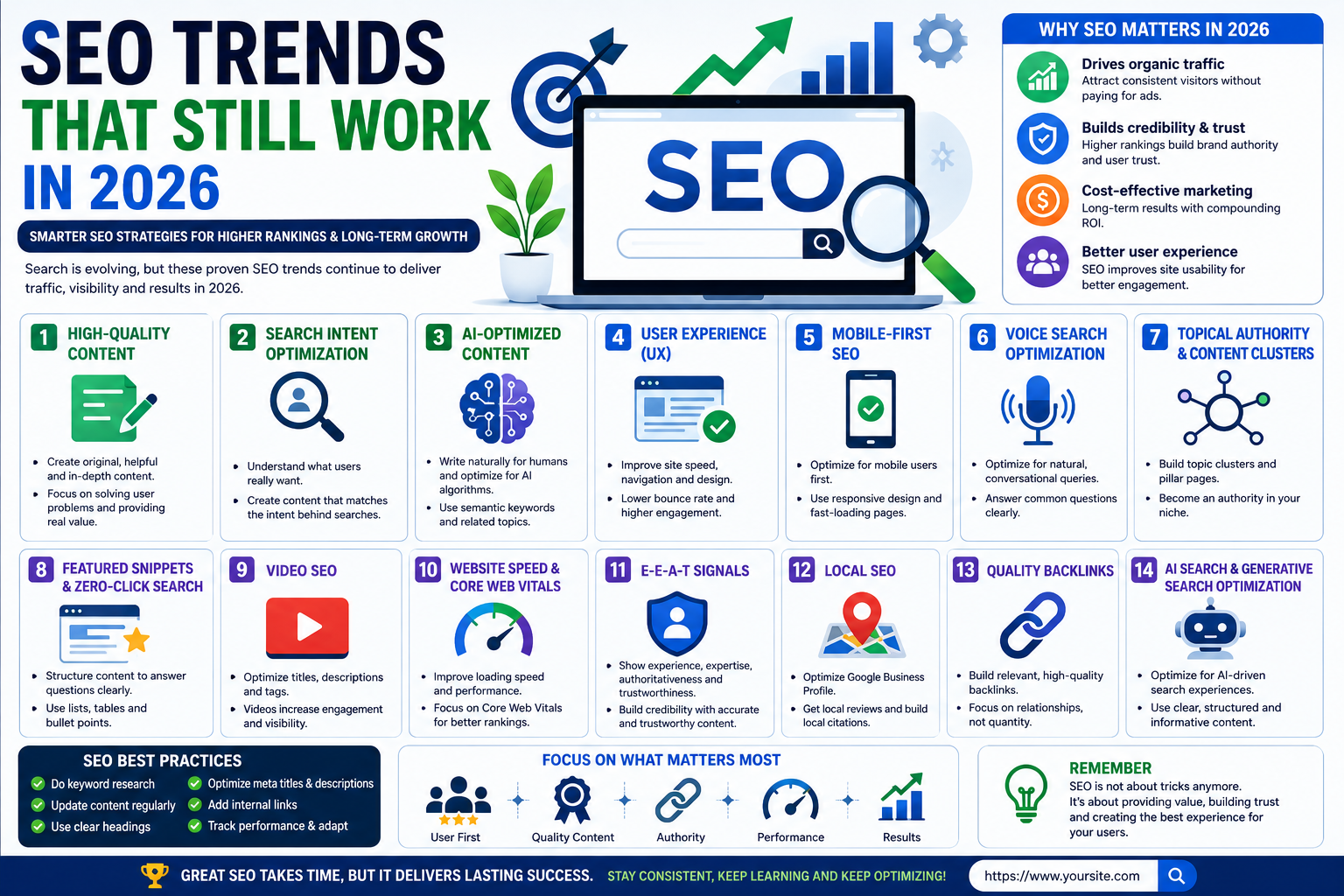
Search Engine Optimization continues to evolve rapidly as search engines become smarter and more focused on user experience. In 2026, SEO is no longer just about stuffing keywords into articles or building random backlinks. Modern SEO focuses on delivering high-quality content, improving website performance, understanding user intent, and adapting to AI-driven search algorithms.
Businesses, bloggers, content creators, and digital marketers are competing harder than ever to gain visibility on search engines like Google. With artificial intelligence influencing search rankings and user behavior changing constantly, understanding the latest SEO trends is essential for online success.
Although many outdated SEO techniques no longer work, several powerful strategies continue delivering excellent results in 2026.
In this article, we will explore the SEO trends that still work in 2026 and how you can use them to improve website rankings, increase traffic, and grow your online presence.
Why SEO Is Still Important in 2026
SEO remains one of the most effective long-term digital marketing strategies.
Benefits of SEO
Good SEO helps websites:
- Increase organic traffic
- Improve online visibility
- Build brand authority
- Generate leads and sales
- Reduce advertising costs
- Improve user experience
Unlike paid advertising, SEO can continue driving traffic for months or years after content is published.
1. High-Quality Content Still Dominates SEO
Content quality remains the foundation of successful SEO.
What Search Engines Prioritize
Modern search engines favor content that is:
- Helpful
- Accurate
- Original
- Well-structured
- User-focused
- Easy to understand
Thin, low-value, or AI-spam content struggles to rank in 2026.
Content Depth Matters
Detailed articles that thoroughly answer user questions tend to perform better than short, generic posts.
Long-form content often ranks higher because it provides more value and context.
2. Search Intent Optimization
Understanding user intent has become more important than exact keyword matching.
Types of Search Intent
Search engines analyze whether users want:
- Information
- Product recommendations
- Services
- Tutorials
- Comparisons
- Local businesses
Successful SEO content aligns closely with what users actually want.
Example
A person searching for:
“Best smartphones under $500”
expects product recommendations, not a general explanation of smartphones.
Matching intent improves rankings significantly.
3. AI-Optimized SEO Content
Artificial intelligence is changing how search engines evaluate content.
AI and Search Algorithms
Modern search systems analyze:
- Content relevance
- Readability
- Topic authority
- User engagement
- Semantic meaning
Keyword stuffing is no longer effective.
Human + AI Collaboration
Many marketers now use AI tools for:
- Content research
- SEO optimization
- Outline generation
- Topic clustering
However, human creativity and expertise remain essential for high-quality content.
4. User Experience (UX) Is a Major Ranking Factor
Google and other search engines prioritize websites that offer excellent user experiences.
Important UX Factors
- Fast loading speed
- Mobile responsiveness
- Easy navigation
- Clean design
- Low bounce rates
- Secure browsing
Websites that frustrate users often lose rankings.
5. Mobile-First SEO
Most internet users now browse primarily on smartphones.
Why Mobile Optimization Matters
Search engines prioritize mobile-friendly websites because:
- Mobile traffic dominates internet usage
- Faster mobile experiences improve engagement
- Responsive design improves accessibility
Mobile SEO Best Practices
- Use responsive layouts
- Optimize images
- Improve page speed
- Simplify navigation
- Avoid intrusive popups
Mobile optimization is no longer optional.
6. Voice Search Optimization
Voice assistants and smart devices continue growing in popularity.
How Voice Search Changes SEO
Voice searches are often:
- Longer
- Conversational
- Question-based
Example:
Instead of typing:
“weather Hyderabad”
Users may ask:
“What’s the weather like in Hyderabad today?”
Voice SEO Tips
- Use natural language
- Answer common questions
- Optimize for featured snippets
- Include FAQ sections
Voice search optimization is becoming increasingly important.
7. Topical Authority and Content Clusters
Search engines reward websites that demonstrate expertise in specific topics.
What Is Topical Authority?
Topical authority means consistently publishing high-quality content around related subjects.
Example:
A technology website should publish articles about:
- AI tools
- Cloud computing
- Cybersecurity
- Smart gadgets
- Software trends
This helps search engines understand the site’s expertise.
Content Clustering Strategy
Successful websites use pillar content and related supporting articles to strengthen SEO authority.
8. Featured Snippets and Zero-Click Searches
Featured snippets remain valuable for gaining visibility.
What Are Featured Snippets?
These are highlighted answers displayed at the top of search results.
They often include:
- Definitions
- Lists
- Steps
- Quick answers
How to Optimize for Snippets
- Use headings clearly
- Answer questions directly
- Use bullet points
- Write concise explanations
Featured snippets improve visibility and click-through rates.
9. Video SEO Continues Growing
Video content plays a major role in modern SEO strategies.
Why Video Matters
Videos increase:
- User engagement
- Time on site
- Social sharing
- Search visibility
Platforms like YouTube remain highly influential in search traffic generation.
Video SEO Tips
- Use keyword-rich titles
- Add descriptions and captions
- Create engaging thumbnails
- Optimize video length
Video content is especially effective for tutorials and reviews.
10. Website Speed and Core Web Vitals
Page speed remains a strong ranking factor.
Why Speed Matters
Slow websites cause:
- Higher bounce rates
- Lower conversions
- Poor user experience
Core Web Vitals
Search engines evaluate:
- Loading performance
- Visual stability
- Interactivity
Fast websites generally perform better in rankings.
11. E-E-A-T Signals
Google increasingly values:
- Experience
- Expertise
- Authoritativeness
- Trustworthiness
How to Improve E-E-A-T
- Publish accurate information
- Use credible sources
- Build author profiles
- Maintain website security
- Gain positive reputation signals
Trust is becoming essential in SEO success.
12. Local SEO Still Works Extremely Well
Local businesses continue benefiting from local search optimization.
Local SEO Best Practices
- Optimize Google Business profiles
- Use location-based keywords
- Collect customer reviews
- Build local citations
- Improve mobile experience
Local SEO is highly valuable for small businesses and service providers.
13. Backlinks Still Matter — But Quality Over Quantity
Backlinks remain important ranking signals.
Modern Link Building
Search engines prioritize:
- Relevant backlinks
- Authoritative websites
- Natural link profiles
Spammy backlink strategies are risky and ineffective.
Effective Link Building Methods
- Guest posting
- High-quality content
- Industry partnerships
- Digital PR
- Resource pages
Strong backlinks continue improving domain authority.
14. AI Search and Generative Search Optimization
AI-powered search experiences are changing how users discover information.
SEO for AI Search Systems
Modern SEO now involves:
- Clear content structure
- Conversational formatting
- Accurate answers
- Semantic relevance
Content optimized for AI-driven search systems may gain more visibility in future search experiences.
Common SEO Mistakes to Avoid
Keyword Stuffing
Overusing keywords reduces readability and may hurt rankings.
Ignoring User Experience
Poor design and slow websites negatively impact SEO.
Publishing Thin Content
Short, low-value articles rarely rank well.
Using Black-Hat SEO
Manipulative SEO tactics can result in penalties.
Future of SEO Beyond 2026
SEO will continue evolving alongside AI and changing search behaviors.
Future SEO Trends
- More AI-powered search
- Visual search optimization
- Personalized search experiences
- Advanced voice search
- Search beyond traditional browsers
Adaptability will remain essential for SEO success.
Conclusion
SEO in 2026 is focused on quality, user experience, relevance, and trust rather than outdated ranking tricks. High-quality content, mobile optimization, fast website performance, topical authority, AI-friendly formatting, and strong user engagement continue to drive successful SEO strategies.
Businesses and content creators who adapt to modern SEO trends can achieve long-term organic growth, higher rankings, and stronger online visibility.
As search technology continues evolving, websites that prioritize users first while staying updated with SEO best practices will continue succeeding in the competitive digital landscape.












Leave a Reply