

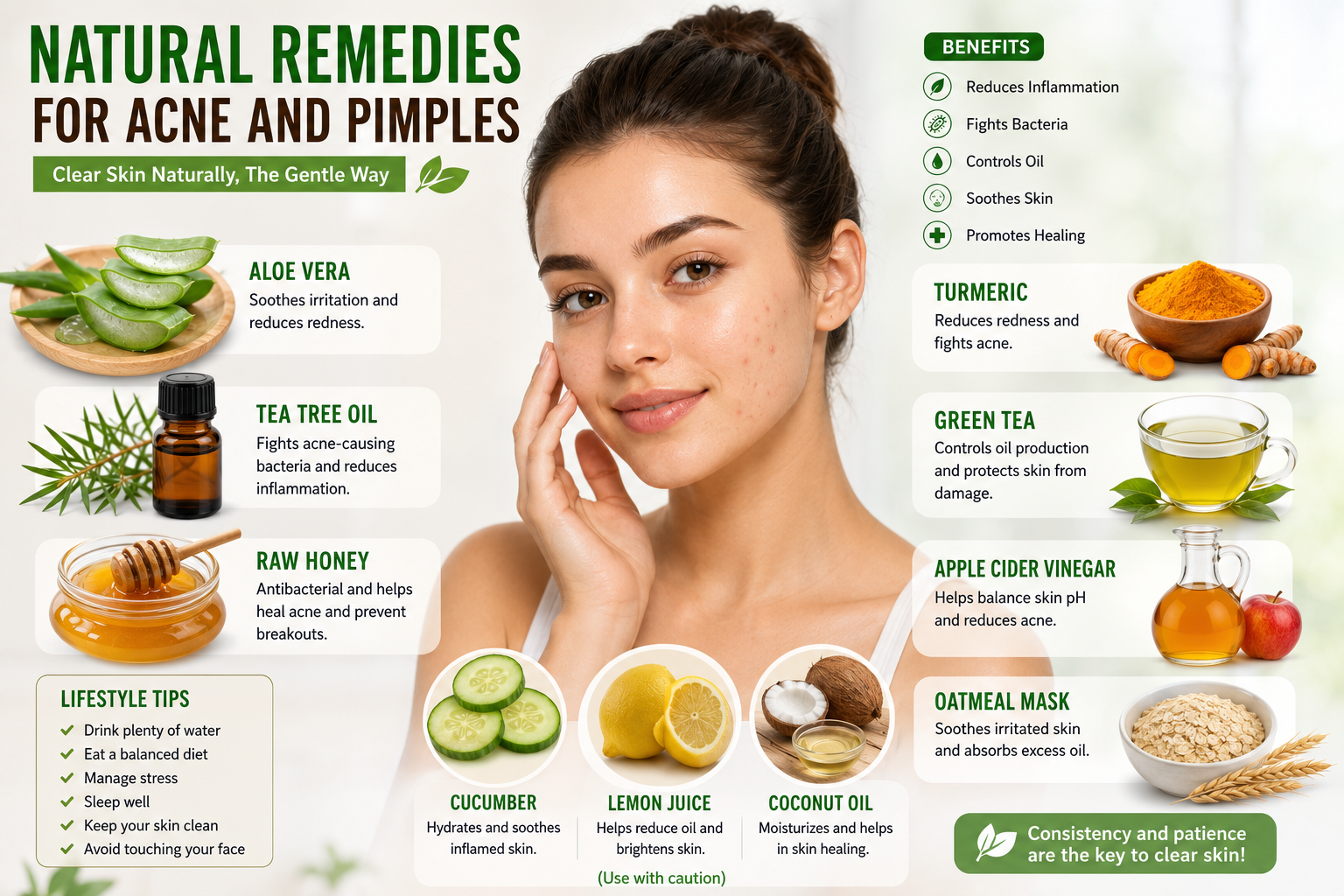
Acne and pimples are among the most common skin concerns affecting people of all ages. Whether you’re a teenager dealing with hormonal changes or an adult facing occasional breakouts, acne can impact your confidence and overall skin health. While there are numerous over-the-counter treatments available, many people prefer natural remedies to manage acne due to their gentle and cost-effective nature.
Natural remedies can help reduce inflammation, control excess oil, fight acne-causing bacteria, and support the skin’s healing process. In this comprehensive guide, we’ll explore some of the most effective natural remedies for acne and pimples, along with lifestyle tips to maintain healthy, clear skin.
Understanding Acne and Pimples
Acne occurs when hair follicles become clogged with oil (sebum), dead skin cells, and bacteria. This blockage can result in blackheads, whiteheads, pimples, and even cystic acne.
Common Causes of Acne
- Excess oil production
- Hormonal fluctuations
- Stress
- Poor skincare habits
- Unhealthy diet
- Genetics
- Certain medications
Understanding the root cause of your acne can help you choose the most effective treatment approach.
Benefits of Using Natural Remedies
Many natural ingredients contain antibacterial, anti-inflammatory, and antioxidant properties that can help improve skin health.
Advantages Include:
- Fewer harsh chemicals
- Lower risk of side effects
- Affordable and easily available
- Suitable for sensitive skin
- Supports overall skin wellness
However, natural remedies may take longer to show results compared to medical treatments.
Top Natural Remedies for Acne and Pimples
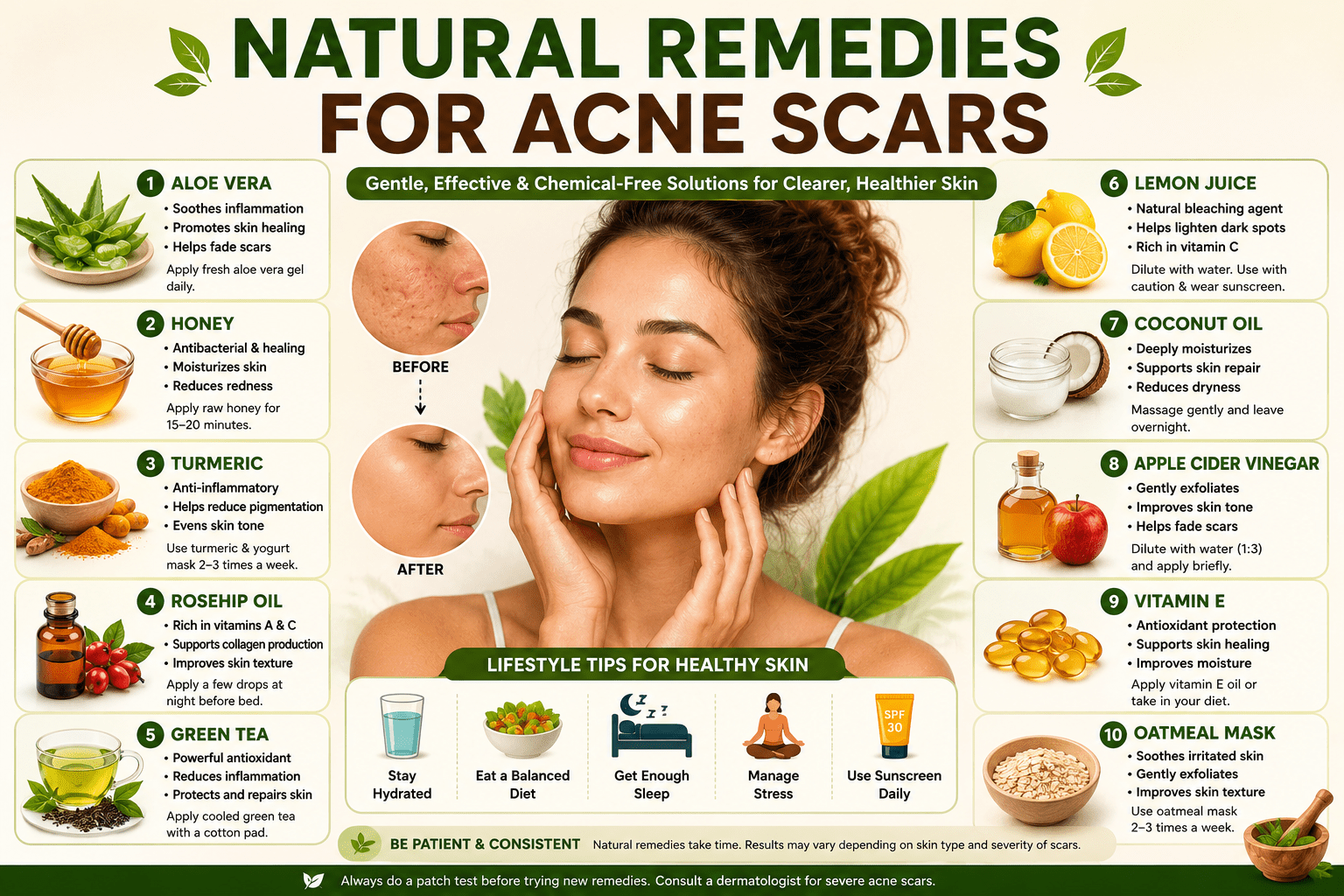
1. Aloe Vera
Aloe vera is widely known for its soothing and healing properties. It contains compounds that help reduce inflammation and support skin repair.
Benefits
- Calms irritated skin
- Reduces redness
- Promotes healing of acne scars
- Provides lightweight hydration
How to Use
Apply fresh aloe vera gel directly to affected areas and leave it on overnight before rinsing in the morning.
2. Tea Tree Oil
Tea tree oil is one of the most popular natural treatments for acne due to its antibacterial properties.
Benefits
- Fights acne-causing bacteria
- Reduces swelling
- Helps dry out pimples
- Controls excess oil
How to Use
Dilute a few drops of tea tree oil with a carrier oil and apply it directly to pimples using a cotton swab.
Note: Always perform a patch test before use.
3. Raw Honey
Honey has natural antibacterial and anti-inflammatory properties that can help combat acne.
Benefits
- Reduces inflammation
- Supports wound healing
- Moisturizes skin
- Helps prevent bacterial growth
How to Use
Apply a thin layer of raw honey to the face as a mask. Leave it on for 15–20 minutes before rinsing with warm water.
4. Turmeric
Turmeric contains curcumin, a powerful antioxidant and anti-inflammatory compound.
Benefits
- Reduces acne-related redness
- Helps fight bacteria
- Brightens skin
- Supports healing
How to Use
Mix turmeric powder with honey or yogurt to create a face mask. Apply for 10–15 minutes and rinse thoroughly.
5. Green Tea
Green tea contains antioxidants known as catechins that help reduce inflammation and excess oil production.
Benefits
- Controls sebum production
- Fights bacteria
- Reduces redness
- Protects skin from damage
How to Use
Brew green tea, allow it to cool, and apply it to your face using a cotton pad or spray bottle.
6. Apple Cider Vinegar
Apple cider vinegar contains organic acids that may help kill acne-causing bacteria.
Benefits
- Exfoliates dead skin cells
- Reduces bacteria
- Helps balance skin pH
How to Use
Mix one part apple cider vinegar with three parts water and apply sparingly to affected areas.
Caution: Avoid overuse, as it may cause irritation.
7. Oatmeal Mask
Oatmeal is excellent for soothing irritated and inflamed skin.
Benefits
- Reduces redness
- Absorbs excess oil
- Calms inflammation
- Gently exfoliates
How to Use
Mix cooked oatmeal with honey and apply it as a face mask for 15 minutes.
8. Cucumber
Cucumber provides hydration and cooling effects that help calm inflamed skin.
Benefits
- Soothes irritation
- Reduces puffiness
- Hydrates skin
- Refreshes complexion
How to Use
Apply cucumber slices directly to the skin or blend them into a face mask.
9. Lemon Juice (Use with Caution)
Lemon contains citric acid that may help reduce oil and exfoliate skin.
Potential Benefits
- Brightens skin
- Removes excess oil
- Provides mild antibacterial action
Important Warning
Lemon juice can cause irritation and increased sun sensitivity. Always dilute it and avoid direct sunlight after use.
10. Coconut Oil (For Certain Skin Types)
Coconut oil contains lauric acid, which has antimicrobial properties.
Benefits
- Moisturizes skin
- Supports healing
- Reduces inflammation
Note
People with oily or acne-prone skin may find coconut oil too heavy, so use cautiously.
Lifestyle Changes to Prevent Acne Naturally
Natural remedies work best when combined with healthy habits.
Maintain a Consistent Skincare Routine
- Wash your face twice daily
- Use non-comedogenic products
- Remove makeup before bed
- Avoid harsh scrubbing
Stay Hydrated
Drinking enough water helps maintain healthy skin and supports the body’s natural detoxification processes.
Recommended Intake
Aim for at least 8–10 glasses of water per day.
Follow a Healthy Diet
Certain foods may contribute to acne flare-ups.
Foods to Eat
- Fruits
- Vegetables
- Whole grains
- Nuts and seeds
- Fatty fish
Foods to Limit
- Sugary snacks
- Processed foods
- Excess dairy
- Sugary beverages
Manage Stress
Stress can increase hormone levels that trigger acne breakouts.
Stress Reduction Techniques
- Meditation
- Yoga
- Deep breathing exercises
- Regular physical activity
- Adequate sleep
Avoid Touching Your Face
Your hands carry bacteria and oils that can worsen acne.
Helpful Tips
- Keep hands clean
- Avoid picking pimples
- Change pillowcases regularly
- Clean mobile phone screens frequently
When to See a Dermatologist
While natural remedies can be effective for mild acne, professional treatment may be necessary if you experience:
- Severe acne
- Painful cysts
- Persistent breakouts
- Significant scarring
- Emotional distress related to acne
A dermatologist can recommend customized treatments for your specific skin concerns.
Common Mistakes to Avoid
Overwashing the Face
Excessive cleansing can strip the skin’s natural oils and worsen acne.
Using Too Many Remedies at Once
Combining multiple treatments may irritate the skin and increase inflammation.
Expecting Immediate Results
Natural remedies require consistency and patience. Most people notice improvements after several weeks of regular use.
Conclusion
Natural remedies for acne and pimples can be an effective way to achieve clearer, healthier skin without relying heavily on harsh chemicals. Ingredients like aloe vera, tea tree oil, honey, turmeric, and green tea offer powerful benefits that help reduce inflammation, fight bacteria, and support skin healing.
Remember that everyone’s skin is different. What works for one person may not work for another. Start with gentle remedies, monitor your skin’s response, and maintain healthy lifestyle habits for the best long-term results.
With consistency, patience, and proper skincare practices, natural solutions can play an important role in managing acne and improving your overall complexion.




Leave a Reply