

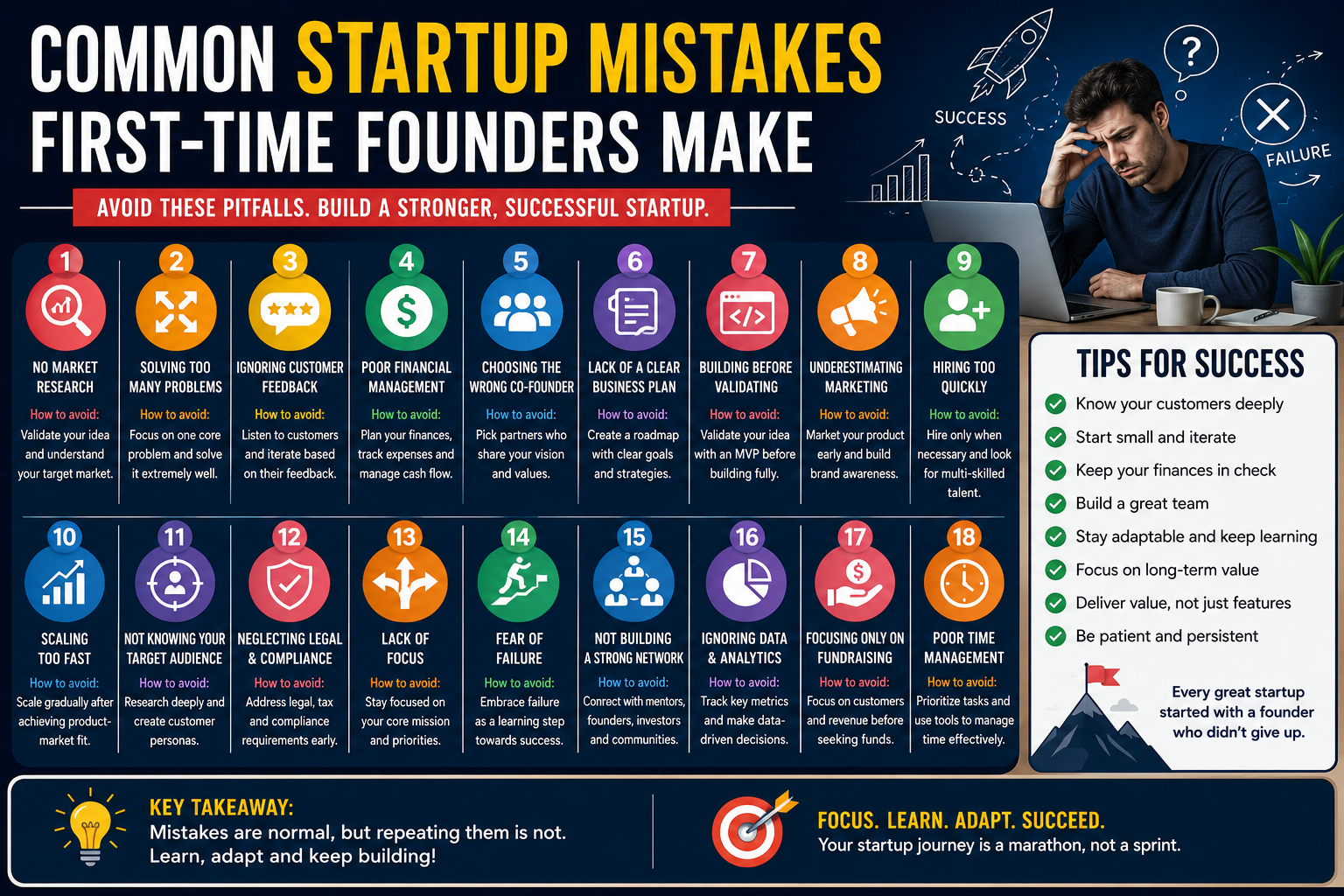
Starting a business is an exciting journey filled with opportunities, challenges, and valuable lessons. Every year, thousands of entrepreneurs launch startups with dreams of building successful companies. However, many startups fail within their first few years due to avoidable mistakes.
First-time founders often face a steep learning curve. While mistakes are part of the entrepreneurial process, understanding common pitfalls can significantly improve your chances of success. By learning from the experiences of other entrepreneurs, you can make informed decisions and build a stronger foundation for your business.
In this article, we’ll explore the most common startup mistakes first-time founders make and provide actionable tips to avoid them.
Why Startups Fail
Many startups fail not because of a lack of passion but due to poor planning, insufficient market demand, financial mismanagement, or ineffective execution.
Common reasons include:
- Lack of product-market fit
- Running out of cash
- Poor marketing strategies
- Weak leadership
- Ignoring customer feedback
- Scaling too quickly
Understanding these challenges can help founders prepare for long-term success.
1. Starting Without Market Research
One of the biggest mistakes entrepreneurs make is launching a product without validating market demand.
Why It’s a Problem
Even the best idea can fail if customers don’t need or want it.
How to Avoid It
- Conduct surveys and interviews
- Analyze competitors
- Study industry trends
- Test your idea with a minimum viable product (MVP)
Always confirm there is genuine demand before investing significant time and money.
2. Trying to Solve Too Many Problems
Many first-time founders attempt to create products with excessive features.
Why It’s a Problem
Complex products require more development time and resources.
How to Avoid It
Focus on solving one core problem exceptionally well before expanding features.
Successful startups often begin with a simple solution and improve based on customer feedback.
3. Ignoring Customer Feedback
Customers provide valuable insights that can help improve products and services.
Why It’s a Problem
Ignoring users may result in building features nobody wants.
How to Avoid It
- Collect customer feedback regularly
- Conduct user interviews
- Monitor reviews and complaints
- Implement meaningful improvements
Customer-focused startups are more likely to succeed.
4. Poor Financial Management
Financial mistakes can quickly destroy a promising startup.
Common Financial Errors
- Overspending
- Underestimating costs
- Lack of budgeting
- Poor cash flow management
How to Avoid It
- Create detailed financial forecasts
- Track expenses carefully
- Maintain emergency reserves
- Review finances regularly
Cash flow is often more important than profitability during the early stages.
5. Choosing the Wrong Co-Founder
Many startups are built by teams rather than individuals.
Why It’s a Problem
Conflicts between founders can disrupt operations and damage growth.
How to Avoid It
Choose partners who:
- Share similar values
- Complement your skills
- Communicate effectively
- Have long-term commitment
A strong founding team increases the likelihood of success.
6. Lack of a Clear Business Plan
Some founders focus solely on product development while neglecting business strategy.
Why It’s a Problem
Without a roadmap, decision-making becomes difficult.
How to Avoid It
Develop a business plan that outlines:
- Target market
- Revenue model
- Marketing strategy
- Growth goals
- Financial projections
A clear plan helps guide your startup through uncertainty.
7. Building Before Validating
Many entrepreneurs spend months developing products before talking to customers.
Why It’s a Problem
You may invest heavily in something nobody wants.
How to Avoid It
Validate your concept before building extensive features.
Launch quickly, gather feedback, and iterate based on real-world data.
8. Underestimating Marketing
A great product alone rarely guarantees success.
Why It’s a Problem
Without visibility, customers may never discover your business.
How to Avoid It
Invest in:
- Search Engine Optimization (SEO)
- Content marketing
- Social media marketing
- Email campaigns
- Paid advertising
Marketing should be a priority from day one.
9. Hiring Too Quickly
Rapid hiring can create unnecessary expenses and management challenges.
Why It’s a Problem
Early-stage startups often need flexibility and efficiency.
How to Avoid It
Hire only when necessary and prioritize versatile team members who can handle multiple responsibilities.
10. Scaling Too Fast
Growth is exciting, but premature scaling is a common startup killer.
Why It’s a Problem
Rapid expansion can strain resources and operations.
Signs of Premature Scaling
- Hiring aggressively without revenue growth
- Expanding into multiple markets too soon
- Overspending on infrastructure
How to Avoid It
Focus on achieving product-market fit before pursuing aggressive growth.
11. Failing to Understand the Target Audience
Some founders assume they know what customers want without proper research.
Why It’s a Problem
Marketing messages become ineffective and product adoption suffers.
How to Avoid It
Create detailed customer personas and continuously update your understanding of customer needs.
12. Neglecting Legal and Compliance Requirements
Many startups overlook legal responsibilities.
Common Issues
- Business registration problems
- Intellectual property disputes
- Tax compliance failures
- Missing contracts
How to Avoid It
Consult legal professionals and ensure compliance from the beginning.
13. Lack of Focus
Entrepreneurs often chase too many opportunities simultaneously.
Why It’s a Problem
Resources become spread too thin.
How to Avoid It
Prioritize the activities that generate the highest impact and align with business goals.
Stay focused on your core mission.
14. Fear of Failure
Many founders hesitate to take action because they fear making mistakes.
Why It’s a Problem
Inaction prevents growth and learning.
How to Avoid It
View failure as a learning opportunity and focus on continuous improvement.
Most successful entrepreneurs have experienced setbacks before achieving success.
15. Not Building a Strong Network
Entrepreneurship can be challenging without support and guidance.
Why It’s a Problem
Founders miss opportunities, partnerships, and valuable advice.
How to Avoid It
Network with:
- Entrepreneurs
- Investors
- Industry experts
- Mentors
- Business communities
Strong relationships can accelerate startup growth.
16. Ignoring Data and Analytics
Business decisions based solely on assumptions often lead to poor outcomes.
Important Metrics to Track
- Customer acquisition cost
- Customer lifetime value
- Conversion rates
- Revenue growth
- Retention rates
Data-driven decision-making improves efficiency and profitability.
17. Focusing Only on Fundraising
Many first-time founders become obsessed with securing investment.
Why It’s a Problem
Fundraising should support growth, not replace it.
How to Avoid It
Focus on building a valuable product, attracting customers, and generating revenue.
Investors are more likely to support businesses that demonstrate traction.
18. Poor Time Management
Founders wear many hats and often struggle to prioritize effectively.
How to Avoid It
- Set daily priorities
- Use productivity tools
- Delegate when possible
- Focus on high-value activities
Effective time management increases productivity and reduces stress.
Key Lessons for First-Time Founders
Successful entrepreneurs understand that startups require:
- Patience
- Adaptability
- Customer focus
- Financial discipline
- Strategic planning
Avoiding common mistakes can significantly increase the odds of building a sustainable business.
Final Thoughts
Launching a startup is one of the most rewarding experiences an entrepreneur can pursue, but it comes with challenges. Many common startup mistakes first-time founders make are entirely preventable with proper planning, research, and execution.
Focus on understanding your market, validating your idea, managing finances carefully, listening to customers, and building a strong team. By learning from the mistakes of others, you can avoid costly setbacks and position your startup for long-term growth and success.
Remember that entrepreneurship is a journey of continuous learning. Every challenge presents an opportunity to improve, adapt, and move closer to your business goals.
Conclusion
First-time founders often encounter obstacles that can derail startup growth. However, by avoiding common mistakes such as poor market research, financial mismanagement, premature scaling, and neglecting customer feedback, entrepreneurs can build stronger, more resilient businesses. Success comes from making informed decisions, staying focused, and consistently delivering value to customers.
Also read Small Business Marketing Strategies: Proven Ways to Grow Your Business














Leave a Reply