

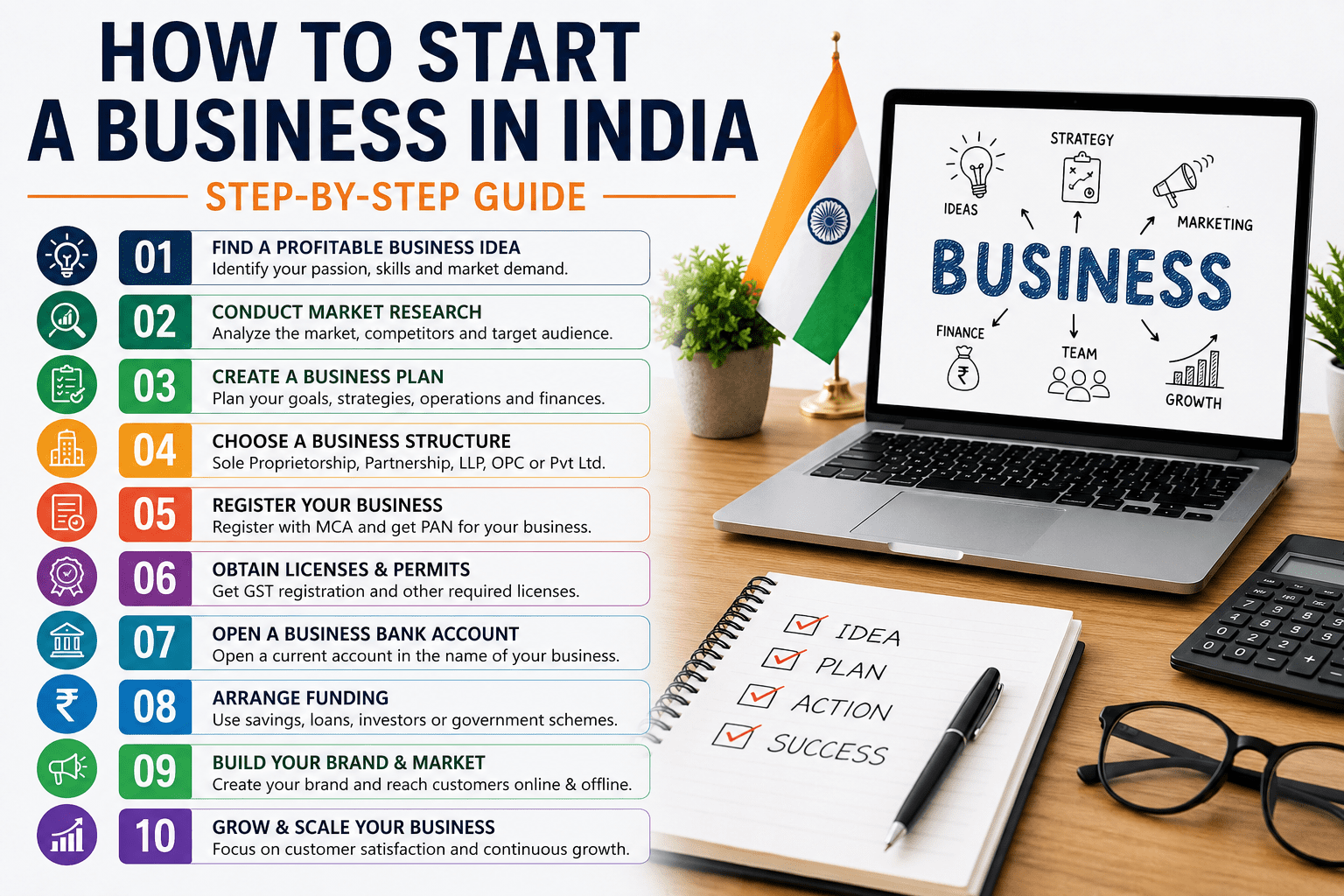
India has become one of the fastest-growing startup ecosystems in the world. With a large consumer market, increasing internet penetration, and government initiatives supporting entrepreneurship, there has never been a better time to start a business in India. Whether you want to launch a small local business, an online store, or a technology startup, understanding the right process is essential for long-term success.
This step-by-step guide will help aspiring entrepreneurs understand how to start a business in India legally and efficiently.
Why Start a Business in India?
India offers numerous opportunities for entrepreneurs due to:
- A growing economy
- Rising digital adoption
- Government support through Startup India initiatives
- Access to a large customer base
- Availability of skilled workforce
- Expanding e-commerce and technology sectors
With proper planning and execution, businesses can achieve significant growth in both domestic and international markets.
Step 1: Identify a Profitable Business Idea
The foundation of every successful business is a strong idea. Before investing money, research market demand and customer needs.
Popular Business Ideas in India
- E-commerce stores
- Digital marketing agency
- Mobile app development
- Content creation services
- Online education platforms
- Food delivery businesses
- Health and wellness services
- Freelancing and consulting
- Manufacturing units
- Dropshipping businesses
Choose a business idea that aligns with your skills, interests, and market demand.
Step 2: Conduct Market Research
Market research helps validate your business idea and identify opportunities.
Key Areas to Research
- Target audience
- Competitor analysis
- Pricing strategies
- Market trends
- Customer pain points
- Industry growth potential
You can use surveys, social media insights, Google Trends, and competitor websites to gather useful information.
Step 3: Create a Business Plan
A business plan acts as a roadmap for your company.
Include the Following:
- Business overview
- Mission and vision
- Market analysis
- Products or services
- Marketing strategy
- Financial projections
- Operational plan
- Funding requirements
A well-prepared business plan also increases your chances of securing investors and loans.
Step 4: Choose the Right Business Structure
Selecting the correct legal structure is important for taxation and compliance.
Sole Proprietorship
- Easy to start
- Minimal compliance
- Suitable for small businesses
Partnership Firm
- Owned by two or more individuals
- Shared responsibilities and profits
Limited Liability Partnership (LLP)
- Separate legal entity
- Limited liability protection
- Suitable for professional services
Private Limited Company
- Most preferred for startups
- Easier to attract investors
- Separate legal identity
One Person Company (OPC)
- Ideal for solo entrepreneurs
- Limited liability benefits
Choose a structure based on your business goals, ownership preferences, and future expansion plans.
Step 5: Register Your Business
Business registration provides legal recognition and credibility.
Registration Process
- Select your business structure.
- Obtain necessary documents.
- Register with relevant authorities.
- Apply for a PAN card for the business.
- Open a business bank account.
For startups planning significant growth, a Private Limited Company is often the preferred choice.
Step 6: Obtain Required Licenses and Permits
Different industries require different licenses.
Common Business Licenses
- GST Registration
- Shop and Establishment License
- FSSAI License (Food Businesses)
- Import Export Code (IEC)
- Trade License
- Professional Tax Registration
Failure to obtain necessary licenses can lead to legal complications and penalties.
Step 7: Register for GST
Goods and Services Tax (GST) registration is mandatory for businesses crossing prescribed turnover limits and for many online sellers.
Benefits of GST Registration
- Legal compliance
- Input tax credit benefits
- Improved business credibility
- Easier interstate trade
GST registration can be completed online through the government portal.
Step 8: Open a Business Bank Account
Keeping personal and business finances separate is essential.
Benefits
- Better financial management
- Simplified accounting
- Professional transactions
- Easier loan approvals
Most banks require business registration documents, PAN, and address proof.
Step 9: Arrange Business Funding
Every business requires capital for growth.
Funding Options
- Personal savings
- Friends and family
- Bank loans
- Government schemes
- Angel investors
- Venture capital firms
- Crowdfunding platforms
Choose funding based on your business model and growth strategy.
Step 10: Build Your Brand Identity
A strong brand helps attract customers and establish trust.
Essential Branding Elements
- Business name
- Logo
- Website
- Social media profiles
- Brand messaging
- Professional email address
Consistency across all platforms enhances brand recognition.
Step 11: Create an Online Presence
In today’s digital era, every business needs an online presence.
Important Digital Assets
- Professional website
- Google Business Profile
- Facebook page
- Instagram account
- LinkedIn profile
- YouTube channel
A website acts as your digital storefront and helps customers learn about your products and services.
Step 12: Develop a Marketing Strategy
Marketing is crucial for generating leads and sales.
Effective Marketing Methods
Search Engine Optimization (SEO)
Improve website visibility on search engines.
Content Marketing
Publish blogs, videos, and informative content.
Social Media Marketing
Engage customers through social platforms.
Email Marketing
Build relationships with potential customers.
Paid Advertising
Use Google Ads and social media ads for faster growth.
Combining multiple marketing channels often produces the best results.
Step 13: Hire and Build a Team
As your business grows, you’ll need skilled employees.
Hiring Tips
- Define job roles clearly
- Conduct proper interviews
- Provide training
- Build a positive work culture
- Encourage innovation
A motivated team can significantly accelerate business growth.
Step 14: Focus on Customer Satisfaction
Happy customers become repeat buyers and brand advocates.
Ways to Improve Customer Experience
- Offer quality products
- Provide excellent support
- Respond quickly to queries
- Gather feedback regularly
- Implement customer suggestions
Customer retention is often more profitable than acquiring new customers.
Step 15: Scale Your Business
Once your business achieves stability, focus on expansion.
Growth Strategies
- Launch new products
- Enter new markets
- Expand online sales channels
- Form strategic partnerships
- Automate operations
- Invest in technology
Scaling strategically helps sustain long-term profitability.
Common Mistakes to Avoid
Many entrepreneurs fail because they overlook critical aspects of business management.
Avoid These Errors
- Skipping market research
- Ignoring legal compliance
- Poor financial planning
- Weak marketing efforts
- Hiring too quickly
- Lack of customer focus
- Underestimating competition
Learning from these mistakes can save significant time and resources.
Final Thoughts
Starting a business in India requires careful planning, legal compliance, financial management, and consistent marketing efforts. While the entrepreneurial journey comes with challenges, it also offers immense opportunities for growth and financial independence.
By following this step-by-step guide, aspiring entrepreneurs can build a strong foundation for a successful business. Focus on solving real customer problems, stay adaptable to market changes, and continuously improve your products and services to achieve long-term success.
Also read Top Startup Trends in India: The Future of Entrepreneurship in 2026











Leave a Reply