

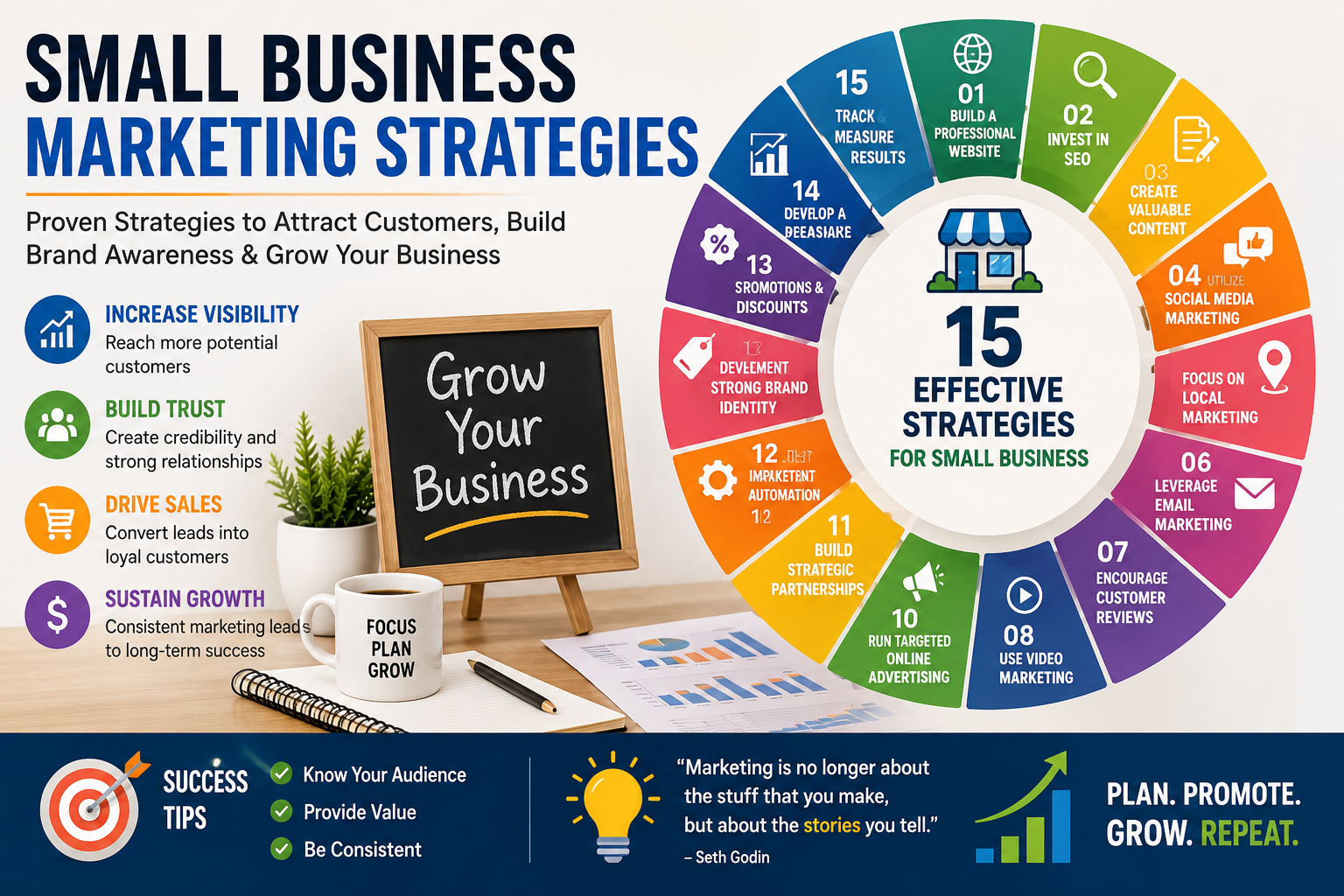
Running a small business is both exciting and challenging. One of the biggest hurdles entrepreneurs face is attracting customers and standing out in a competitive market. Regardless of how great your products or services are, success depends heavily on your ability to market your business effectively.
Fortunately, modern marketing offers numerous opportunities for small businesses to compete with larger brands without spending a fortune. By implementing the right strategies, you can increase visibility, build customer trust, and drive long-term growth.
In this guide, we’ll explore the most effective small business marketing strategies that can help you reach your target audience and grow your business.
Why Marketing Matters for Small Businesses
Marketing is more than just advertising. It helps businesses:
- Build brand awareness
- Generate leads
- Increase sales
- Establish credibility
- Retain customers
- Gain a competitive advantage
A well-planned marketing strategy ensures that your business reaches the right people at the right time with the right message.
1. Build a Professional Website
Your website is often the first impression potential customers have of your business.
A professional website should include:
- Clear business information
- Product or service details
- Contact information
- Customer testimonials
- Fast loading speed
- Mobile-friendly design
A website acts as your digital storefront and serves as the foundation of your online marketing efforts.
Benefits
- Improves credibility
- Generates leads 24/7
- Enhances customer experience
- Supports SEO efforts
2. Invest in Search Engine Optimization (SEO)
SEO helps your website rank higher on search engines like Google, making it easier for potential customers to find your business.
Key SEO Practices
- Keyword research
- On-page optimization
- High-quality content creation
- Internal linking
- Technical SEO improvements
- Local SEO optimization
When done correctly, SEO can provide long-term organic traffic without ongoing advertising costs.
3. Create Valuable Content
Content marketing is one of the most cost-effective ways to attract and engage customers.
Content Types
- Blog posts
- Guides and tutorials
- Videos
- Infographics
- Case studies
- Industry insights
Helpful content positions your business as an authority while building trust with your audience.
Example
A local fitness center can publish articles about workout tips, healthy eating, and wellness advice to attract potential clients.
4. Utilize Social Media Marketing
Social media platforms allow businesses to connect directly with customers and build brand awareness.
Popular Platforms
- X (Twitter)
- YouTube
Effective Social Media Strategies
- Post consistently
- Share valuable content
- Engage with followers
- Use hashtags strategically
- Run contests and giveaways
Social media can significantly increase your reach without requiring a large budget.
5. Focus on Local Marketing
Local marketing is especially important for small businesses serving a specific geographic area.
Local Marketing Tactics
- Optimize your Google Business Profile
- Encourage customer reviews
- Participate in community events
- Partner with local businesses
- Use location-specific keywords
Local SEO helps your business appear in nearby searches, driving more foot traffic and inquiries.
6. Leverage Email Marketing
Email marketing remains one of the highest ROI marketing channels.
Benefits
- Direct communication with customers
- Personalized messaging
- Increased customer retention
- Cost-effective promotions
Email Campaign Ideas
- Welcome emails
- Product updates
- Special offers
- Newsletters
- Customer appreciation campaigns
Building an email list provides a valuable marketing asset that you fully control.
7. Encourage Customer Reviews
Online reviews play a major role in purchasing decisions.
Ways to Get More Reviews
- Ask satisfied customers
- Follow up after purchases
- Simplify the review process
- Offer exceptional service
Positive reviews improve trust and boost local search rankings.
8. Use Video Marketing
Video content continues to dominate digital marketing.
Video Ideas for Small Businesses
- Product demonstrations
- Customer testimonials
- Behind-the-scenes content
- Educational videos
- Frequently asked questions
Videos often generate higher engagement than text-based content and help businesses connect with audiences more effectively.
9. Launch Referral Programs
Word-of-mouth marketing remains one of the most powerful growth strategies.
Referral Program Benefits
- Lower customer acquisition costs
- Increased trust
- Higher conversion rates
Offer incentives such as discounts, rewards, or exclusive perks to encourage referrals.
10. Run Targeted Online Advertising
Paid advertising allows businesses to reach specific audiences quickly.
Popular Advertising Platforms
- Google Ads
- Facebook Ads
- Instagram Ads
- LinkedIn Ads
- YouTube Ads
Advantages
- Immediate visibility
- Precise audience targeting
- Measurable results
- Flexible budgets
Even small advertising budgets can generate significant results when campaigns are optimized effectively.
11. Build Strategic Partnerships
Collaborating with complementary businesses can expand your audience.
Examples
- Joint promotions
- Cross-marketing campaigns
- Co-hosted events
- Content collaborations
Partnerships help businesses gain exposure without significant marketing expenses.
12. Implement Marketing Automation
Marketing automation tools save time and improve efficiency.
Tasks to Automate
- Email sequences
- Social media scheduling
- Lead nurturing
- Customer follow-ups
Automation enables small business owners to focus on growth while maintaining consistent communication.
13. Develop a Strong Brand Identity
Branding helps customers recognize and remember your business.
Elements of Branding
- Logo
- Brand colors
- Messaging
- Tone of voice
- Visual consistency
A strong brand creates trust and differentiates your business from competitors.
14. Offer Promotions and Discounts
Special offers can attract new customers and encourage repeat purchases.
Promotional Ideas
- Seasonal discounts
- First-time customer offers
- Loyalty rewards
- Bundle deals
- Limited-time sales
Promotions should be strategic and aligned with business goals.
15. Track and Measure Results
Successful marketing requires continuous improvement.
Important Metrics
- Website traffic
- Conversion rates
- Customer acquisition cost
- Social media engagement
- Email open rates
- Return on investment (ROI)
Analyzing performance helps identify what works and where adjustments are needed.
Common Small Business Marketing Mistakes
Avoid these common pitfalls:
Ignoring SEO
Many businesses miss valuable organic traffic opportunities.
Inconsistent Branding
Mixed messaging can confuse potential customers.
Not Understanding the Target Audience
Marketing becomes ineffective when businesses fail to address customer needs.
Neglecting Customer Retention
Keeping existing customers is often cheaper than acquiring new ones.
Lack of Analytics
Without tracking results, it is difficult to optimize marketing efforts.
How to Create a Small Business Marketing Plan
Step 1: Define Goals
Examples include:
- Increase website traffic
- Generate leads
- Improve sales
- Enhance brand awareness
Step 2: Identify Your Audience
Understand customer demographics, interests, and purchasing behaviors.
Step 3: Choose Marketing Channels
Select channels where your audience spends time.
Step 4: Create Content
Develop valuable content tailored to customer needs.
Step 5: Monitor Performance
Regularly review data and adjust strategies accordingly.
Future Marketing Trends for Small Businesses
As technology evolves, small businesses should prepare for emerging trends:
- Artificial Intelligence (AI) marketing
- Voice search optimization
- Personalized customer experiences
- Video-first content strategies
- Conversational marketing
- Marketing automation
Businesses that adapt to these trends will be better positioned for long-term success.
Conclusion
Effective marketing is essential for the growth and sustainability of any small business. By implementing proven small business marketing strategies such as SEO, content marketing, social media engagement, email campaigns, local marketing, and video content, businesses can attract more customers and increase revenue.
Success does not require a massive budget. Instead, consistency, customer focus, and strategic execution are the key ingredients. Start by applying a few of these strategies, track your results, and continuously refine your approach. Over time, your marketing efforts will create a strong foundation for sustainable business growth and beyond.










Leave a Reply