

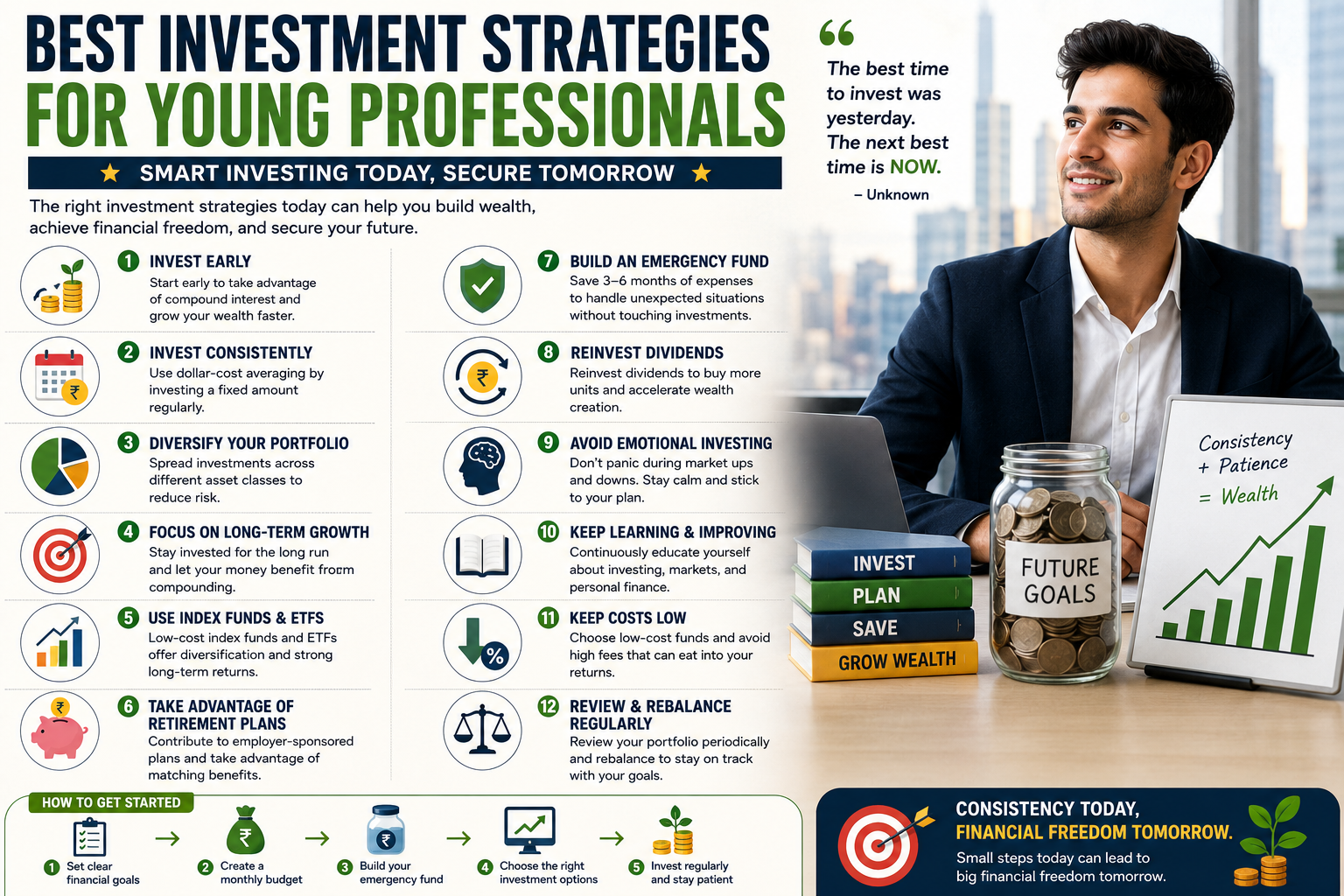
Starting your investment journey early can be one of the smartest financial decisions you ever make. As a young professional, you have a unique advantage: time. The earlier you begin investing, the more opportunities your money has to grow through the power of compound returns.
Many young professionals delay investing because they believe they need a large amount of money or extensive financial knowledge. However, successful investing is often about consistency, patience, and choosing the right strategies rather than trying to get rich quickly.
In this guide, we’ll explore the best investment strategies for young professionals looking to build wealth and secure their financial future.
Why Young Professionals Should Start Investing Early
Time is one of the most valuable assets in investing.
Benefits of starting early include:
- Greater compound growth
- More flexibility to take calculated risks
- Higher long-term returns potential
- Better retirement preparedness
- Increased financial independence
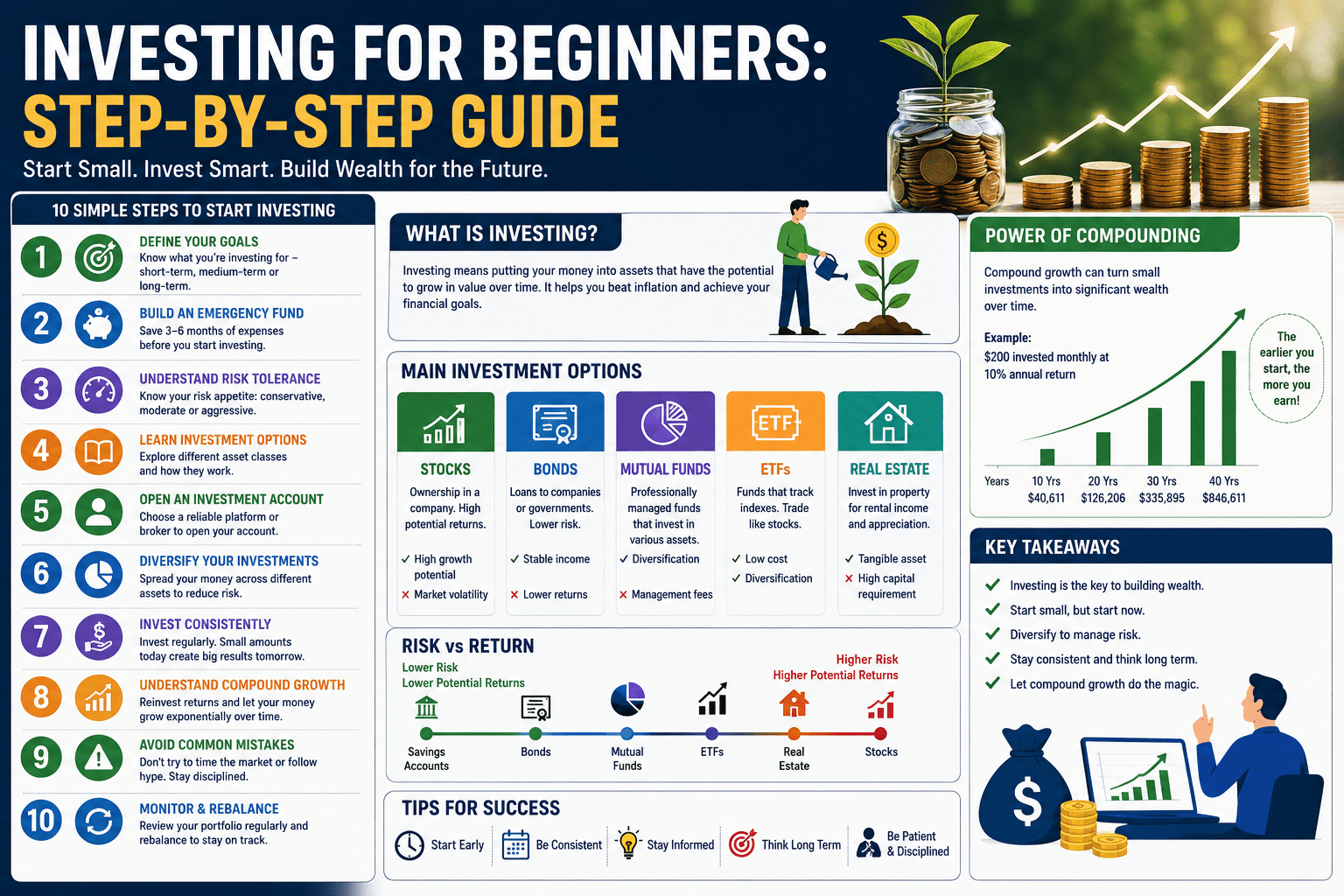
Even small monthly investments can grow significantly over decades.
1. Invest Consistently Through Dollar-Cost Averaging
One of the most effective investment strategies is dollar-cost averaging (DCA).
This involves investing a fixed amount regularly, regardless of market conditions.
Benefits of Dollar-Cost Averaging
- Reduces emotional investing
- Minimizes market timing risks
- Builds investment discipline
- Takes advantage of market fluctuations
For example, investing a fixed amount every month into mutual funds or ETFs can help build wealth steadily over time.
2. Build a Diversified Portfolio
Diversification is a key principle of successful investing.
A diversified portfolio spreads investments across different asset classes, reducing overall risk.
Diversification May Include:
- Stocks
- Mutual funds
- ETFs
- Bonds
- Real estate
- International investments
Diversification helps protect your portfolio from significant losses if one asset class underperforms.
3. Focus on Long-Term Growth
Many beginners make the mistake of chasing quick profits.
Successful investors understand that wealth is built over years, not weeks.
Long-Term Investing Benefits
- Less stress from market volatility
- Better compound returns
- Reduced trading costs
- Improved decision-making
Maintaining a long-term perspective often leads to better investment outcomes.
4. Prioritize Index Funds and ETFs
For young professionals who are new to investing, index funds and ETFs offer an excellent starting point.
These investment vehicles track major market indexes and provide instant diversification.
Advantages
- Low management fees
- Broad market exposure
- Simplicity
- Consistent long-term performance
Many financial experts recommend index investing as a core wealth-building strategy.
5. Take Advantage of Employer Retirement Plans
If your employer offers a retirement plan with matching contributions, make it a priority.
Employer matching is essentially free money that can significantly boost your retirement savings.
Benefits
- Tax advantages
- Automatic investing
- Long-term growth
- Additional employer contributions
Ignoring employer matching opportunities means leaving money on the table.
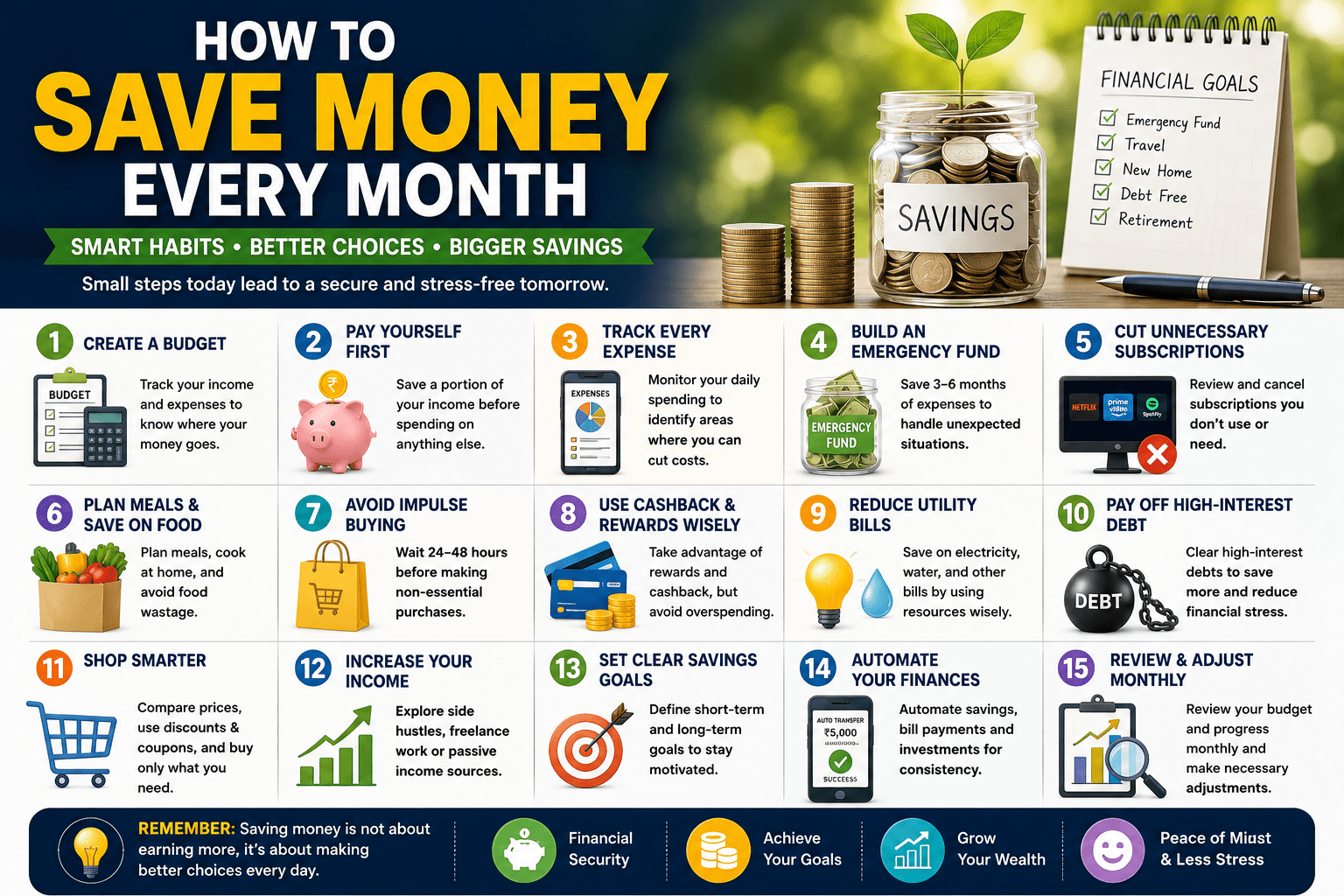
6. Create an Emergency Fund Before Aggressive Investing
Before investing heavily, establish an emergency fund.
An emergency fund helps cover unexpected expenses without forcing you to sell investments during market downturns.
Recommended Amount
Save three to six months of living expenses in a separate, easily accessible account.
This provides financial stability while allowing investments to grow uninterrupted.
7. Invest in Growth-Oriented Assets
Young professionals typically have a longer investment horizon, allowing them to focus more on growth assets.
Examples include:
- Growth stocks
- Technology-focused funds
- Broad-market equity funds
- Emerging market investments
While these assets may experience short-term volatility, they often provide higher long-term growth potential.
8. Avoid Emotional Investing
Market fluctuations are normal.
Many investors lose money because they react emotionally to market movements.
Common Emotional Mistakes
- Panic selling during market declines
- Buying investments due to hype
- Chasing short-term trends
- Constant portfolio switching
Successful investors stick to their strategy and avoid making decisions based on fear or excitement.
9. Reinvest Dividends
Dividend-paying investments can become even more powerful when dividends are reinvested.
Instead of withdrawing dividend payments, use them to purchase additional shares.
Benefits of Dividend Reinvestment
- Accelerates compound growth
- Increases portfolio value
- Generates greater future income
Over time, reinvested dividends can contribute significantly to total investment returns.
10. Invest in Yourself
One of the highest-return investments isn’t found in the stock market.
It’s investing in your skills and knowledge.
Examples
- Professional certifications
- Industry-specific training
- Online courses
- Advanced education
- Networking opportunities
Improving your earning potential can provide returns far greater than many traditional investments.
11. Keep Investment Costs Low
High fees can reduce investment returns over time.
When selecting investment products, pay attention to:
- Expense ratios
- Management fees
- Trading commissions
- Advisory costs
Low-cost investments help maximize long-term growth.
12. Review and Rebalance Your Portfolio
As markets move, your portfolio allocation may drift away from your intended strategy.
Regular portfolio reviews help maintain your desired level of risk.
Rebalancing Benefits
- Controls risk exposure
- Maintains diversification
- Supports long-term goals
Many investors review their portfolios annually.
Common Investment Mistakes Young Professionals Should Avoid
Avoid these costly errors:
- Waiting too long to start investing
- Trying to time the market
- Investing without a plan
- Putting all money into one asset
- Following social media investment trends blindly
- Ignoring risk management
- Selling during market downturns
Avoiding these mistakes can significantly improve investment results.
Sample Investment Allocation for Young Professionals
A hypothetical growth-focused portfolio might include:
- 70% Stocks or Equity Funds
- 15% International Funds
- 10% Bonds
- 5% Cash or Emergency Reserves
Actual allocations should reflect individual risk tolerance and financial goals.
How to Get Started Today
Step 1
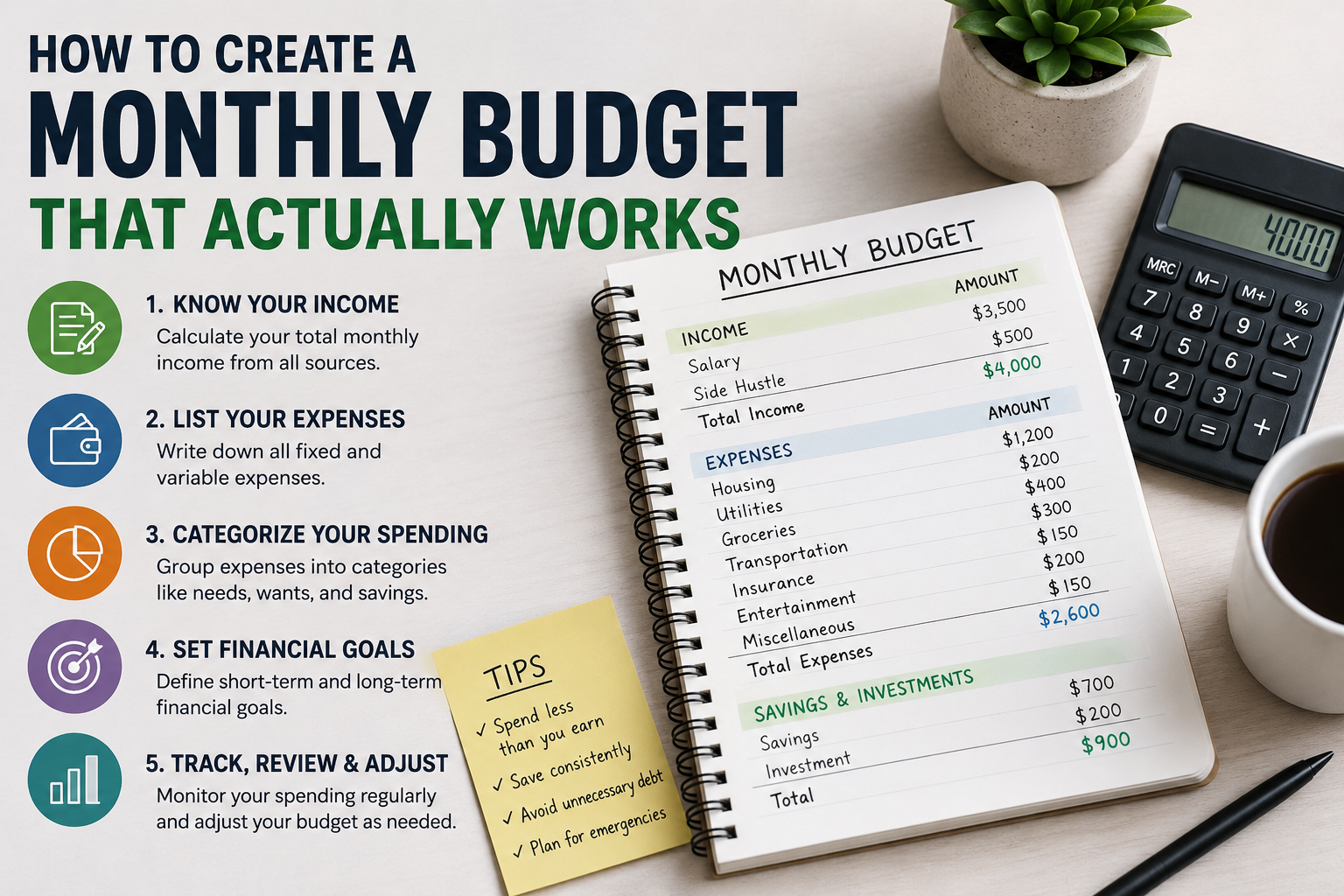
Create a monthly budget.
Step 2
Build an emergency fund.
Step 3
Open an investment account.
Step 4
Start with diversified index funds.
Step 5
Invest consistently every month.
Step 6
Stay focused on long-term goals.
Consistency often matters more than investment size.
Conclusion
Young professionals have a powerful advantage in investing: time. By starting early, investing consistently, diversifying wisely, and maintaining a long-term mindset, you can build substantial wealth over the years.
The best investment strategy is not about finding the perfect stock or timing the market. It’s about creating a disciplined plan, staying invested, and allowing compound growth to work in your favor.
The sooner you start, the greater the potential rewards. Your future financial success begins with the investment decisions you make today.
Also read The Biggest Money Mistakes People Make in Their 20s










Leave a Reply