

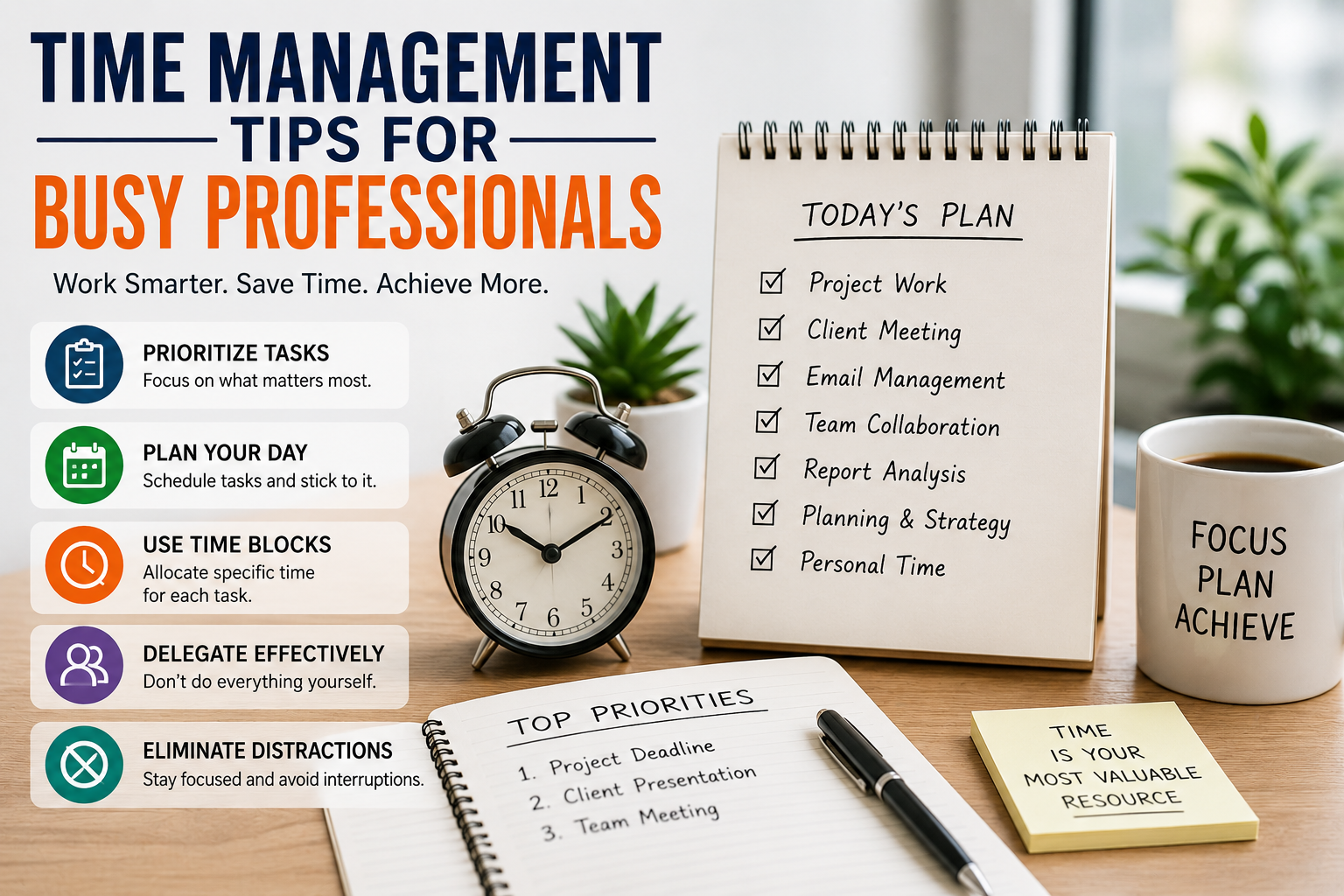
In today’s fast-paced business environment, professionals often struggle to balance work responsibilities, personal commitments, and career growth. With endless meetings, emails, deadlines, and unexpected tasks, managing time effectively has become more important than ever.
Good time management is not about working harder or longer hours. Instead, it involves working smarter, prioritizing tasks, and making the best use of available time. By adopting effective time management strategies, busy professionals can increase productivity, reduce stress, and achieve a healthier work-life balance.
In this article, we will explore practical time management tips that can help busy professionals stay organized and accomplish more every day.
Why Time Management Matters
Effective time management offers several benefits, including:
- Increased productivity
- Reduced workplace stress
- Better decision-making
- Improved work-life balance
- Greater career growth opportunities
- Enhanced focus and concentration
Professionals who manage their time well are often more successful because they can consistently meet deadlines and deliver high-quality work.
1. Set Clear Priorities
Not every task deserves the same level of attention. One of the most important time management skills is learning how to prioritize effectively.
Start each day by identifying:
- High-priority tasks
- Important but non-urgent tasks
- Low-priority activities
Focus on tasks that contribute directly to your goals and responsibilities before handling less important work.
2. Create a Daily Schedule
Planning your day in advance helps eliminate confusion and improves productivity.
A simple daily schedule should include:
- Important meetings
- Project deadlines
- Focus work sessions
- Breaks and personal time
Using a digital calendar or planner can help keep your schedule organized and easily accessible.
3. Use the Time Blocking Method
Time blocking involves assigning specific blocks of time to particular tasks.
For example:
- 9:00 AM – 10:00 AM: Email management
- 10:00 AM – 12:00 PM: Project work
- 1:00 PM – 2:00 PM: Meetings
- 2:00 PM – 4:00 PM: Strategic planning
This method reduces distractions and helps maintain focus throughout the day.
4. Follow the 80/20 Rule
The Pareto Principle states that approximately 80% of results come from 20% of efforts.
Identify the activities that generate the greatest impact and dedicate most of your energy to them.
Ask yourself:
- Which tasks produce the most value?
- What activities directly support my goals?
Concentrating on high-impact work increases efficiency and productivity.
5. Avoid Multitasking
Many professionals believe multitasking improves performance. In reality, constantly switching between tasks often decreases productivity and increases errors.
Instead:
- Focus on one task at a time
- Complete it before moving to the next
- Give your full attention to the work at hand
Single-tasking allows for better concentration and higher-quality results.
6. Manage Email Efficiently
Email can consume a significant portion of the workday if not managed properly.
Consider these strategies:
- Check emails at designated times
- Avoid constant inbox monitoring
- Use filters and folders
- Unsubscribe from unnecessary newsletters
Limiting email interruptions can free up valuable time for more important tasks.
7. Learn to Delegate
Successful professionals understand that they cannot do everything themselves.
Delegating tasks can:
- Reduce workload
- Improve efficiency
- Develop team members’ skills
- Allow focus on higher-value responsibilities
Assign tasks to qualified team members whenever possible and provide clear instructions.
8. Minimize Workplace Distractions
Distractions can significantly reduce productivity.
Common distractions include:
- Social media
- Unnecessary meetings
- Phone notifications
- Workplace interruptions
To stay focused:
- Turn off non-essential notifications
- Create dedicated focus periods
- Use noise-canceling headphones if necessary
- Set boundaries with colleagues when working on critical tasks
9. Use Productivity Tools
Technology can help professionals manage time more effectively.
Popular productivity tools include:
- Task management apps
- Calendar software
- Time tracking applications
- Note-taking tools
- Project management platforms
These tools help organize tasks, monitor progress, and improve accountability.
10. Apply the Two-Minute Rule
The Two-Minute Rule suggests that if a task takes less than two minutes to complete, do it immediately.
Examples include:
- Replying to a simple email
- Scheduling an appointment
- Filing a document
Completing small tasks quickly prevents them from accumulating and becoming overwhelming.
11. Schedule Regular Breaks
Working continuously without breaks can reduce focus and productivity.
Short breaks help:
- Refresh your mind
- Improve creativity
- Reduce mental fatigue
- Increase concentration
Consider using the Pomodoro Technique:
- Work for 25 minutes
- Take a 5-minute break
- Repeat the cycle
This approach helps maintain energy levels throughout the day.
12. Learn to Say No
Many professionals struggle with overcommitment.
Before accepting new responsibilities, ask:
- Is this task necessary?
- Does it align with my priorities?
- Do I have sufficient time available?
Saying no when appropriate helps protect your schedule and prevents burnout.
13. Organize Your Workspace
A clean and organized workspace promotes better focus and efficiency.
Keep your desk:
- Clutter-free
- Well-organized
- Equipped with essential tools
- Comfortable and distraction-free
An organized environment reduces wasted time searching for documents or materials.
14. Set Realistic Deadlines
Unrealistic deadlines create stress and reduce work quality.
When planning projects:
- Estimate time accurately
- Include buffer time for unexpected issues
- Break large projects into smaller tasks
Realistic deadlines help maintain consistency and improve performance.
15. Review and Reflect Daily
Spend a few minutes at the end of each workday reviewing your progress.
Ask yourself:
- What did I accomplish today?
- Which tasks remain unfinished?
- What can I improve tomorrow?
Daily reflection helps identify productivity patterns and areas for improvement.
Maintaining Work-Life Balance
Effective time management is not only about professional success. It also supports a healthier personal life.
To maintain balance:
- Set clear work boundaries
- Take regular vacations
- Spend time with family and friends
- Prioritize physical and mental health
A balanced lifestyle improves long-term productivity and overall well-being.
Final Thoughts
Time is one of the most valuable resources available to busy professionals. By implementing practical strategies such as prioritizing tasks, using time blocks, minimizing distractions, delegating responsibilities, and maintaining a healthy work-life balance, professionals can accomplish more while reducing stress.
The key to effective time management is consistency. Start with one or two techniques and gradually build habits that fit your workflow. Over time, these small improvements can lead to greater productivity, better career performance, and a more fulfilling life.
Remember, successful professionals are not necessarily those who work the longest hours—they are the ones who manage their time most effectively.
Also read Simple Ways to Improve Your Productivity Every Day











Leave a Reply