

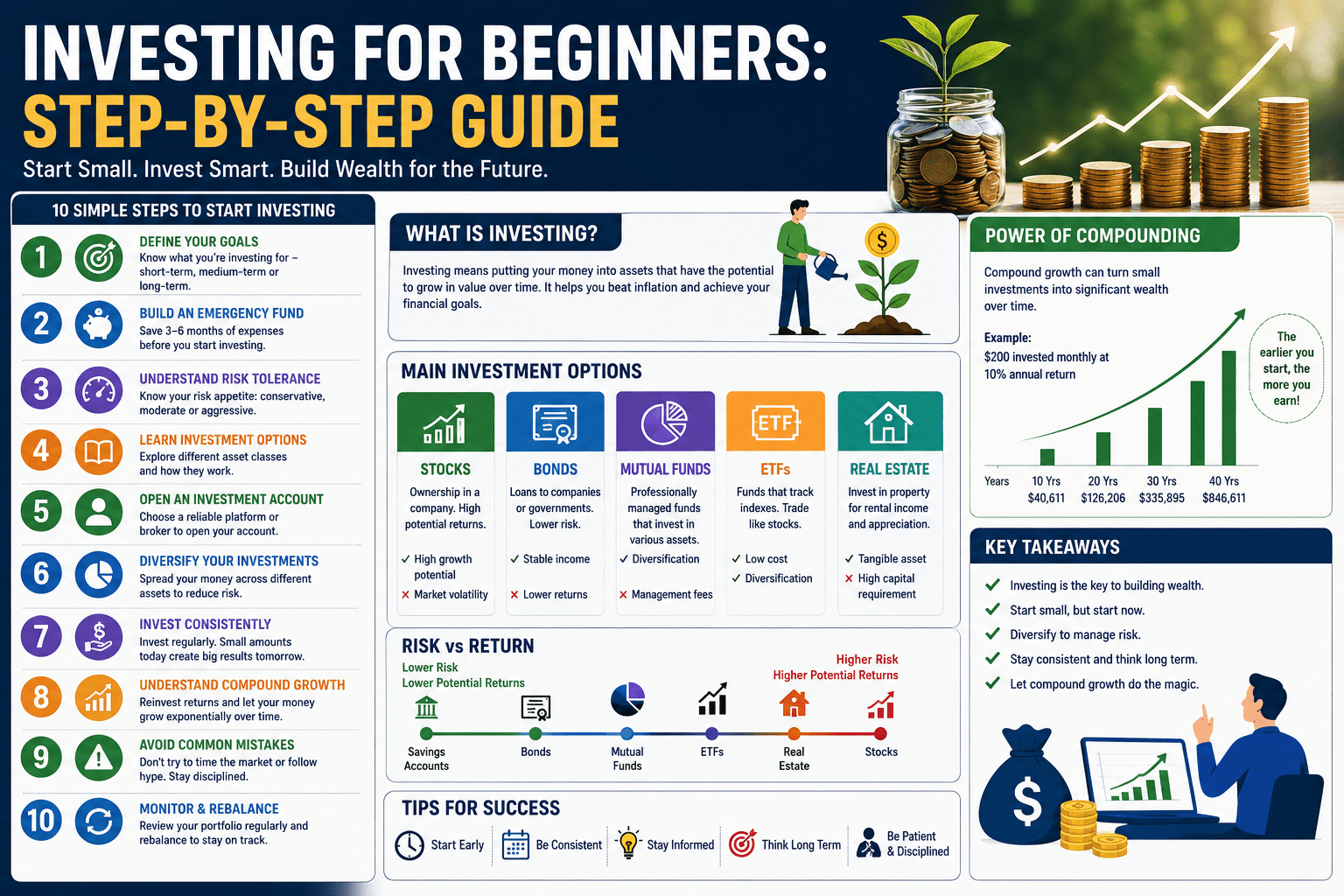
Investing is one of the most effective ways to build wealth over time and achieve long-term financial goals. While many beginners believe investing is complicated or only for wealthy individuals, the truth is that anyone can start investing with the right knowledge and strategy.
Whether your goal is financial independence, retirement planning, buying a home, or growing your savings, understanding the basics of investing can help you make informed financial decisions. This comprehensive guide will walk you through the investing process step by step.
What Is Investing?
Investing involves putting your money into assets that have the potential to grow in value over time. Instead of letting your money sit idle in a savings account, investing allows it to generate returns through appreciation, dividends, interest, or capital gains.
Common investment assets include:
- Stocks
- Bonds
- Mutual Funds
- Exchange-Traded Funds (ETFs)
- Real Estate
- Gold
- Cryptocurrencies
- Retirement Accounts
The primary goal of investing is to grow your wealth while managing risk.
Why Should You Start Investing?
Many people delay investing because they think they need a large amount of money. However, starting early is often more important than starting with a large investment.
Benefits of Investing
- Builds long-term wealth
- Helps beat inflation
- Generates passive income
- Supports retirement planning
- Achieves financial goals faster
- Creates financial security
The earlier you begin investing, the more time your money has to grow through compound returns.
Step 1: Define Your Financial Goals
Before investing, determine what you want to achieve.
Examples include:
Short-Term Goals (1–5 Years)
- Emergency fund
- Vacation savings
- Car purchase
Medium-Term Goals (5–10 Years)
- Home down payment
- Business startup
- Higher education
Long-Term Goals (10+ Years)
- Retirement
- Financial independence
- Wealth building
Your investment strategy should align with your goals and timeline.
Step 2: Build an Emergency Fund
Before investing heavily, create an emergency fund.
Financial experts generally recommend saving three to six months of living expenses in an easily accessible account.
This fund helps cover:
- Medical emergencies
- Job loss
- Unexpected repairs
- Family emergencies
Having emergency savings prevents you from selling investments during market downturns.
Step 3: Understand Risk Tolerance
Every investment carries some level of risk.
Conservative Investors
Prefer stable returns and lower risk.
Suitable investments:
- Bonds
- Fixed deposits
- Government securities
Moderate Investors
Accept moderate risk for better growth potential.
Suitable investments:
- Balanced funds
- ETFs
- Diversified mutual funds
Aggressive Investors
Seek higher returns and can tolerate market volatility.
Suitable investments:
- Growth stocks
- Sector funds
- Emerging market investments
Understanding your risk tolerance helps you choose appropriate investments.
Step 4: Learn the Main Investment Options
Stocks
Stocks represent ownership in a company.
Advantages
- High growth potential
- Dividend income
- Long-term wealth creation
Risks
- Market volatility
- Potential losses
Bonds
Bonds are loans made to governments or corporations.
Advantages
- Lower risk
- Predictable income
Risks
- Lower returns compared to stocks
Mutual Funds
Mutual funds pool money from multiple investors and are managed by professionals.
Advantages
- Diversification
- Professional management
Risks
- Management fees
- Market fluctuations
ETFs (Exchange-Traded Funds)
ETFs track indexes or sectors and trade like stocks.
Advantages
- Low cost
- Diversification
- Flexibility
Risks
- Market risk
Real Estate
Investing in property can generate rental income and long-term appreciation.
Advantages
- Tangible asset
- Potential passive income
Risks
- High capital requirements
- Maintenance costs
Step 5: Open an Investment Account
To begin investing, you’ll need an investment account with a brokerage platform or financial institution.
When selecting a platform, consider:
- Fees and commissions
- User experience
- Research tools
- Customer support
- Available investment options
Choose a reputable provider that aligns with your investment goals.
Step 6: Start with Diversification
Diversification means spreading investments across different asset classes to reduce risk.
Instead of investing all your money in one stock, consider a mix of:
- Stocks
- Bonds
- ETFs
- Mutual funds
- Real estate assets
Diversification helps protect your portfolio from significant losses.
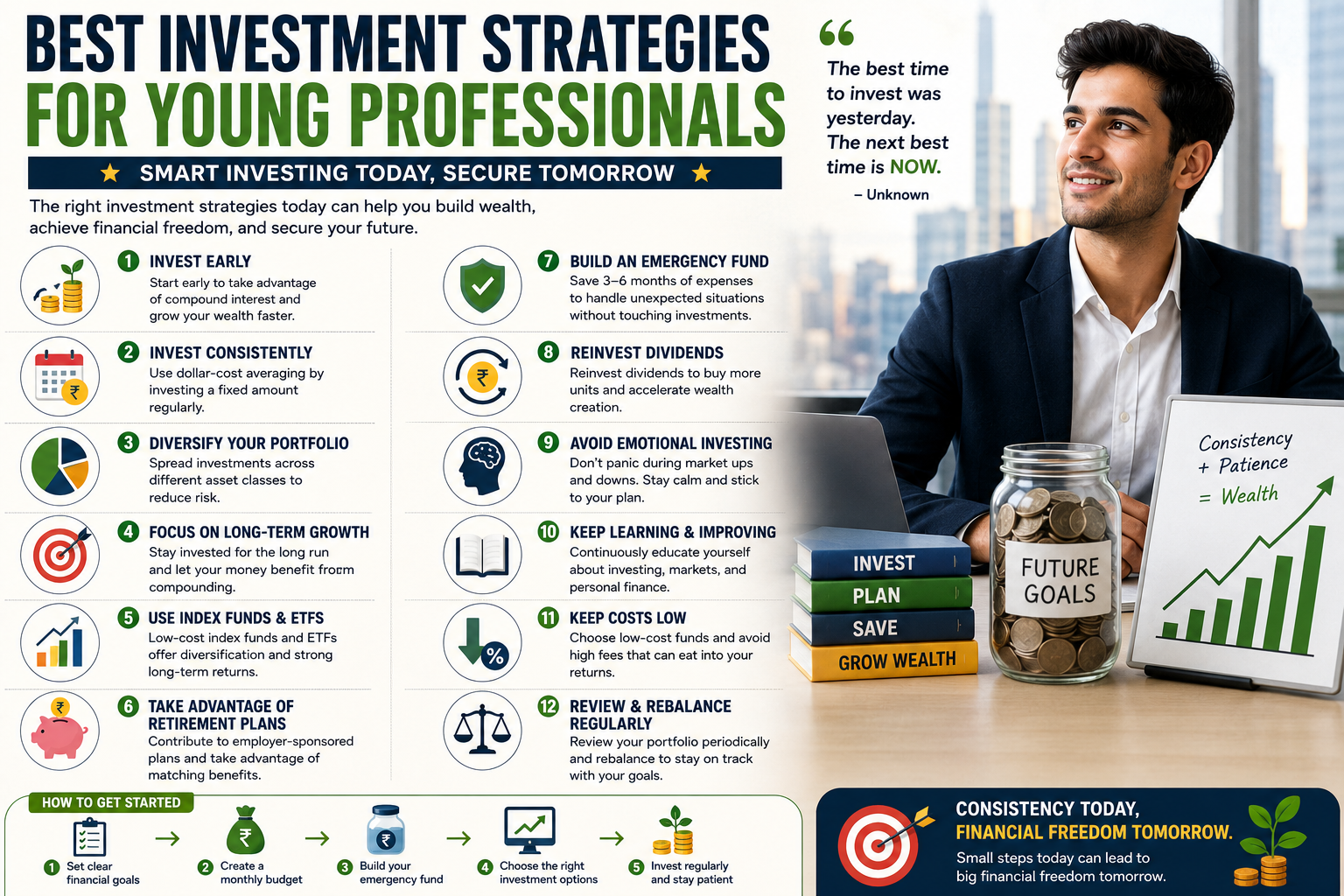
Step 7: Invest Consistently
One of the most powerful investment strategies is consistency.
Dollar-Cost Averaging
This strategy involves investing a fixed amount regularly regardless of market conditions.
Example:
- Invest monthly
- Buy during highs and lows
- Reduce emotional decision-making
Consistent investing can smooth out market volatility over time.
Step 8: Understand Compound Growth
Compound growth occurs when your earnings generate additional earnings.
For example:
- Initial investment: $1,000
- Annual return: 10%
- Earnings reinvested
Over time, growth accelerates because returns compound on previous gains.
Compounding is often called the “eighth wonder of the world” because of its wealth-building potential.
Step 9: Avoid Common Beginner Mistakes
Trying to Time the Market
Predicting market movements is extremely difficult.
Focus on long-term investing instead.
Following Investment Hype
Avoid making decisions based solely on social media trends or rumors.
Lack of Research
Always understand what you’re investing in before committing money.
Emotional Investing
Fear and greed often lead to poor decisions.
Stick to your strategy during market fluctuations.
Ignoring Fees
Investment fees can significantly reduce long-term returns.
Choose cost-effective investment options whenever possible.
Step 10: Monitor and Rebalance Your Portfolio
Investing is not a one-time activity.
Regularly review your portfolio to ensure it aligns with your goals.
Rebalancing
Rebalancing involves adjusting asset allocations as market values change.
Example:
If stocks grow faster than bonds, your portfolio may become riskier than intended.
Periodic rebalancing helps maintain your desired risk level.
Best Investment Strategies for Beginners
Index Fund Investing
Many beginners prefer index funds because they offer:
- Diversification
- Low fees
- Long-term growth potential
Buy-and-Hold Strategy
This approach involves purchasing quality investments and holding them for many years.
Benefits include:
- Lower trading costs
- Reduced stress
- Long-term wealth accumulation
Retirement Investing
Contributing regularly to retirement accounts helps build financial security for the future.
How Much Money Do You Need to Start?
One of the biggest misconceptions about investing is that it requires a large amount of money.
Today, many platforms allow you to start with:
- $10
- $50
- $100
The key is consistency rather than the initial amount.
Even small investments can grow significantly over time through compound returns.
The Importance of Financial Education
Successful investing requires continuous learning.
Stay informed by:
- Reading financial books
- Following market news
- Taking online courses
- Listening to investment podcasts
- Learning from experienced investors
Financial knowledge improves decision-making and confidence.
Conclusion
Investing doesn’t have to be complicated. By following this Investing for Beginners: Step-by-Step Guide, you can build a strong financial foundation and start growing your wealth confidently.
Begin by defining your goals, creating an emergency fund, understanding risk, and choosing diversified investments. Focus on long-term growth, invest consistently, and avoid emotional decisions.
Remember, successful investing is not about getting rich quickly—it’s about building wealth steadily over time. The sooner you start, the more opportunities you’ll have to benefit from the power of compound growth and achieve your financial goals.









Leave a Reply