
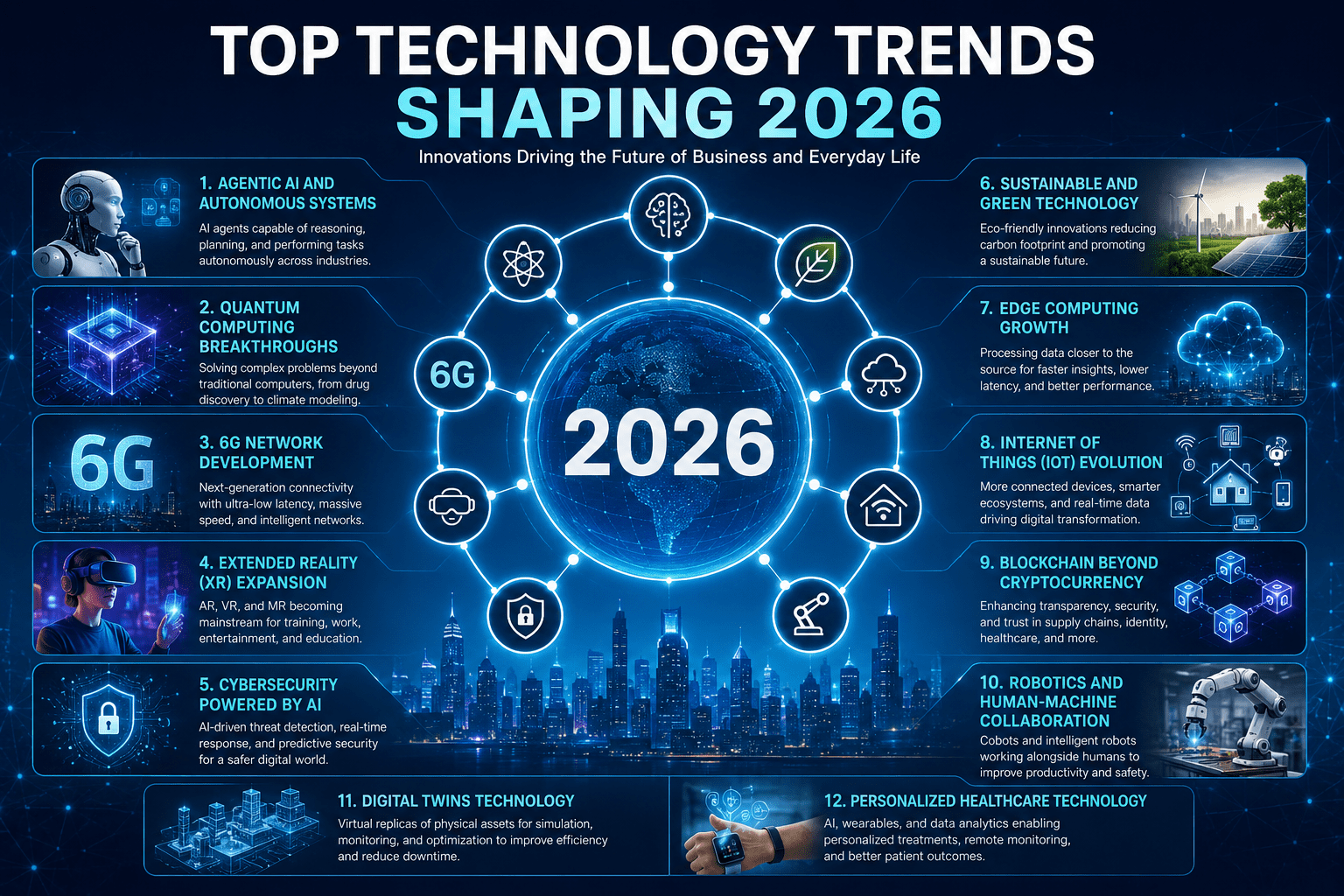
Technology continues to evolve at an unprecedented pace, transforming industries, businesses, and everyday life. As we move through 2026, emerging innovations are creating new opportunities while redefining how people work, communicate, and interact with the world. From advanced artificial intelligence to sustainable technologies, these trends are driving the next wave of digital transformation.
In this article, we explore the top technology trends shaping 2026 and their impact on businesses and consumers worldwide.
1. Agentic AI and Autonomous Systems
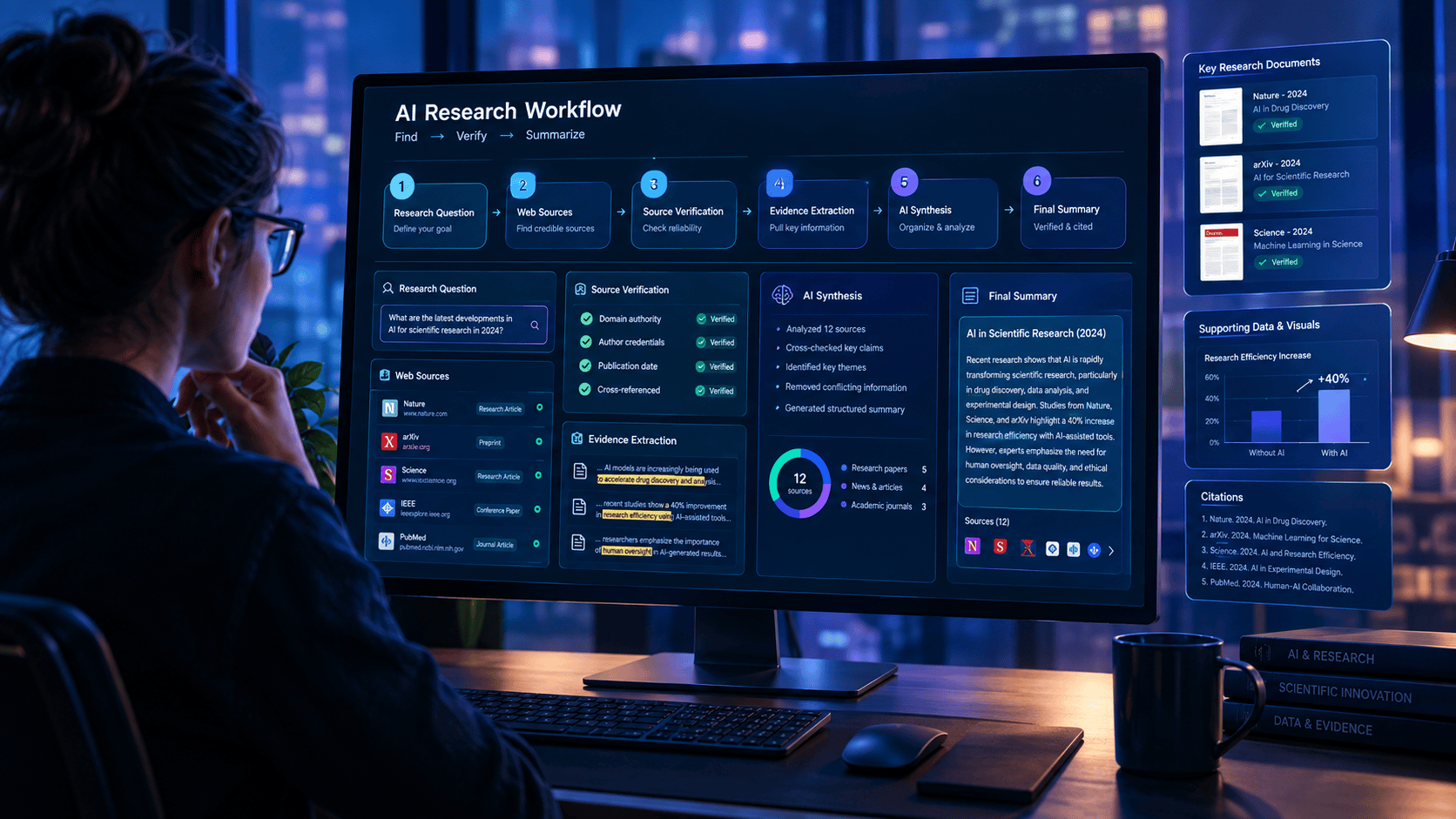
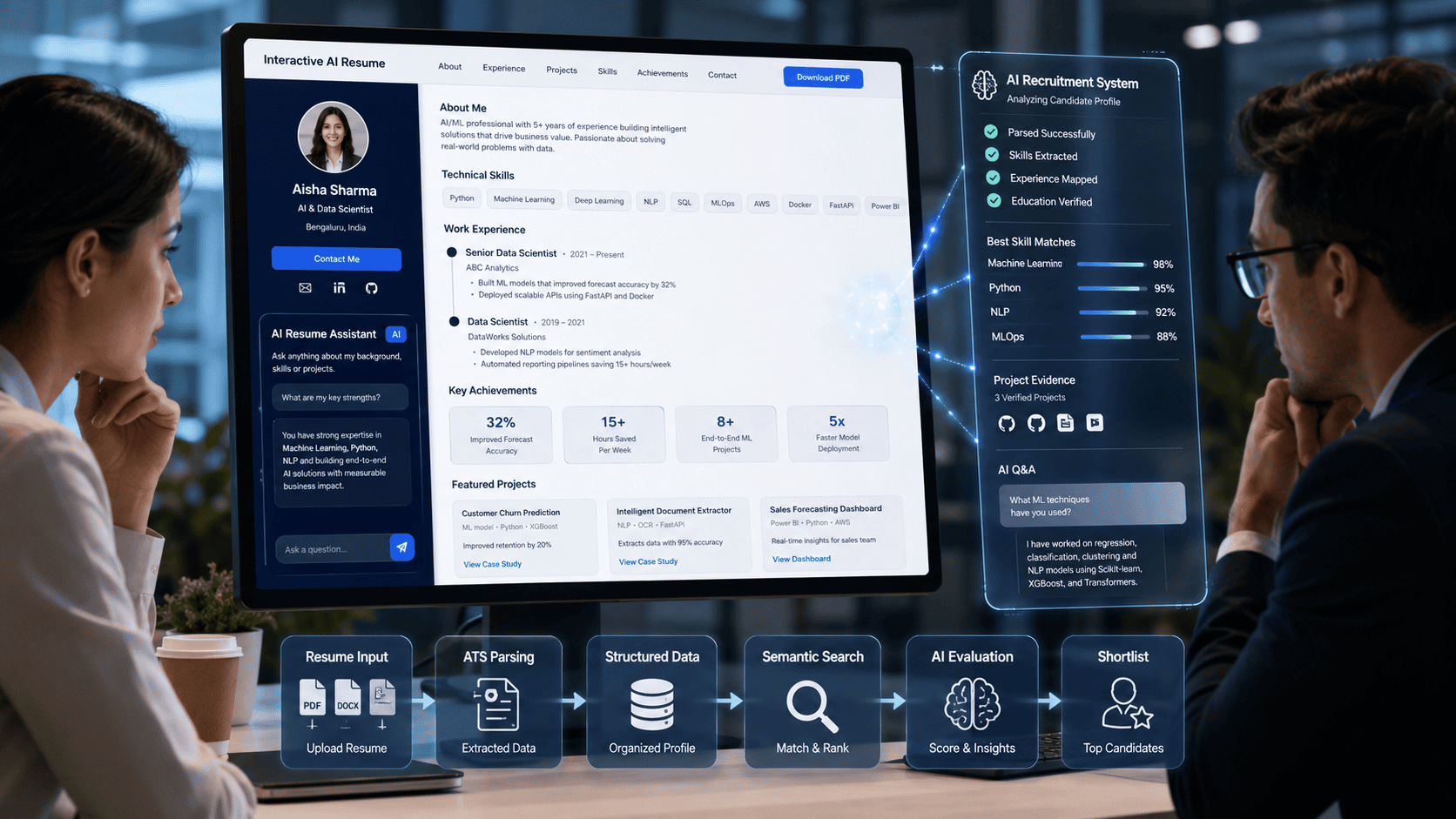
Artificial Intelligence (AI) remains the most influential technology trend in 2026. However, the focus has shifted from simple automation to Agentic AI—AI systems capable of planning, reasoning, and performing tasks with minimal human intervention.
Businesses are leveraging AI agents to:
- Manage customer support
- Analyze large datasets
- Automate business workflows
- Assist with software development
- Enhance decision-making processes
Industries such as healthcare, finance, retail, and manufacturing are seeing significant productivity gains through AI-powered automation.
Benefits:
- Increased efficiency
- Reduced operational costs
- Faster decision-making
- Improved customer experiences
2. Quantum Computing Breakthroughs
Quantum computing is moving closer to practical commercial applications. Major technology companies and research institutions are investing heavily in quantum technologies to solve problems beyond the capabilities of traditional computers.
Potential applications include:
- Drug discovery
- Financial modeling
- Logistics optimization
- Climate simulations
- Advanced cryptography
While still in its early stages, quantum computing is expected to revolutionize scientific research and complex problem-solving over the coming years.
3. 6G Network Development
Although 5G adoption continues globally, 6G research and pilot programs are rapidly advancing. Experts predict that 6G networks will deliver:
- Ultra-low latency
- Faster data transmission
- Enhanced AI integration
- Advanced IoT connectivity
- Immersive virtual experiences
The technology could enable real-time holographic communication, autonomous transportation systems, and highly connected smart cities.
Key Advantages:
- Improved connectivity
- Enhanced mobile experiences
- Better support for AI applications
- More reliable communication networks
4. Extended Reality (XR) Expansion
Extended Reality (XR), which combines Virtual Reality (VR), Augmented Reality (AR), and Mixed Reality (MR), is becoming mainstream in 2026.
Businesses are utilizing XR for:
- Employee training
- Product visualization
- Remote collaboration
- Virtual events
- Educational experiences
As hardware becomes more affordable and powerful, XR adoption is expected to grow significantly across industries.
5. Cybersecurity Powered by AI
With cyber threats becoming increasingly sophisticated, organizations are turning to AI-powered cybersecurity solutions to protect sensitive data and digital infrastructure.
Modern cybersecurity systems can:
- Detect threats in real time
- Predict potential vulnerabilities
- Automate security responses
- Identify unusual network behavior
Cybersecurity remains a top priority as businesses continue expanding their digital operations and cloud-based services.
6. Sustainable and Green Technology
Environmental concerns are driving innovation in sustainable technology. Organizations are investing in solutions that reduce energy consumption and minimize environmental impact.
Popular green technology trends include:
- Energy-efficient data centers
- Renewable energy systems
- Smart power grids
- Sustainable manufacturing
- Carbon tracking software
Businesses adopting green technologies not only support sustainability goals but also reduce operating costs over time.
7. Edge Computing Growth
Edge computing is gaining momentum as organizations seek faster data processing and reduced latency.
Instead of sending all data to centralized cloud servers, edge computing processes information closer to where it is generated.
Applications:
- Autonomous vehicles
- Smart factories
- Healthcare monitoring
- Industrial IoT systems
- Smart cities
Benefits include improved performance, faster response times, and enhanced security.
8. Internet of Things (IoT) Evolution
The Internet of Things continues to expand in 2026, connecting billions of devices worldwide.
IoT applications include:
- Smart homes
- Wearable devices
- Connected healthcare equipment
- Industrial automation
- Smart agriculture
Advanced sensors, AI integration, and improved connectivity are making IoT ecosystems more intelligent and efficient.
9. Blockchain Beyond Cryptocurrency
Blockchain technology is finding applications far beyond digital currencies.
Businesses are utilizing blockchain for:
- Supply chain transparency
- Digital identity management
- Secure transactions
- Healthcare records
- Smart contracts
The technology enhances trust, security, and transparency across various industries.
10. Robotics and Human-Machine Collaboration
Robotics technology continues to evolve, enabling closer collaboration between humans and machines.
Modern robots are being deployed in:
- Manufacturing
- Warehousing
- Healthcare
- Agriculture
- Retail operations
Collaborative robots (cobots) work alongside employees, improving productivity while maintaining workplace safety.
11. Digital Twins Technology
Digital twins are virtual representations of physical systems, assets, or processes.
Organizations use digital twins to:
- Monitor equipment performance
- Predict maintenance needs
- Optimize operations
- Simulate scenarios
- Reduce downtime
Industries such as manufacturing, energy, and transportation are increasingly adopting digital twin technology to improve efficiency.
12. Personalized Healthcare Technology
Healthcare innovation is accelerating through AI, wearable devices, and advanced analytics.
Emerging healthcare technologies include:
- AI-assisted diagnostics
- Remote patient monitoring
- Precision medicine
- Smart medical devices
- Predictive health analytics
These technologies are improving patient outcomes while reducing healthcare costs.
Impact of Technology Trends on Businesses
Organizations that embrace emerging technologies can gain significant competitive advantages, including:
- Increased operational efficiency
- Enhanced customer experiences
- Better decision-making capabilities
- Reduced costs
- Improved innovation potential
Businesses that fail to adapt may struggle to remain competitive in an increasingly digital marketplace.
Preparing for the Future
To stay ahead of technological change, businesses and professionals should:
- Invest in digital skills development.
- Monitor emerging technology trends.
- Prioritize cybersecurity initiatives.
- Explore AI and automation opportunities.
- Adopt sustainable technology practices.
- Build flexible digital infrastructures.
Continuous learning and innovation will be essential for long-term success in the rapidly evolving technology landscape.
Conclusion
The top technology trends shaping 2026 highlight a future driven by intelligence, connectivity, automation, and sustainability. Innovations such as Agentic AI, quantum computing, 6G networks, XR experiences, cybersecurity advancements, and green technologies are transforming industries and creating new opportunities worldwide.
Organizations and individuals who understand and embrace these trends will be better positioned to thrive in the digital economy. As technology continues to evolve, staying informed and adaptable will remain the key to success in the years ahead.
Also read Understanding 5G and the Future of 6G: What You Need to Know


Leave a Reply