

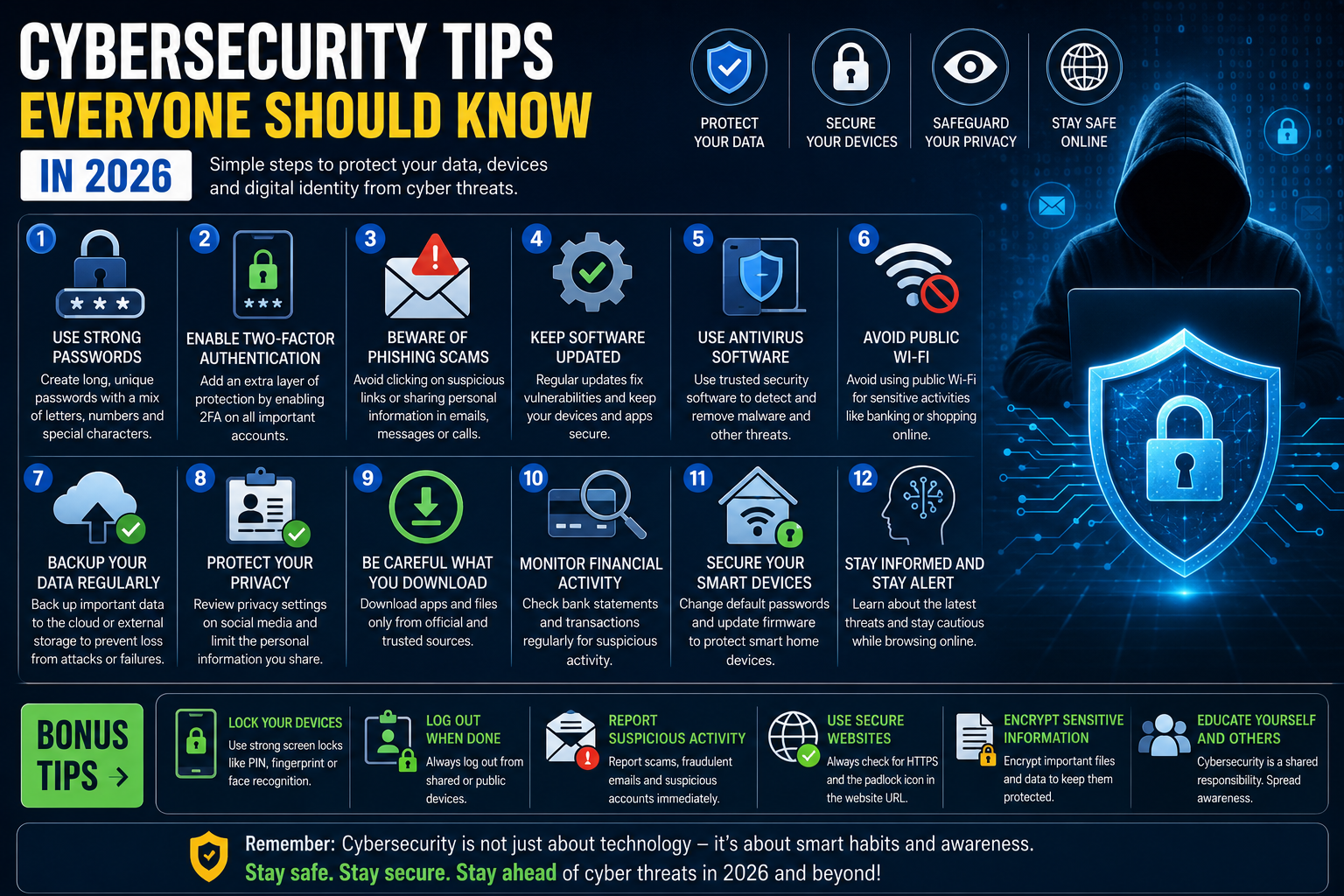
As technology becomes more integrated into everyday life, cybersecurity has become more important than ever before. In 2026, people rely heavily on smartphones, online banking, cloud storage, smart homes, social media platforms, and digital communication tools. While technology offers convenience and efficiency, it also creates opportunities for cybercriminals to exploit personal information and online vulnerabilities.
Cyberattacks are increasing globally, affecting individuals, businesses, and governments. From phishing scams and ransomware attacks to identity theft and data breaches, online threats are becoming more sophisticated every year.
The good news is that many cybersecurity risks can be reduced by following simple but effective digital safety practices. Whether you are a student, professional, business owner, or casual internet user, understanding basic cybersecurity principles is essential for protecting your data and privacy.
In this article, we will explore the most important cybersecurity tips everyone should know in 2026 and how to stay safe in the digital world.
Why Cybersecurity Matters in 2026
The modern digital world is highly connected. People store sensitive information online, including:
- Banking details
- Personal photos
- Business documents
- Passwords
- Health records
- Social media accounts
Cybercriminals target this information for financial fraud, identity theft, blackmail, and other malicious activities.
As artificial intelligence and automation continue advancing, cyberattacks are also becoming smarter and more difficult to detect.
Strong cybersecurity habits are now essential for everyone.
1. Use Strong and Unique Passwords
Passwords are the first line of defense against cyber threats.
Tips for Creating Strong Passwords
A secure password should include:
- Uppercase and lowercase letters
- Numbers
- Special characters
- At least 12 characters
Avoid using:
- Birthdates
- Simple words
- Phone numbers
- Common passwords like “123456”
Avoid Reusing Passwords
Using the same password across multiple websites is dangerous. If one account gets hacked, all connected accounts become vulnerable.
Use unique passwords for every platform.
2. Enable Two-Factor Authentication (2FA)
Two-factor authentication adds an extra layer of security.
How 2FA Works
After entering a password, users must verify their identity using:
- OTP codes
- Authentication apps
- Fingerprint verification
- Face recognition
Even if hackers steal a password, they cannot access the account without the second verification step.
Best Accounts for 2FA
Always enable 2FA for:
- Email accounts
- Banking apps
- Social media
- Cloud storage
- Work-related platforms
3. Be Careful of Phishing Scams
Phishing remains one of the most common cyber threats in 2026.
What Is Phishing?
Phishing attacks trick users into sharing sensitive information through fake:
- Emails
- Messages
- Websites
- Social media links
Hackers often pretend to be trusted companies or organizations.
How to Avoid Phishing
- Never click suspicious links
- Verify sender email addresses
- Avoid downloading unknown attachments
- Check website URLs carefully
- Ignore urgent requests for personal information
Always think carefully before sharing sensitive data online.
4. Keep Software and Devices Updated
Software updates often include important security improvements.
Why Updates Matter
Outdated systems may contain vulnerabilities that hackers can exploit.
Update regularly:
- Smartphones
- Laptops
- Operating systems
- Browsers
- Antivirus software
- Apps
Automatic updates are recommended whenever possible.
5. Use Trusted Antivirus and Security Software
Antivirus software helps detect and block cyber threats.
Features of Modern Security Software
Good security tools provide:
- Malware protection
- Real-time threat detection
- Ransomware defense
- Safe browsing alerts
- Firewall protection
Reliable security software significantly improves device safety.
6. Avoid Public Wi-Fi for Sensitive Activities
Public Wi-Fi networks are often unsecured.
Risks of Public Wi-Fi
Hackers can intercept data on public networks, especially in:
- Airports
- Cafes
- Hotels
- Shopping malls
Avoid using public Wi-Fi for:
- Online banking
- Password logins
- Financial transactions
Use a VPN
A Virtual Private Network (VPN) encrypts internet traffic and improves online privacy.
VPNs are highly recommended for public internet usage.
7. Backup Important Data Regularly
Data backups protect against:
- Ransomware attacks
- Device failure
- Accidental deletion
- Data corruption
Backup Methods
Store backups using:
- External hard drives
- Cloud storage
- Secure backup systems
Regular backups reduce the risk of permanent data loss.
8. Protect Your Social Media Privacy
Cybercriminals often collect personal information through social media platforms.
Social Media Safety Tips
- Limit public profile information
- Avoid sharing personal details
- Be cautious with friend requests
- Disable unnecessary location sharing
- Review privacy settings regularly
Oversharing online increases cybersecurity risks.
9. Be Careful What You Download
Malicious software is often hidden inside fake downloads.
Avoid Downloading From Untrusted Sources
Only install apps and software from:
- Official app stores
- Verified websites
- Trusted developers
Avoid pirated software and suspicious files.
10. Learn to Recognize Online Scams
Cybercriminals use emotional manipulation to trick users.
Common Online Scams
- Fake lottery messages
- Investment scams
- Romance scams
- Tech support fraud
- Fake job offers
If something sounds too good to be true, it usually is.
11. Secure Smart Home Devices
Smart homes and connected devices are becoming increasingly common.
Smart Device Security Tips
- Change default passwords
- Update firmware regularly
- Disable unused features
- Use secure Wi-Fi networks
Smart devices can become targets if poorly secured.
12. Monitor Financial Activity Regularly
Early detection helps prevent financial losses.
What to Monitor
Regularly check:
- Bank transactions
- Credit card statements
- Online payment accounts
Immediately report suspicious activity.
13. Understand AI-Powered Cyber Threats
Artificial intelligence is now being used in cyberattacks.
AI Cyber Risks
Cybercriminals use AI for:
- Advanced phishing scams
- Deepfake fraud
- Automated hacking attempts
- Fake voice cloning
Users must remain alert as cyber threats become more sophisticated.
Cybersecurity Best Practices for Businesses
Businesses face even greater cybersecurity risks.
Important Business Security Measures
Companies should:
- Train employees regularly
- Use strong access controls
- Implement data encryption
- Monitor networks continuously
- Create incident response plans
Employee awareness remains one of the strongest cybersecurity defenses.
Future of Cybersecurity in 2026 and Beyond
Cybersecurity technology continues evolving rapidly.
Emerging Trends
Future cybersecurity innovations include:
- AI-powered threat detection
- Biometric authentication
- Zero-trust security systems
- Quantum encryption
- Advanced cloud security
As cyber threats evolve, security systems must continue improving.
Benefits of Strong Cybersecurity Habits
Better Privacy Protection
Good cybersecurity practices keep personal information safe.
Reduced Financial Risks
Strong protection lowers the chances of fraud and identity theft.
Safer Online Experiences
Users can browse, shop, and communicate more securely.
Improved Digital Confidence
Understanding cybersecurity reduces fear and uncertainty online.
Conclusion
Cybersecurity is no longer optional in 2026. As digital technology becomes more advanced and interconnected, online threats continue increasing in complexity and frequency. Protecting personal information, devices, and online accounts requires awareness, caution, and good security habits.
Simple actions such as using strong passwords, enabling two-factor authentication, avoiding phishing scams, updating devices, and backing up data can significantly reduce cybersecurity risks.
The digital world offers enormous opportunities, but staying safe online requires responsibility and continuous learning. Individuals and businesses that prioritize cybersecurity will be better prepared for the future of the connected world.
Also read How Artificial Intelligence Is Reshaping Workplaces in 2026


Leave a Reply