

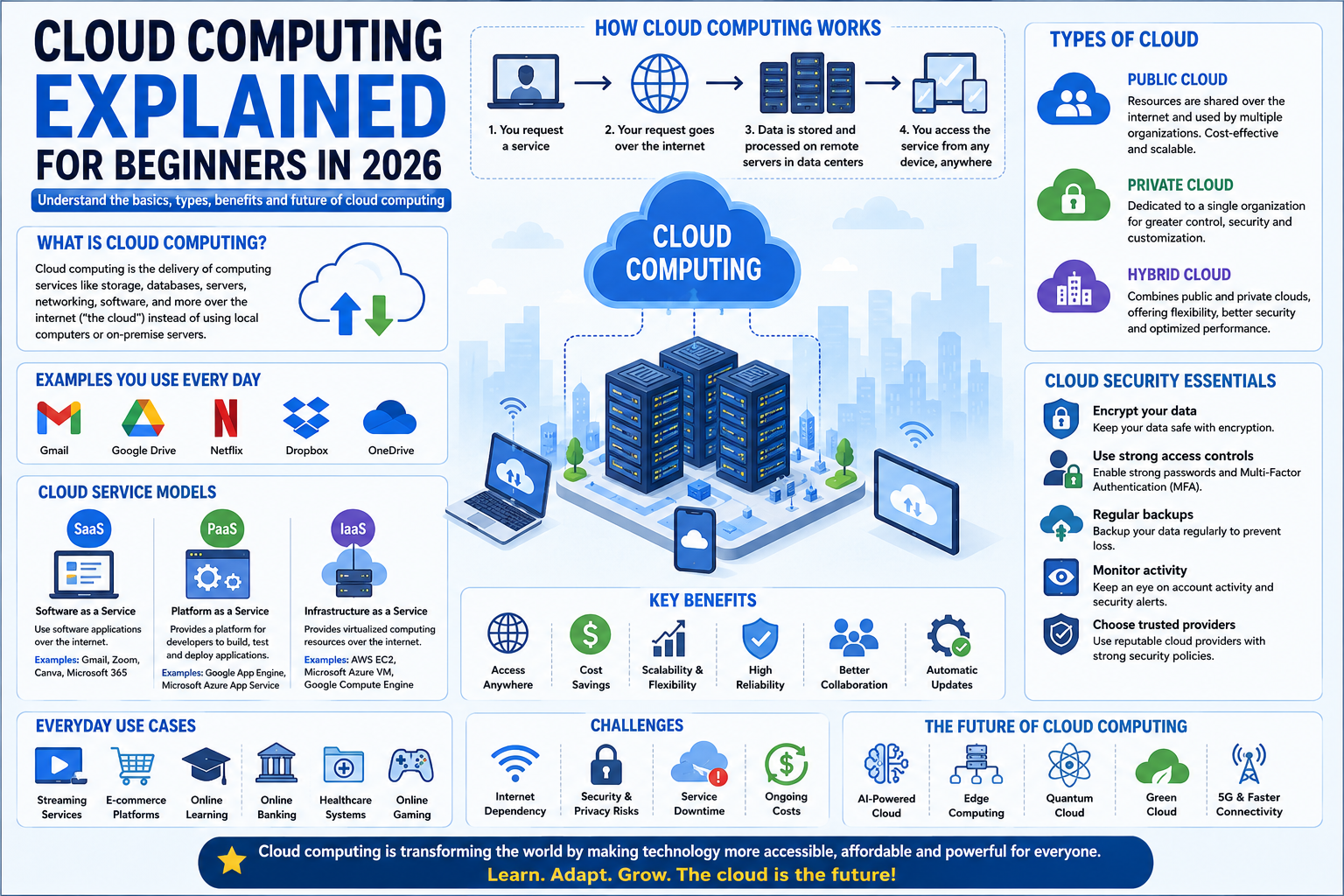
Cloud computing has become one of the most important technologies in the digital world. In 2026, businesses, students, creators, and everyday users rely on cloud services for storing data, running applications, collaborating remotely, and accessing powerful computing resources from anywhere in the world.
From streaming movies and online gaming to business software and artificial intelligence, cloud computing powers many of the digital services people use every day. Major technology companies continue investing heavily in cloud infrastructure, making cloud services faster, more secure, and more accessible.
Despite its popularity, many beginners still find cloud computing confusing. Understanding how cloud technology works is essential because it plays a major role in modern internet experiences and business operations.
In this article, we will explain cloud computing for beginners in simple terms, including how it works, different cloud models, benefits, security, and future trends.
What Is Cloud Computing?
Cloud computing refers to delivering computing services over the internet instead of relying entirely on local computers or physical servers.
These services may include:
- Data storage
- Software applications
- Databases
- Networking
- Servers
- Artificial intelligence tools
- Processing power
Instead of storing files only on a personal computer, users can access their data and applications online through cloud platforms.
Simple Example of Cloud Computing
Many people already use cloud computing daily without realizing it.
Examples include:
- Google Drive
- Dropbox
- Netflix
- Gmail
- Microsoft OneDrive
- Online gaming platforms
When users upload photos to cloud storage or stream movies online, cloud servers process and deliver the content through the internet.
How Cloud Computing Works
Cloud computing works through a network of remote servers located in data centers worldwide.
Basic Process
- Users connect to cloud services through the internet.
- Data is stored and processed on remote servers.
- Applications run on cloud infrastructure.
- Users access services from smartphones, laptops, or other devices.
Cloud providers maintain the hardware, security, and infrastructure so users do not need to manage physical systems themselves.
Types of Cloud Computing
There are several major types of cloud computing models.
1. Public Cloud
Public cloud services are provided over the internet and shared among multiple users.
Examples
- Google Cloud
- Microsoft Azure
- Amazon Web Services (AWS)
Benefits
- Affordable
- Scalable
- Easy to use
- No hardware maintenance
Public cloud services are widely used by startups, businesses, and individual users.
2. Private Cloud
Private cloud infrastructure is dedicated to a single organization.
Advantages
- Better control
- Higher customization
- Enhanced security
Large companies and government organizations often use private cloud systems.
3. Hybrid Cloud
Hybrid cloud combines public and private cloud environments.
Businesses use hybrid cloud systems to balance:
- Flexibility
- Security
- Performance
- Cost efficiency
This model is becoming increasingly popular in 2026.
Main Cloud Service Models
Cloud services are divided into different categories based on functionality.
1. Software as a Service (SaaS)
SaaS delivers software applications through the internet.
Examples
- Gmail
- Zoom
- Canva
- Microsoft 365
- Google Docs
Users can access these tools without installing complex software locally.
Benefits
- Easy accessibility
- Automatic updates
- Cross-device support
- Lower costs
SaaS is one of the most widely used cloud service models.
2. Platform as a Service (PaaS)
PaaS provides development environments for programmers and developers.
Features
- Application development tools
- Databases
- Hosting platforms
- Development frameworks
Developers can build and deploy applications faster without managing servers manually.
3. Infrastructure as a Service (IaaS)
IaaS provides virtual computing infrastructure online.
Services Include
- Virtual servers
- Storage systems
- Networking
- Computing power
Businesses use IaaS to reduce hardware costs and scale resources easily.
Benefits of Cloud Computing
Cloud computing offers many advantages for businesses and individuals.
1. Access From Anywhere
Users can access files and applications from any device with an internet connection.
This supports:
- Remote work
- Online learning
- Global collaboration
2. Cost Savings
Cloud computing reduces the need for expensive hardware and maintenance.
Businesses save money on:
- Servers
- Data centers
- IT infrastructure
- Software installation
3. Scalability
Cloud services can easily scale up or down based on demand.
For example:
- Businesses can increase storage instantly
- Websites can handle traffic spikes
- Companies pay only for resources used
4. Automatic Updates
Cloud providers handle software updates and security improvements automatically.
This reduces maintenance workload for users.
5. Better Collaboration
Teams can work together in real time using cloud-based tools.
Examples include:
- Shared documents
- Video meetings
- Collaborative projects
- Cloud workspaces
Cloud computing has become essential for hybrid and remote work environments.
Cloud Computing and Artificial Intelligence
Artificial intelligence relies heavily on cloud computing infrastructure.
AI + Cloud Integration
Cloud platforms provide:
- AI processing power
- Machine learning tools
- Data storage
- AI model training systems
Many AI applications users interact with today operate through cloud systems.
Cloud Security in 2026
Security remains a major concern in cloud computing.
Common Cloud Security Risks
- Data breaches
- Unauthorized access
- Malware attacks
- Misconfigured systems
How Cloud Providers Improve Security
Modern cloud platforms use:
- Data encryption
- Multi-factor authentication
- AI-powered threat detection
- Backup systems
- Access control management
Leading cloud providers invest heavily in cybersecurity technologies.
Cloud Computing in Everyday Life
Cloud technology supports many modern digital experiences.
Examples Include
- Video streaming
- Social media
- Online banking
- Smart home systems
- Mobile apps
- E-commerce platforms
Without cloud computing, many online services would not function efficiently.
Cloud Computing for Businesses
Businesses rely on cloud technology for digital transformation.
Business Applications
Companies use cloud computing for:
- Customer relationship management
- Data analytics
- Remote collaboration
- Website hosting
- Inventory management
- AI-powered automation
Cloud services improve efficiency and flexibility for organizations of all sizes.
Challenges of Cloud Computing
Despite its advantages, cloud computing also has limitations.
1. Internet Dependency
Cloud services require stable internet connections.
Without internet access, users may experience limited functionality.
2. Privacy Concerns
Storing data online raises concerns about privacy and data control.
Businesses must ensure compliance with security regulations.
3. Downtime Risks
Although rare, cloud service outages can temporarily disrupt business operations.
Future of Cloud Computing
Cloud technology will continue evolving rapidly beyond 2026.
Future Trends Include
- AI-powered cloud systems
- Edge computing
- Quantum cloud computing
- Greener cloud infrastructure
- Faster global connectivity
- Advanced cloud security solutions
Cloud computing will remain a foundational technology for future digital innovation.
Why Cloud Computing Skills Matter
Cloud computing skills are increasingly valuable in the job market.
Popular Cloud Careers
- Cloud engineer
- Cloud architect
- DevOps engineer
- Cybersecurity specialist
- Data analyst
- AI developer
Learning cloud technology can open many career opportunities in the tech industry.
Conclusion
Cloud computing has become an essential part of modern technology in 2026. It powers online services, supports businesses, enables remote work, and drives innovation across industries. From data storage and collaboration tools to artificial intelligence and streaming platforms, cloud technology is shaping the future of the digital world.
For beginners, understanding cloud computing is important because it affects both personal and professional technology use. As cloud services continue evolving, their impact on everyday life and business operations will only continue growing.
Individuals and organizations that embrace cloud technology early will be better prepared for the future of digital transformation.
Also read Cybersecurity Tips Everyone Should Know






Leave a Reply