

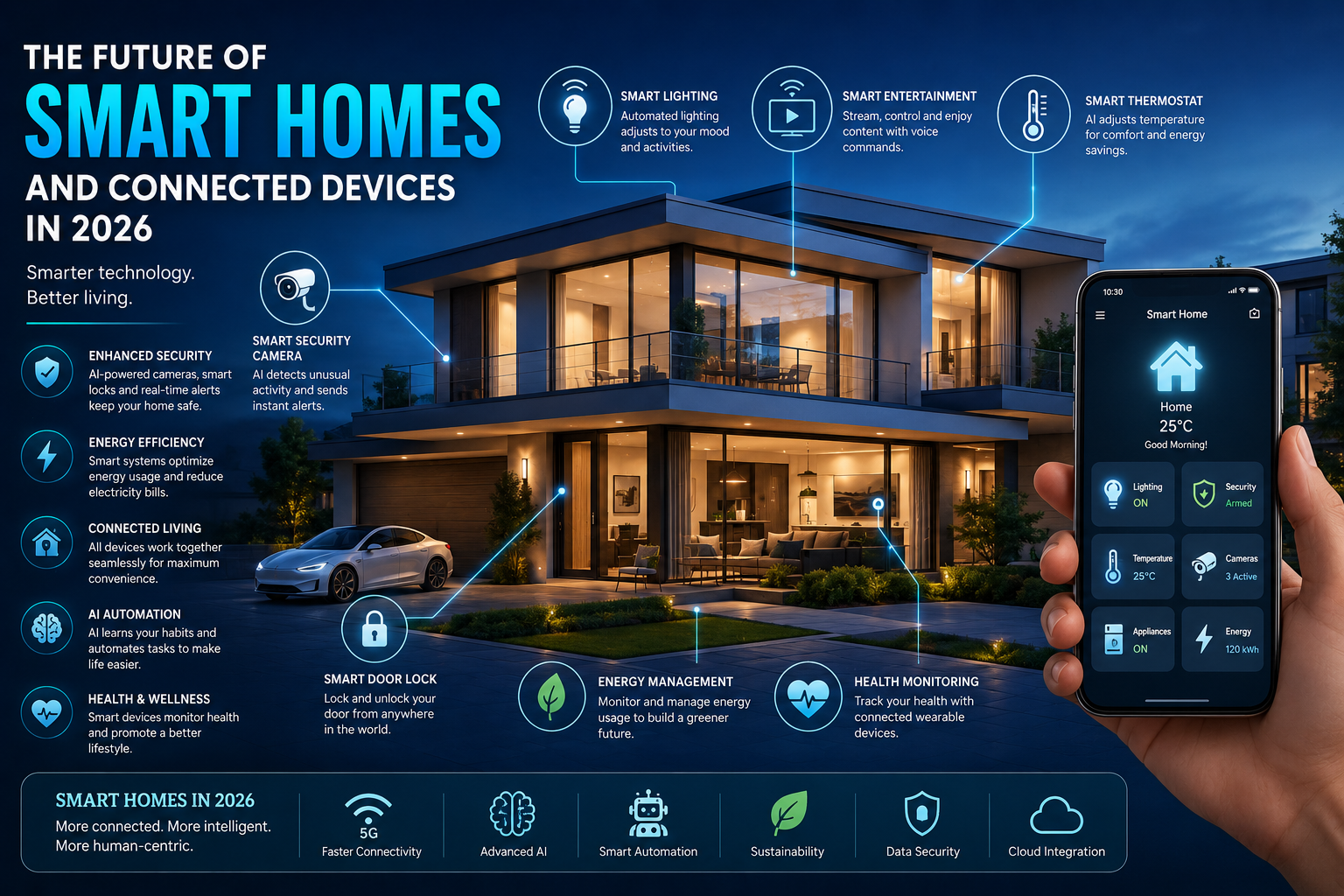
Technology is transforming homes faster than ever before. In 2026, smart homes and connected devices are becoming a normal part of modern living, changing the way people interact with their surroundings. From AI-powered assistants and smart security systems to connected appliances and automated lighting, homes are becoming more intelligent, efficient, and convenient.
The rise of the Internet of Things (IoT), artificial intelligence, and cloud computing has allowed devices to communicate with each other seamlessly. Smart homes are no longer limited to luxury lifestyles; they are now accessible to everyday consumers looking for comfort, safety, and energy efficiency.
In this article, we will explore the future of smart homes and connected devices in 2026, their benefits, emerging trends, and how they are shaping the future of modern living.
What Are Smart Homes?
A smart home is a residence equipped with internet-connected devices that can automate and remotely control household functions. These devices communicate through Wi-Fi, Bluetooth, or IoT technology, allowing users to manage them using smartphones, tablets, or voice commands.
Smart homes typically include:
- Smart lighting systems
- AI-powered virtual assistants
- Smart security cameras
- Smart TVs and entertainment systems
- Smart thermostats
- Connected kitchen appliances
- Automated door locks
- Energy management systems
The goal of smart home technology is to improve convenience, efficiency, security, and overall quality of life.
Rise of Connected Devices in 2026
Connected devices are rapidly increasing worldwide. In 2026, billions of devices are expected to be connected through IoT networks, creating a highly integrated digital ecosystem.
Why Connected Devices Are Growing Rapidly
Several factors are driving the popularity of connected devices:
- Faster internet connectivity
- Affordable smart gadgets
- Growth of artificial intelligence
- Increased smartphone usage
- Demand for automation
- Improved cloud computing services
As technology becomes more advanced and affordable, more households are adopting smart devices for daily use.
AI-Powered Smart Assistants
Virtual assistants have become central to smart homes in 2026. AI-powered assistants can understand voice commands, learn user behavior, and automate household tasks.
Features of Smart Assistants
Modern virtual assistants can:
- Control home appliances
- Manage schedules and reminders
- Answer questions instantly
- Play music and videos
- Provide weather updates
- Monitor smart security systems
- Control lighting and temperature
These assistants are becoming more human-like with advanced natural language processing and machine learning capabilities.
Personalized Experiences
AI systems analyze user preferences to provide personalized experiences. For example:
- Smart lighting adjusts automatically based on mood
- Music recommendations change according to listening habits
- Temperature settings adapt to daily routines
- Shopping suggestions become more accurate
Personalization is making smart homes more efficient and user-friendly.
Smart Security Systems
Home security technology has advanced significantly with AI and connected devices.
AI-Powered Surveillance Cameras
Modern security cameras use artificial intelligence to:
- Detect suspicious movement
- Recognize familiar faces
- Send real-time alerts
- Differentiate between humans, pets, and vehicles
This reduces false alarms and improves home safety.
Smart Door Locks
Smart locks allow homeowners to:
- Unlock doors remotely
- Use fingerprint access
- Monitor entry activity
- Provide temporary guest access
These systems improve both convenience and security.
Smart Alarm Systems
Connected alarm systems automatically notify homeowners and emergency services during suspicious activity or break-ins.
Energy-Efficient Smart Homes
Energy efficiency is one of the biggest advantages of connected homes.
Smart Thermostats
AI-powered thermostats analyze daily routines and optimize energy usage automatically. They help reduce electricity bills by adjusting heating and cooling systems efficiently.
Automated Lighting Systems
Smart lighting systems use motion sensors and AI to control lights based on occupancy and natural daylight.
Benefits include:
- Reduced electricity consumption
- Longer bulb lifespan
- Improved convenience
Smart Energy Monitoring
Connected systems provide detailed reports about household energy usage, helping users identify ways to save energy and reduce environmental impact.
Smart Kitchens and Connected Appliances
Kitchen technology is evolving rapidly with connected devices.
Smart Refrigerators
Modern refrigerators can:
- Track food inventory
- Suggest recipes
- Monitor expiration dates
- Create shopping lists
These features reduce food waste and simplify meal planning.
AI Cooking Assistants
Smart ovens and cooking devices use AI to recommend cooking times and temperatures automatically.
Some appliances can even prepare meals remotely using smartphone controls.
Voice-Controlled Appliances
Connected coffee makers, microwaves, and dishwashers can now be operated using voice commands or mobile apps.
Smart Entertainment Systems
Entertainment experiences are becoming more immersive through connected technology.
AI Content Recommendations
Streaming platforms use AI algorithms to recommend:
- Movies
- TV shows
- Music playlists
- Podcasts
Recommendations are based on user preferences and viewing habits.
Smart TVs and Home Theaters
Modern entertainment systems offer:
- Voice control
- Smart home integration
- Personalized profiles
- Cloud gaming support
- AI picture optimization
These technologies improve viewing experiences significantly.
Healthcare Integration in Smart Homes
Smart homes are increasingly supporting healthcare and wellness.
Remote Health Monitoring
Connected wearable devices can monitor:
- Heart rate
- Sleep quality
- Blood oxygen levels
- Physical activity
These devices send real-time health data to users and healthcare professionals.
Elderly Care Solutions
AI-powered monitoring systems help elderly individuals live independently while improving safety.
Features include:
- Fall detection
- Medication reminders
- Emergency alerts
- Health monitoring
This technology is becoming essential for aging populations worldwide.
Smart Cities and Home Integration
Smart homes are becoming part of larger smart city ecosystems.
Connected Infrastructure
Future cities will connect:
- Traffic systems
- Energy grids
- Public transportation
- Smart buildings
- Emergency services
Smart homes will interact directly with city infrastructure to improve efficiency and sustainability.
Sustainable Living
Connected systems help reduce environmental impact through:
- Energy optimization
- Smart water management
- Waste reduction
- Eco-friendly automation
Sustainability is becoming a major focus in modern smart home development.
Benefits of Smart Homes and Connected Devices
Convenience
Automation simplifies everyday tasks and improves comfort.
Improved Security
AI-powered systems enhance home protection and monitoring.
Energy Savings
Smart devices optimize energy consumption and reduce utility bills.
Better Health Monitoring
Connected health systems encourage healthier lifestyles.
Increased Property Value
Modern smart home features can increase property attractiveness and market value.
Challenges of Smart Home Technology
Despite the advantages, smart homes also face certain challenges.
Privacy Concerns
Connected devices collect large amounts of personal data, raising concerns about data privacy and cybersecurity.
Device Compatibility
Some smart devices may not work seamlessly across different platforms or ecosystems.
High Initial Costs
Advanced smart home setups can still be expensive for some households.
Cybersecurity Risks
Hackers may target poorly secured smart devices, making cybersecurity essential.
Future Trends in Smart Homes
The future of smart homes will continue evolving rapidly.
Advanced AI Integration
AI systems will become more predictive and autonomous.
Fully Automated Homes
Future homes may automate nearly every household task.
Smarter Robotics
Household robots may assist with cleaning, cooking, and maintenance.
Enhanced Sustainability
Eco-friendly smart systems will help reduce environmental impact.
5G and Faster Connectivity
Faster internet networks will improve communication between connected devices.
Conclusion
The future of smart homes and connected devices in 2026 is transforming how people live, work, and interact with technology. AI-powered assistants, smart security systems, connected appliances, and energy-efficient automation are making homes more intelligent, convenient, and sustainable.
As technology advances further, smart homes will become even more integrated into everyday life, improving comfort, security, and productivity for millions of people worldwide.
Businesses and consumers who embrace connected technologies early will benefit greatly from the next generation of intelligent living solutions.
Also read AI Tools Changing Everyday Life in 2026


Leave a Reply