

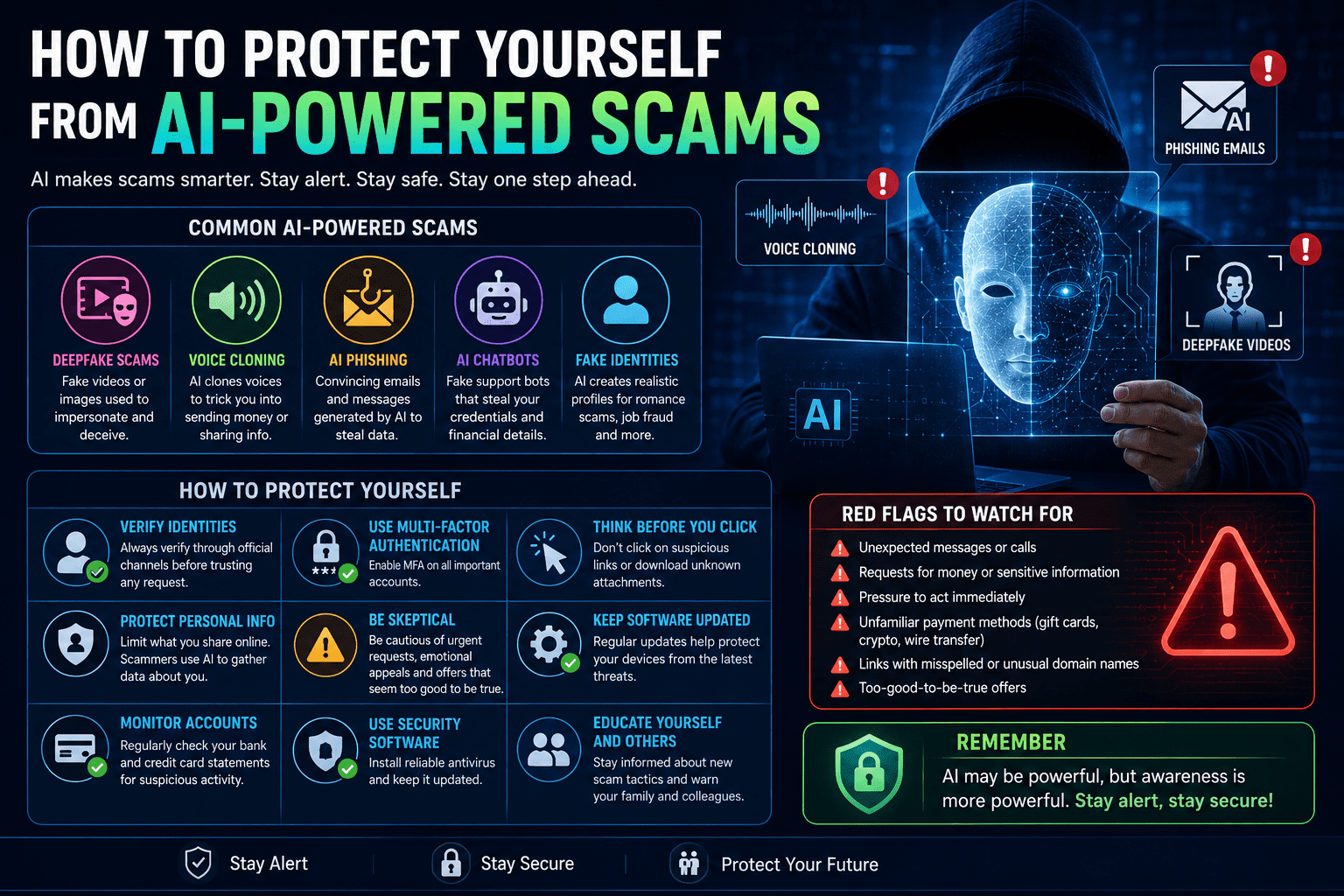
Artificial Intelligence (AI) has revolutionized the way people work, communicate, and access information. While AI offers countless benefits, it has also become a powerful tool for cybercriminals. AI-powered scams are becoming more sophisticated, making them harder to detect than traditional fraud schemes. From realistic deepfake videos to convincing phishing emails and voice-cloning attacks, scammers are using AI technology to deceive individuals and businesses on a massive scale.
As AI continues to evolve, understanding these threats and learning how to protect yourself is more important than ever. This article explores the most common AI-powered scams, how they work, and practical steps you can take to stay safe online.
What Are AI-Powered Scams?
AI-powered scams are fraudulent activities that use artificial intelligence technologies to trick people into revealing sensitive information, sending money, or granting unauthorized access to accounts and systems.
Unlike traditional scams, AI-enhanced fraud can create highly personalized and convincing messages, images, videos, and voices that appear authentic.
Common AI technologies used by scammers include:
- Deepfake technology
- Voice cloning
- AI-generated emails
- AI chatbots
- Synthetic identities
- Automated phishing campaigns
These tools allow cybercriminals to target victims more effectively and increase their chances of success.
Why AI Scams Are More Dangerous
AI-powered scams are often more effective than traditional scams because they can:
Appear Highly Realistic
AI-generated content can closely mimic real people, voices, and communication styles.
Scale Quickly
Scammers can use AI to automate attacks and target thousands of victims simultaneously.
Personalize Messages
AI analyzes publicly available information to create customized scam messages.
Reduce Human Error
Automated systems can continuously refine scam tactics based on success rates.
As a result, even tech-savvy individuals can fall victim to AI-driven fraud.
Common Types of AI-Powered Scams
Deepfake Video Scams
Deepfake technology uses AI to create realistic videos of people saying or doing things they never actually did.
Scammers may use deepfakes to:
- Impersonate company executives
- Create fake celebrity endorsements
- Spread misinformation
- Manipulate financial transactions
These videos can be extremely convincing, making verification essential.
Voice Cloning Scams
Voice cloning technology can replicate a person’s voice using only a short audio sample.
A scammer may:
- Pretend to be a family member in distress
- Impersonate a company executive
- Request urgent money transfers
- Trick employees into revealing confidential information
The cloned voice often sounds nearly identical to the original speaker.
AI-Powered Phishing Emails
Modern phishing emails use AI to improve grammar, personalization, and credibility.
Unlike older phishing attempts filled with obvious errors, AI-generated emails may appear professionally written and highly convincing.
These emails often aim to:
- Steal passwords
- Collect banking information
- Install malware
- Gain access to sensitive accounts
AI Chatbot Scams
Scammers create fake customer support chatbots that appear legitimate.
Victims may unknowingly provide:
- Login credentials
- Credit card details
- Personal information
- Verification codes
These chatbots can conduct realistic conversations and respond intelligently to questions.
Fake Online Profiles
AI-generated images and identities are increasingly used to create fake social media and dating profiles.
Scammers use these accounts for:
- Romance scams
- Investment fraud
- Identity theft
- Social engineering attacks
The profiles often appear genuine and may interact with victims for weeks or months before attempting fraud.
Warning Signs of AI-Powered Scams
Recognizing suspicious behavior is your first line of defense.
Urgent Requests
Scammers often create a sense of urgency to pressure victims into acting quickly.
Examples include:
- Immediate payment demands
- Emergency financial requests
- Threats of account suspension
Unexpected Communications
Be cautious when receiving unexpected calls, emails, or messages, especially if they request sensitive information.
Requests for Personal Data
Legitimate organizations rarely ask for passwords, verification codes, or banking details through email or messaging apps.
Unusual Payment Methods
Scammers often request payments through:
- Gift cards
- Cryptocurrency
- Wire transfers
- Peer-to-peer payment apps
These methods are difficult to trace and recover.
Too-Good-To-Be-True Offers
Promises of guaranteed returns, free prizes, or exclusive opportunities should raise suspicion.
How to Protect Yourself from AI-Powered Scams
Verify Identities Independently
If someone claims to be a family member, colleague, or company representative, verify their identity using a trusted communication method.
For example:
- Call their known phone number
- Contact them through official channels
- Speak with them directly
Never rely solely on messages, emails, or recordings.
Use Multi-Factor Authentication (MFA)
Multi-factor authentication adds an extra layer of security by requiring additional verification beyond passwords.
Benefits include:
- Reduced account takeover risk
- Enhanced login security
- Protection against credential theft
Enable MFA on all important accounts whenever possible.
Limit Personal Information Online
Scammers often gather publicly available information to personalize attacks.
Consider reducing the amount of personal information shared on:
- Social media platforms
- Professional networking sites
- Public forums
Review privacy settings regularly.
Be Skeptical of Emotional Appeals
AI-powered scams frequently exploit emotions such as fear, excitement, urgency, or sympathy.
Take time to verify claims before responding or sending money.
Check Email Addresses Carefully
Many phishing emails use addresses that closely resemble legitimate organizations.
Before clicking links or downloading attachments:
- Verify the sender’s email
- Check for domain inconsistencies
- Contact the organization directly if unsure
Avoid Clicking Suspicious Links
Fraudulent links may lead to fake websites designed to steal information.
Instead:
- Type website addresses manually
- Use official mobile apps
- Bookmark trusted websites
Use Security Software
Reliable cybersecurity software can help detect:
- Malware
- Phishing attempts
- Suspicious websites
- Unauthorized access
Keep antivirus and security tools updated regularly.
Monitor Financial Accounts
Regularly review:
- Bank statements
- Credit card transactions
- Online payment activity
Report suspicious transactions immediately.
Educate Family Members
Children and elderly individuals are often targeted by scammers.
Teach family members how to:
- Identify suspicious messages
- Verify requests for money
- Protect personal information
- Report potential scams
Awareness significantly reduces risk.
Protecting Businesses from AI Scams
Organizations face unique threats from AI-powered fraud.
Employee Training
Provide regular cybersecurity training focused on:
- Phishing detection
- Deepfake awareness
- Social engineering tactics
Verification Procedures
Require verification for:
- Financial transactions
- Sensitive data requests
- Executive communications
Advanced Security Systems
Implement AI-powered security tools capable of detecting suspicious activities and unusual behavior.
Incident Response Plans
Develop clear procedures for responding to potential security breaches and fraud attempts.
The Role of Governments and Technology Companies
Governments and technology companies are actively working to combat AI-enabled fraud.
Efforts include:
- AI detection tools
- Stronger cybersecurity regulations
- Digital identity verification systems
- Public awareness campaigns
- Improved fraud reporting mechanisms
However, individual vigilance remains essential because scammers constantly adapt their tactics.
Future Trends in AI-Powered Fraud
As AI technology advances, scams may become increasingly sophisticated.
Future threats could include:
- More realistic deepfake videos
- Advanced voice cloning
- Fully automated scam operations
- Personalized AI social engineering
- AI-generated fake websites and documents
Staying informed about emerging threats will be crucial for maintaining online security.
Conclusion
AI-powered scams represent a growing challenge in today’s digital world. Cybercriminals are leveraging artificial intelligence to create convincing emails, cloned voices, deepfake videos, and sophisticated social engineering attacks. These scams can target anyone, regardless of age or technical expertise.
The best defense is a combination of awareness, skepticism, and strong security practices. By verifying identities, using multi-factor authentication, protecting personal information, and staying informed about evolving threats, you can significantly reduce your risk of becoming a victim.
As AI technology continues to advance, remaining vigilant and adopting proactive cybersecurity habits will help ensure your personal and financial information stays secure in an increasingly connected world.
Also read AI vs Human Creativity: Can Machines Replace Artists?













Leave a Reply