

Introduction
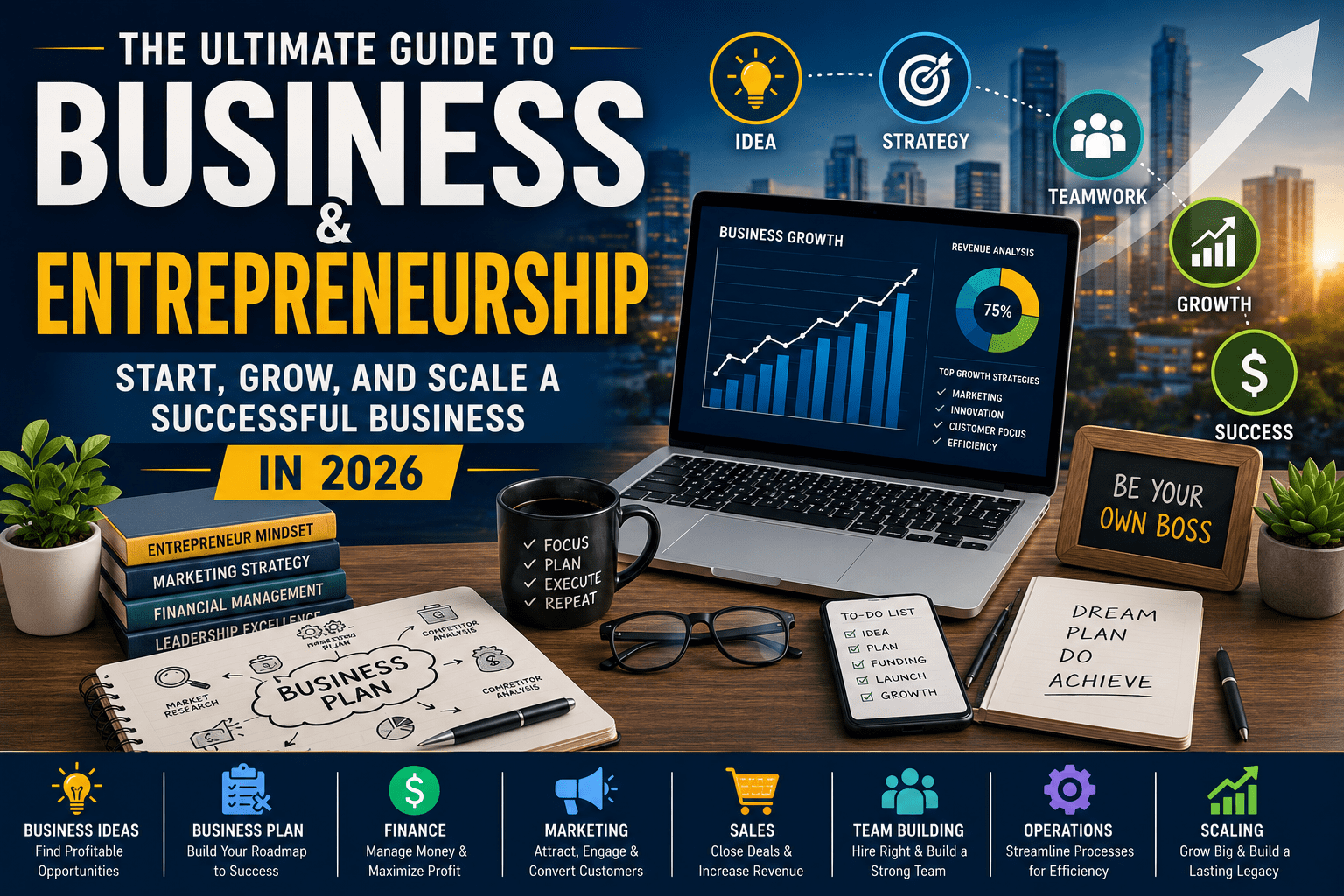
Entrepreneurship is one of the most rewarding ways to create financial independence, solve real-world problems, and build lasting value. Whether you’re launching a startup, running a small business, freelancing, or planning to scale an established company, success requires more than just a good idea.
Today’s entrepreneurs need a strong understanding of business planning, finance, marketing, sales, customer service, technology, leadership, and innovation. This comprehensive guide will help you navigate every stage of building and growing a successful business in 2026.
What Is Entrepreneurship?
Entrepreneurship is the process of identifying opportunities, creating solutions, and building businesses that provide value to customers. Entrepreneurs take calculated risks, innovate, and adapt to changing market conditions.
Successful entrepreneurs often share these qualities:
- Problem-solving mindset
- Creativity
- Resilience
- Leadership
- Adaptability
- Continuous learning
Benefits of Starting a Business
Running your own business can provide:
- Financial independence
- Flexible work opportunities
- Personal satisfaction
- Job creation
- Unlimited growth potential
- Creative freedom
- Long-term wealth building
Choosing the Right Business Idea
A successful business starts with the right idea.
Consider:
- Your skills and interests
- Market demand
- Competition
- Startup costs
- Scalability
- Profit potential
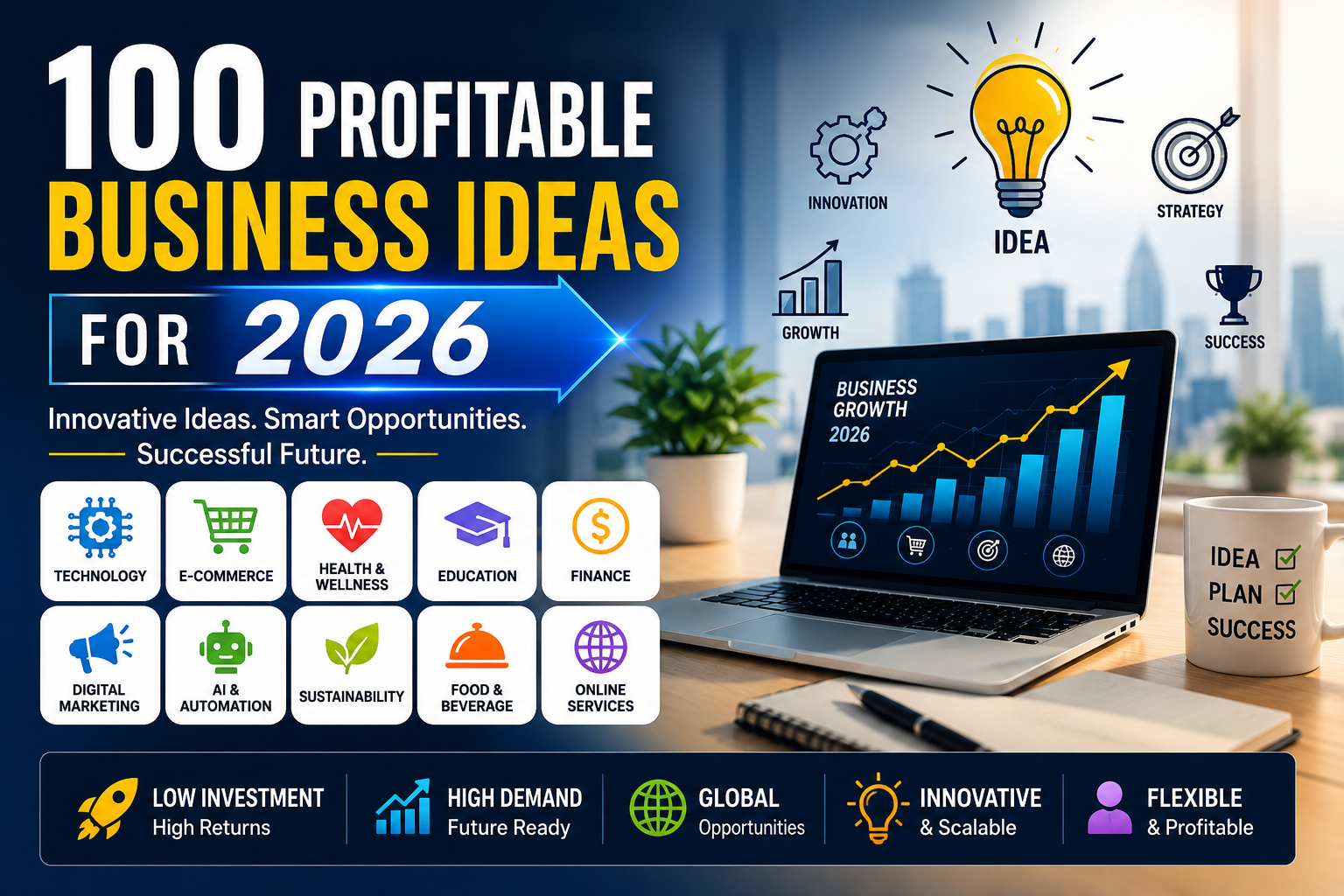
Popular Business Ideas in 2026
- AI consulting
- Digital marketing agency
- E-commerce store
- SaaS products
- Online education
- Content creation
- Affiliate marketing
- Freelancing
- Home-based businesses
- Sustainable businesses
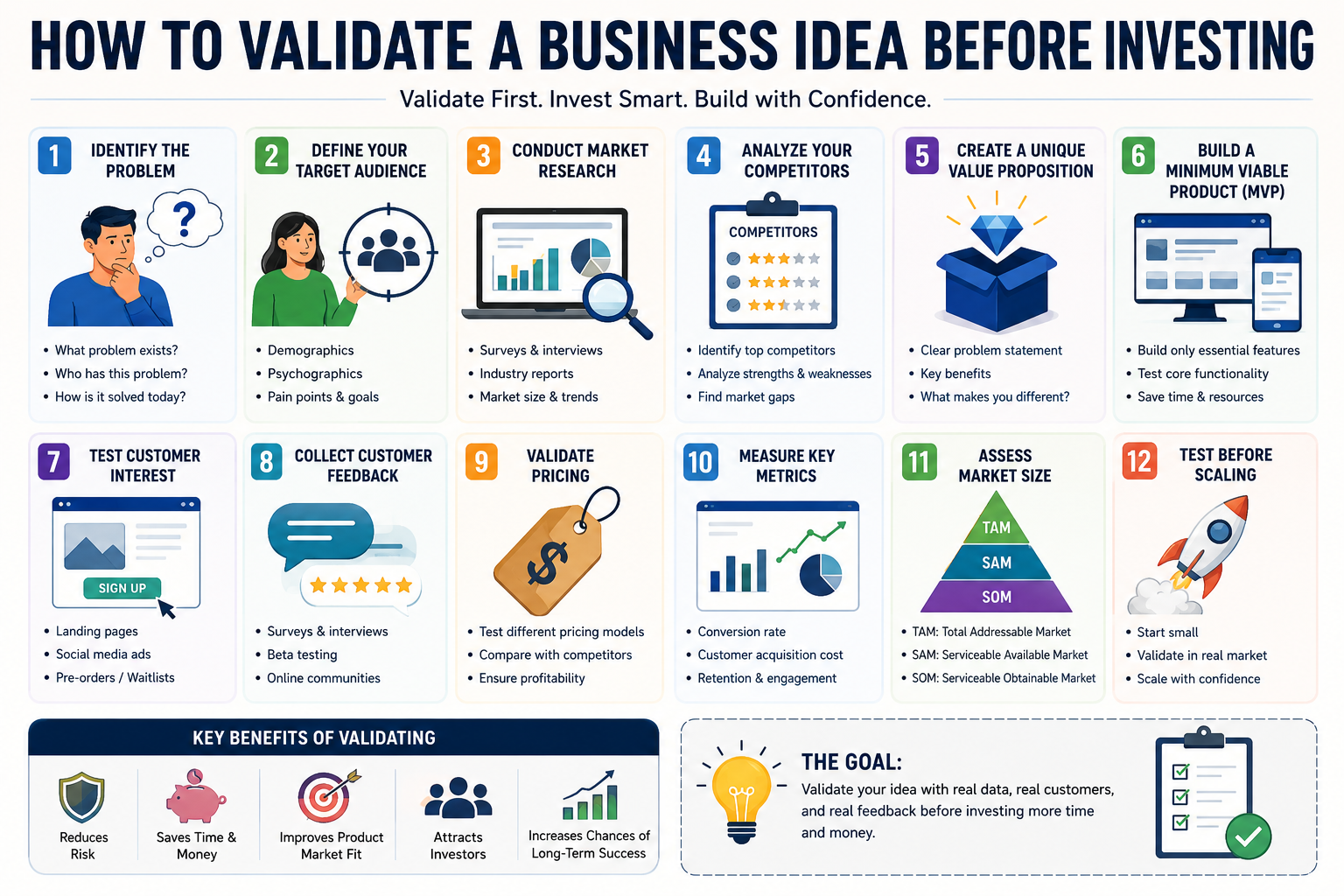
Conducting Market Research
Before launching, understand your target audience.
Research:
- Customer needs
- Competitor strengths
- Industry trends
- Pricing strategies
- Market gaps
- Consumer behavior
Tools you can use:
- Google Trends
- Customer surveys
- Keyword research
- Social media insights
- Industry reports
Writing a Business Plan
A business plan serves as your roadmap.
Include:
- Executive summary
- Business description
- Products or services
- Market analysis
- Marketing strategy
- Operations plan
- Financial projections
- Growth strategy
Understanding Business Models
Choose a model that fits your goals.
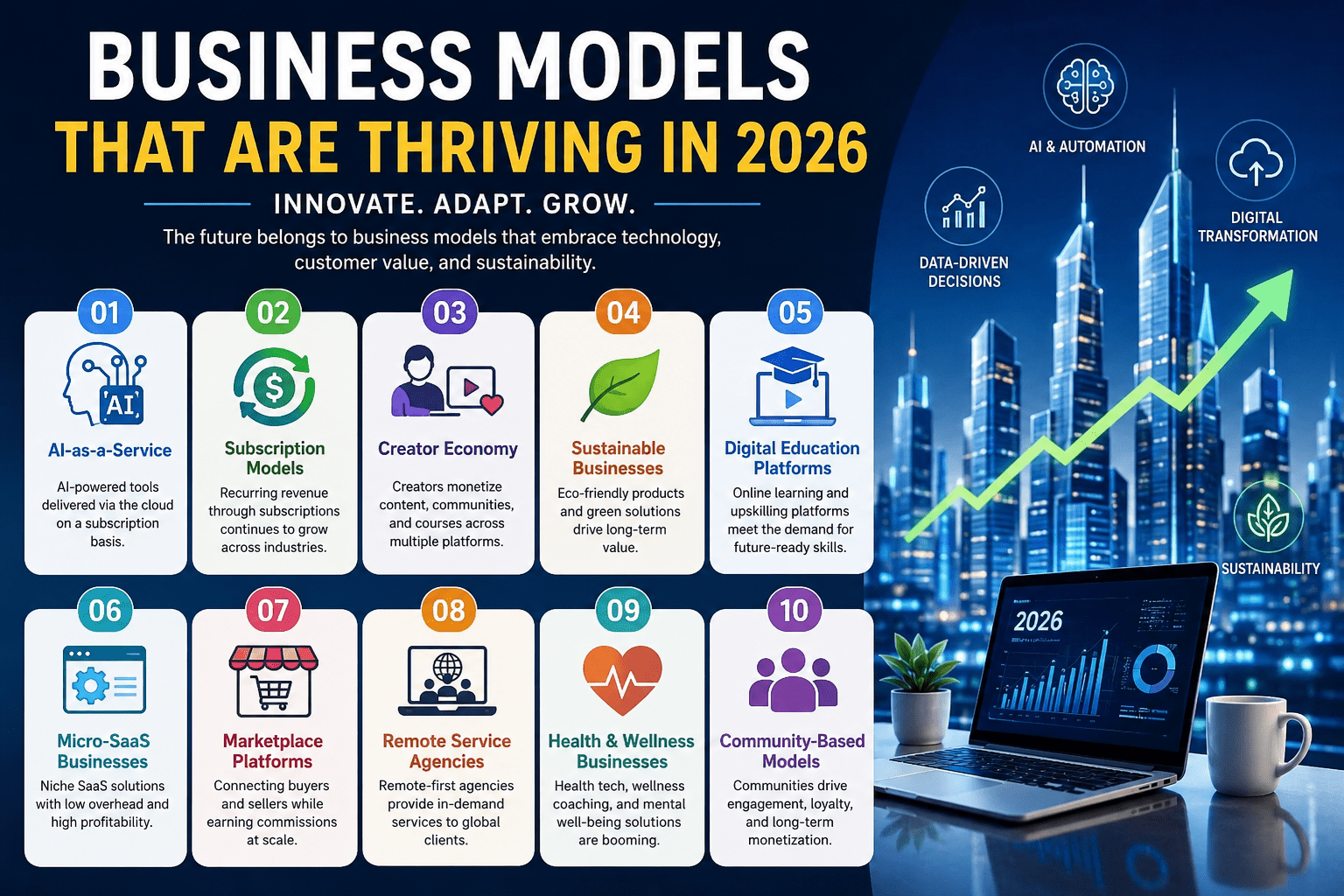
Common models include:
- Business-to-Consumer (B2C)
- Business-to-Business (B2B)
- Subscription
- Marketplace
- Freemium
- Franchise
- E-commerce
- Software as a Service (SaaS)
- Dropshipping
- Affiliate Marketing
Suggested link:
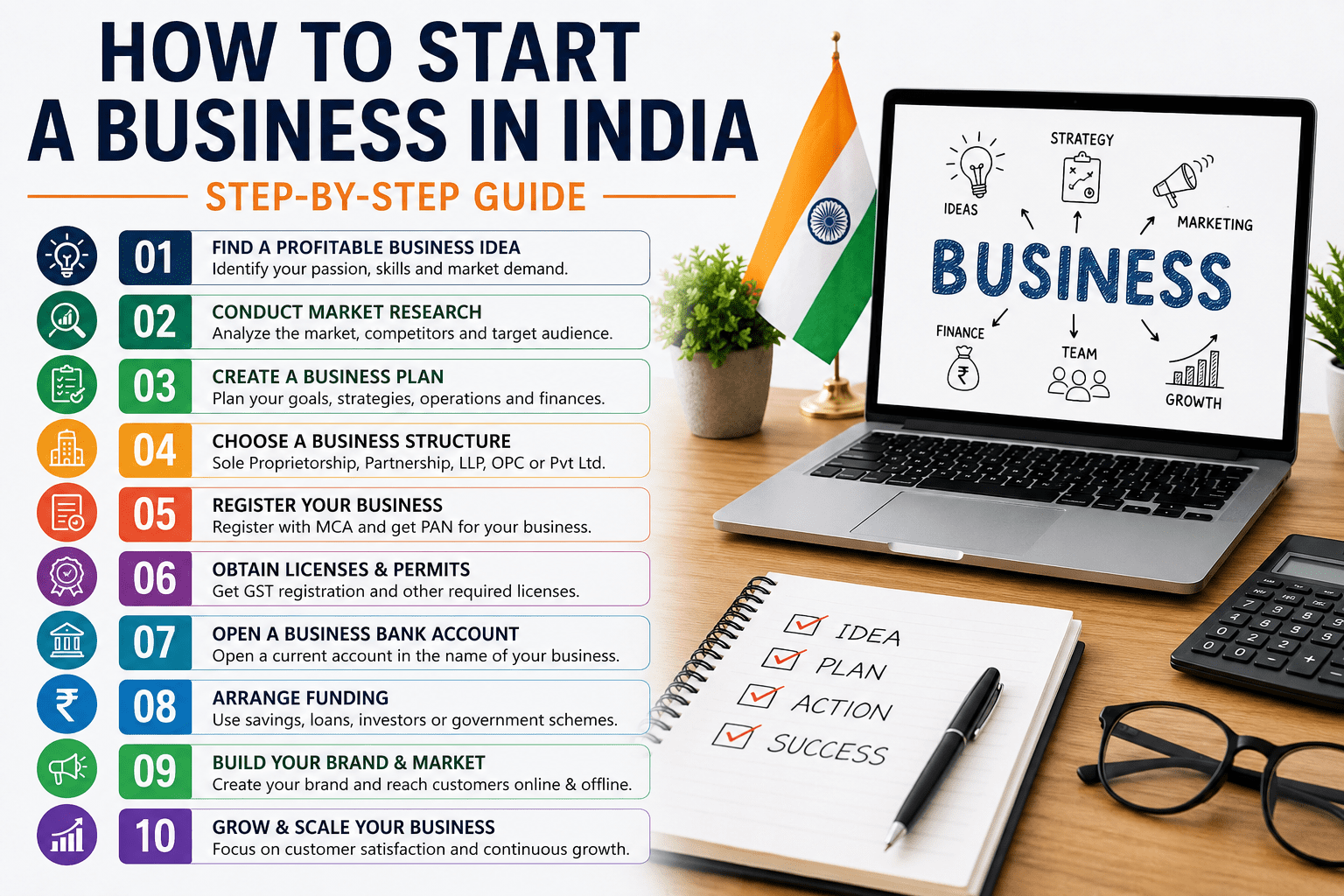
Registering Your Business
Depending on your location, you may need to:
- Choose a legal structure
- Register your business name
- Obtain necessary licenses
- Register for taxes
- Open a business bank account
Always check your local regulations before launching.
Business Finance
Financial management is essential for long-term success.
Key topics:
- Startup capital
- Budgeting
- Cash flow
- Profit margins
- Break-even analysis
- Accounting
- Business taxes
Track income and expenses regularly using accounting software or spreadsheets.
Building a Strong Brand
Your brand is more than just a logo.
Focus on:
- Brand identity
- Mission
- Vision
- Values
- Consistent messaging
- Customer trust
A strong brand helps differentiate your business in competitive markets.
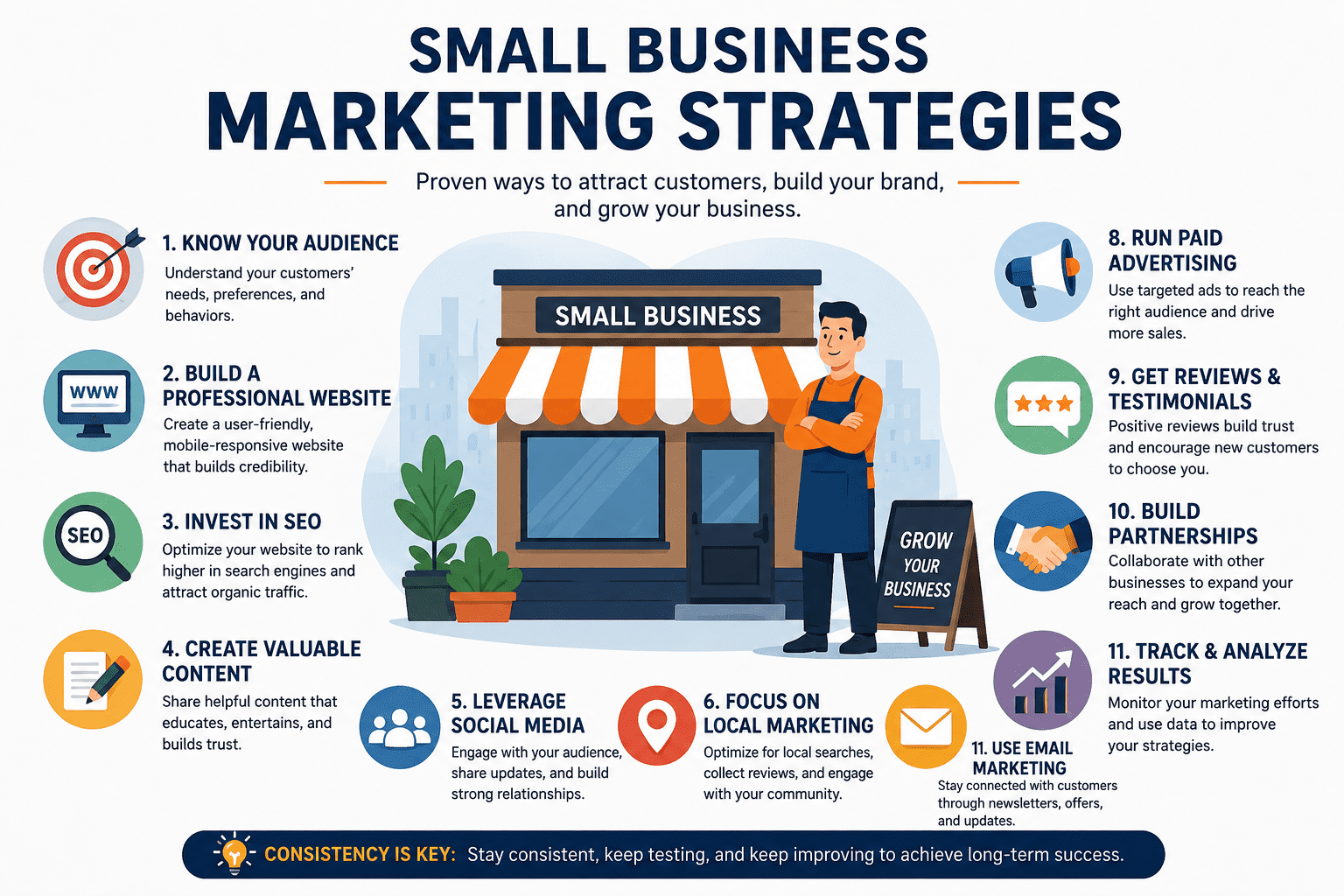
Digital Marketing
Effective marketing attracts and retains customers.
Key Marketing Channels
- Search Engine Optimization (SEO)
- Content marketing
- Social media marketing
- Email marketing
- Video marketing
- Paid advertising
- Influencer marketing
- Local SEO
Create valuable content that addresses your audience’s questions and needs.
Sales Strategies
Sales drive business growth.
Improve sales by:
- Understanding customer pain points
- Offering clear value propositions
- Building trust
- Following up consistently
- Using consultative selling techniques
- Measuring conversion rates
Customer Service
Excellent customer service leads to:
- Higher customer satisfaction
- Repeat business
- Positive reviews
- Referrals
- Stronger brand reputation
Respond promptly, resolve issues professionally, and actively seek customer feedback.
AI in Business
Artificial Intelligence is transforming modern businesses.
Applications include:
- Customer support chatbots
- Marketing automation
- Predictive analytics
- Inventory management
- Sales forecasting
- Personalized recommendations
- Fraud detection
Suggested link:
Business Operations
Efficient operations improve profitability.
Areas to optimize:
- Inventory management
- Supply chain
- Workflow automation
- Quality control
- Documentation
- Standard operating procedures (SOPs)
Hiring and Team Building
As your business grows:
- Hire for skills and culture fit.
- Provide training.
- Encourage collaboration.
- Set clear expectations.
- Recognize employee achievements.
A motivated team contributes significantly to business success.
Leadership Skills
Great entrepreneurs become effective leaders.
Develop:
- Communication
- Decision-making
- Emotional intelligence
- Conflict resolution
- Strategic thinking
- Delegation
Scaling Your Business
Growth requires planning.
Strategies include:
- Expanding product lines
- Entering new markets
- Automating repetitive tasks
- Building partnerships
- Improving customer retention
- Investing in technology
Scale sustainably to maintain quality and customer satisfaction.
Common Business Mistakes
Avoid these common pitfalls:
- Skipping market research
- Poor cash flow management
- Ignoring customer feedback
- Weak marketing
- Trying to do everything alone
- Neglecting legal compliance
- Scaling too quickly
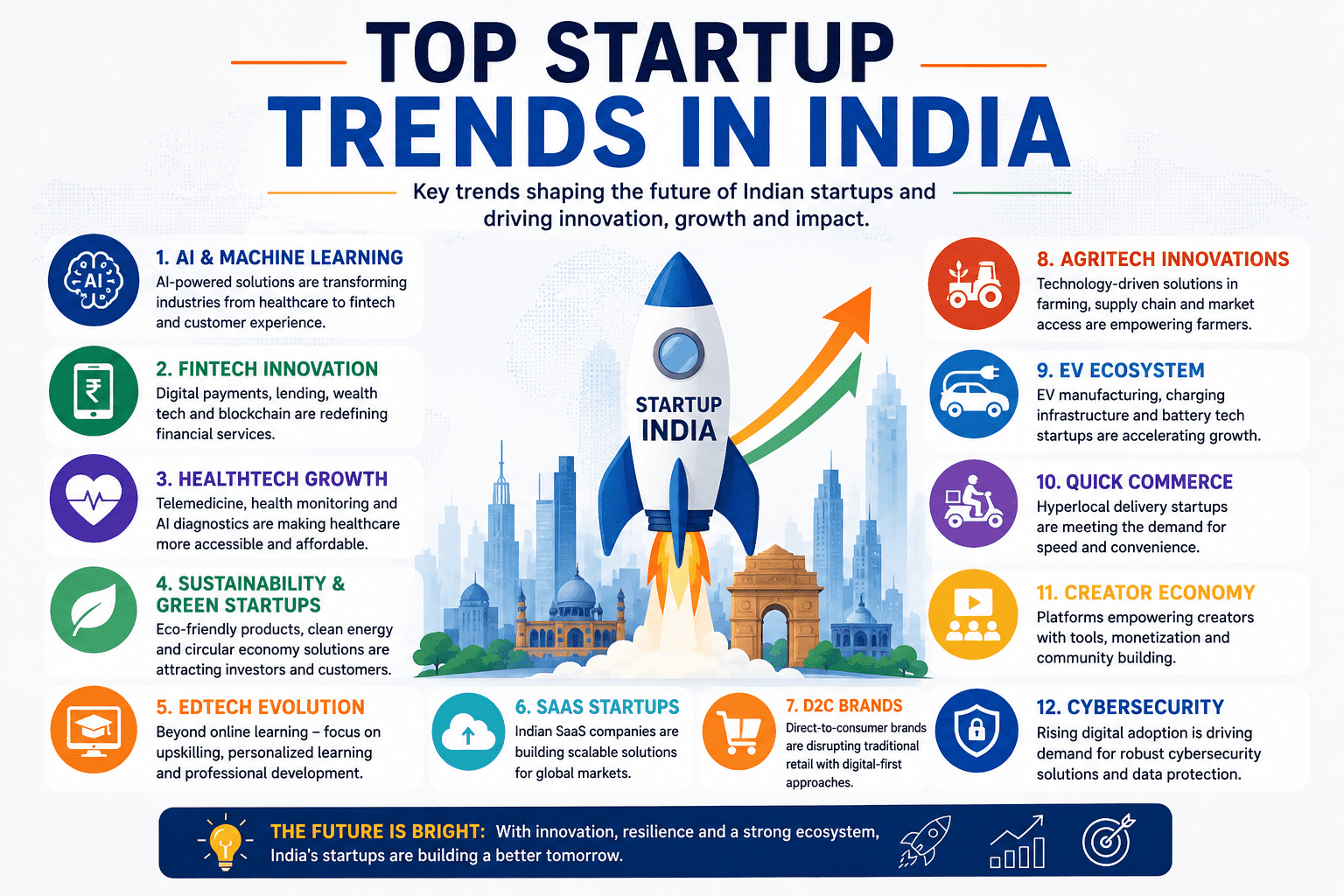
Future Business Trends
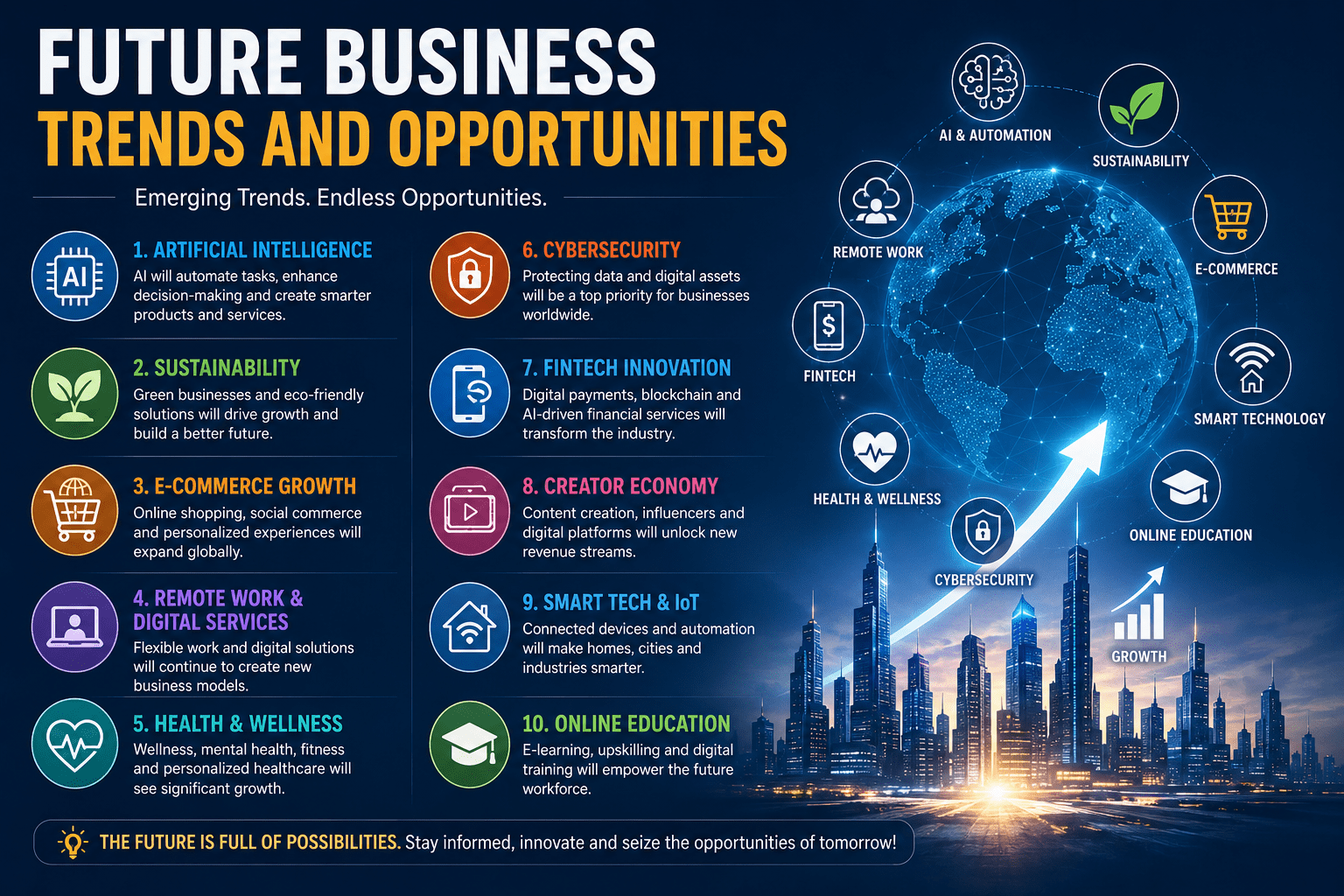
Businesses should prepare for:
- AI-powered automation
- Remote and hybrid work
- Sustainable business practices
- Personalization through data
- E-commerce growth
- Digital payments
- Subscription-based services
- Cybersecurity investments
Staying informed about trends helps businesses remain competitive.
Frequently Asked Questions (FAQ)
What is entrepreneurship?
Entrepreneurship is the process of creating, launching, and managing a business to solve problems and generate value.
How much money do I need to start a business?
Startup costs vary widely depending on the business model. Some online businesses can start with minimal investment, while others require significant capital.
Do I need a business plan?
Yes. A business plan helps define your goals, strategy, financial projections, and growth roadmap.
What is the biggest challenge for new businesses?
Common challenges include finding customers, managing cash flow, standing out from competitors, and adapting to market changes.
How can AI help my business?
AI can automate routine tasks, improve customer service, analyze data, optimize marketing, and increase overall productivity.
When should I scale my business?
Scale only after establishing a stable business model, consistent revenue, and operational processes that can support growth.
Conclusion
Entrepreneurship is a journey of continuous learning, innovation, and resilience. Building a successful business requires careful planning, financial discipline, strong leadership, effective marketing, and a commitment to delivering value to customers.
Whether you’re launching your first startup or expanding an established company, focusing on sustainable growth, customer satisfaction, and adaptability will help you thrive in the evolving business landscape of 2026 and beyond.






Leave a Reply