

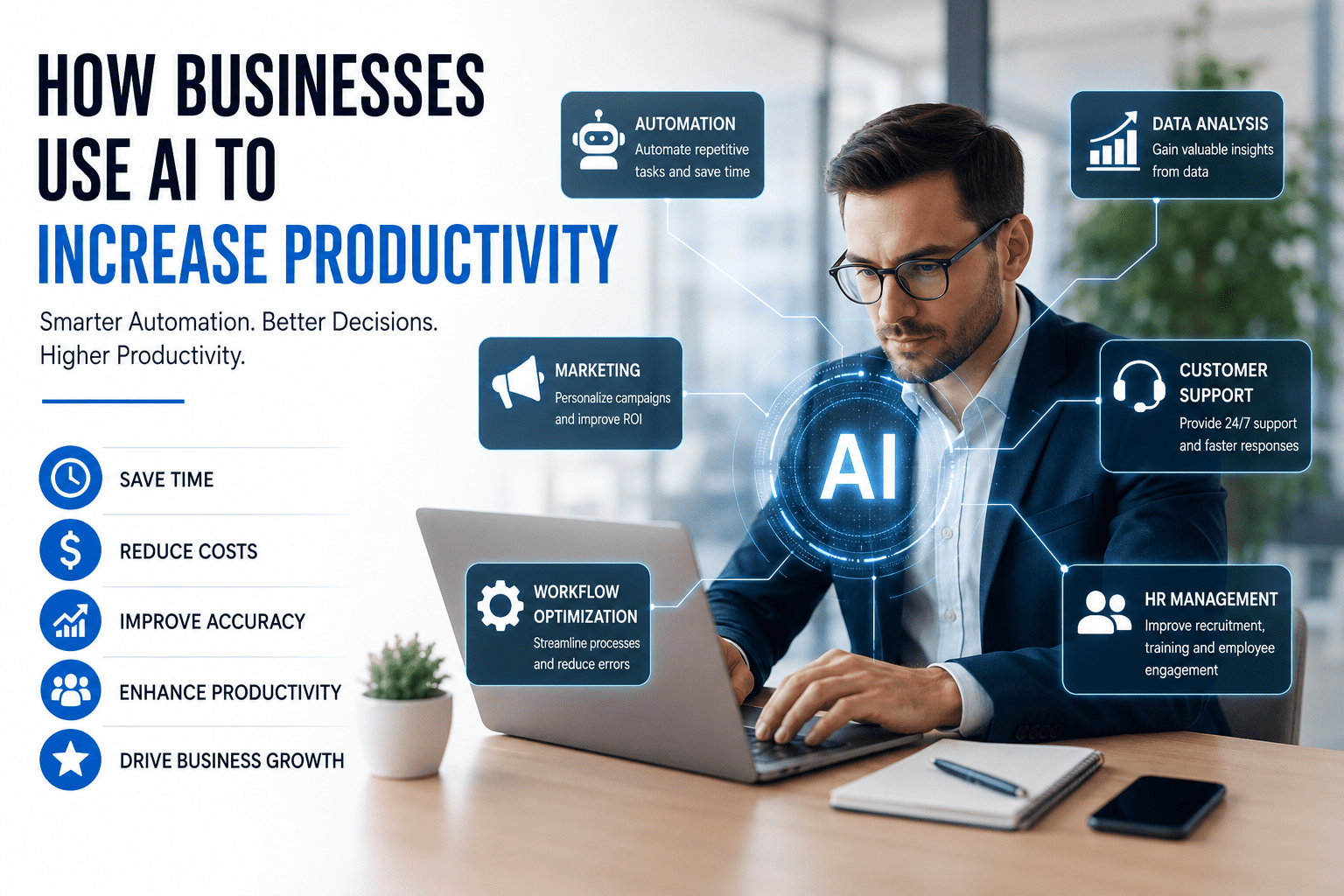
Artificial Intelligence (AI) has transformed from an emerging technology into an essential business tool. Companies of all sizes—from startups to multinational corporations—are using AI to automate repetitive tasks, improve customer experiences, reduce operational costs, and make smarter decisions.
In 2026, AI is no longer just about chatbots or automation. Businesses are integrating AI into every department, including marketing, sales, finance, human resources, manufacturing, logistics, and customer support. Organizations that effectively leverage AI are gaining a competitive advantage by increasing productivity while allowing employees to focus on high-value work.
This guide explores how businesses use AI to increase productivity, its benefits, practical applications, challenges, and future trends.
What Is AI in Business?
Artificial Intelligence refers to computer systems capable of performing tasks that typically require human intelligence. These tasks include:
- Learning from data
- Recognizing patterns
- Understanding language
- Predicting outcomes
- Making recommendations
- Automating repetitive work
Modern AI solutions combine machine learning, natural language processing (NLP), computer vision, and predictive analytics to help businesses operate more efficiently.
Why Businesses Are Investing in AI
Organizations are rapidly adopting AI because it helps them:
- Save time
- Reduce operational costs
- Improve accuracy
- Increase employee productivity
- Enhance customer satisfaction
- Make data-driven decisions
- Scale operations efficiently
Businesses that embrace AI can respond faster to market changes while improving overall performance.
Key Ways Businesses Use AI to Increase Productivity
1. Automating Repetitive Tasks
One of AI’s biggest advantages is automation.
Instead of spending hours on manual tasks, AI software can automatically:
- Process invoices
- Schedule meetings
- Enter data
- Organize documents
- Generate reports
- Sort emails
This allows employees to spend more time solving complex problems and developing innovative ideas.
Example
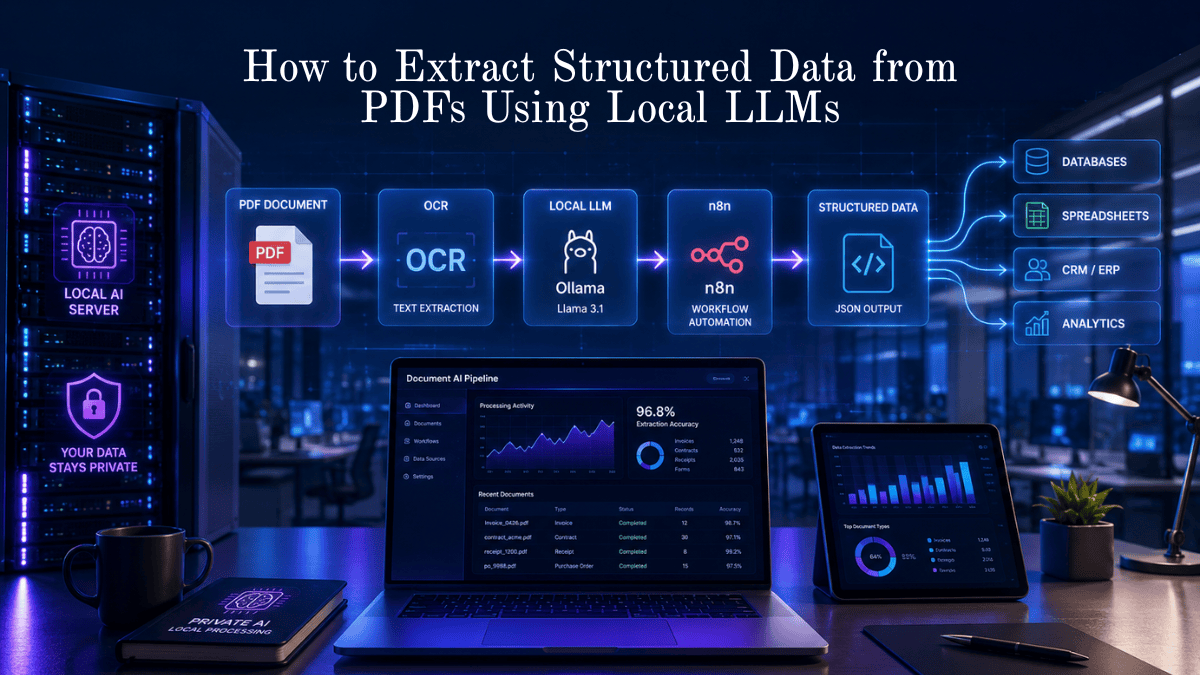
An accounting department can use AI to automatically scan invoices, verify amounts, and enter financial data into accounting software without human intervention.
2. AI-Powered Customer Support
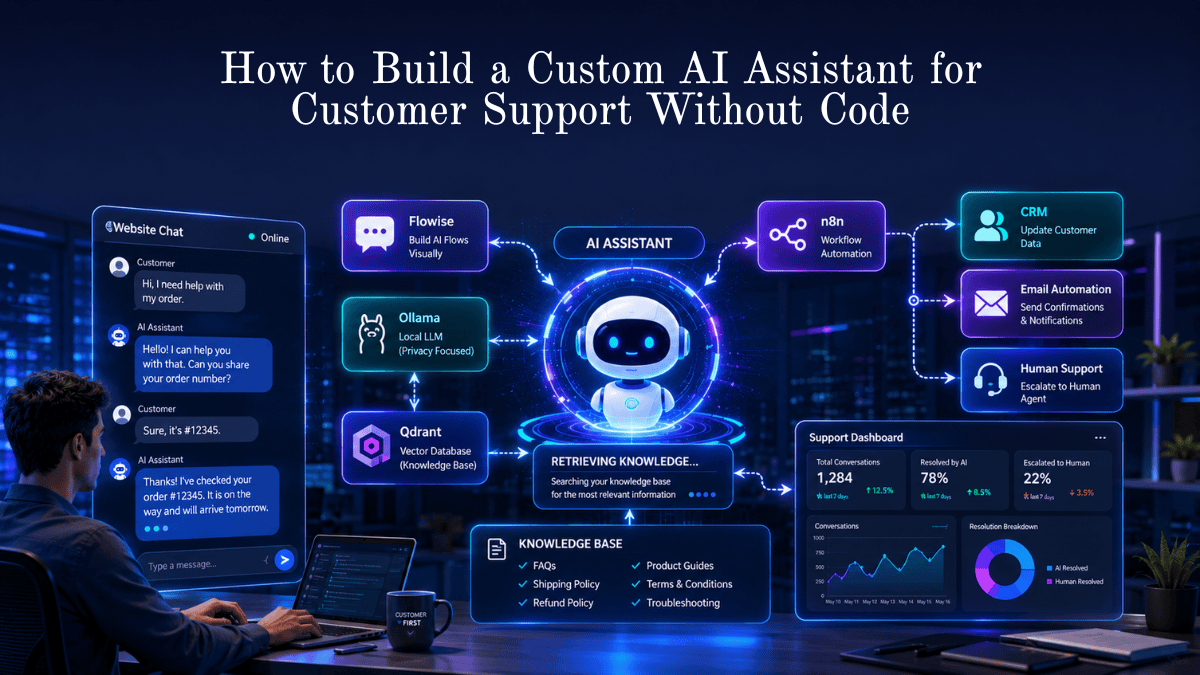
AI chatbots and virtual assistants provide instant customer service 24/7.
Benefits include:
- Faster response times
- Reduced support costs
- Improved customer satisfaction
- Automated ticket routing
- Frequently asked questions handling
Human agents can then focus on more complicated customer issues.
3. Smarter Data Analysis
Businesses generate massive amounts of data every day.
AI analyzes this information much faster than humans and identifies:
- Sales trends
- Customer behavior
- Business risks
- Growth opportunities
- Operational inefficiencies
Managers can make informed decisions based on real-time insights instead of assumptions.
4. AI in Marketing
Marketing teams use AI for:
- Personalized email campaigns
- Customer segmentation
- Content recommendations
- Ad optimization
- Keyword research
- Predictive analytics
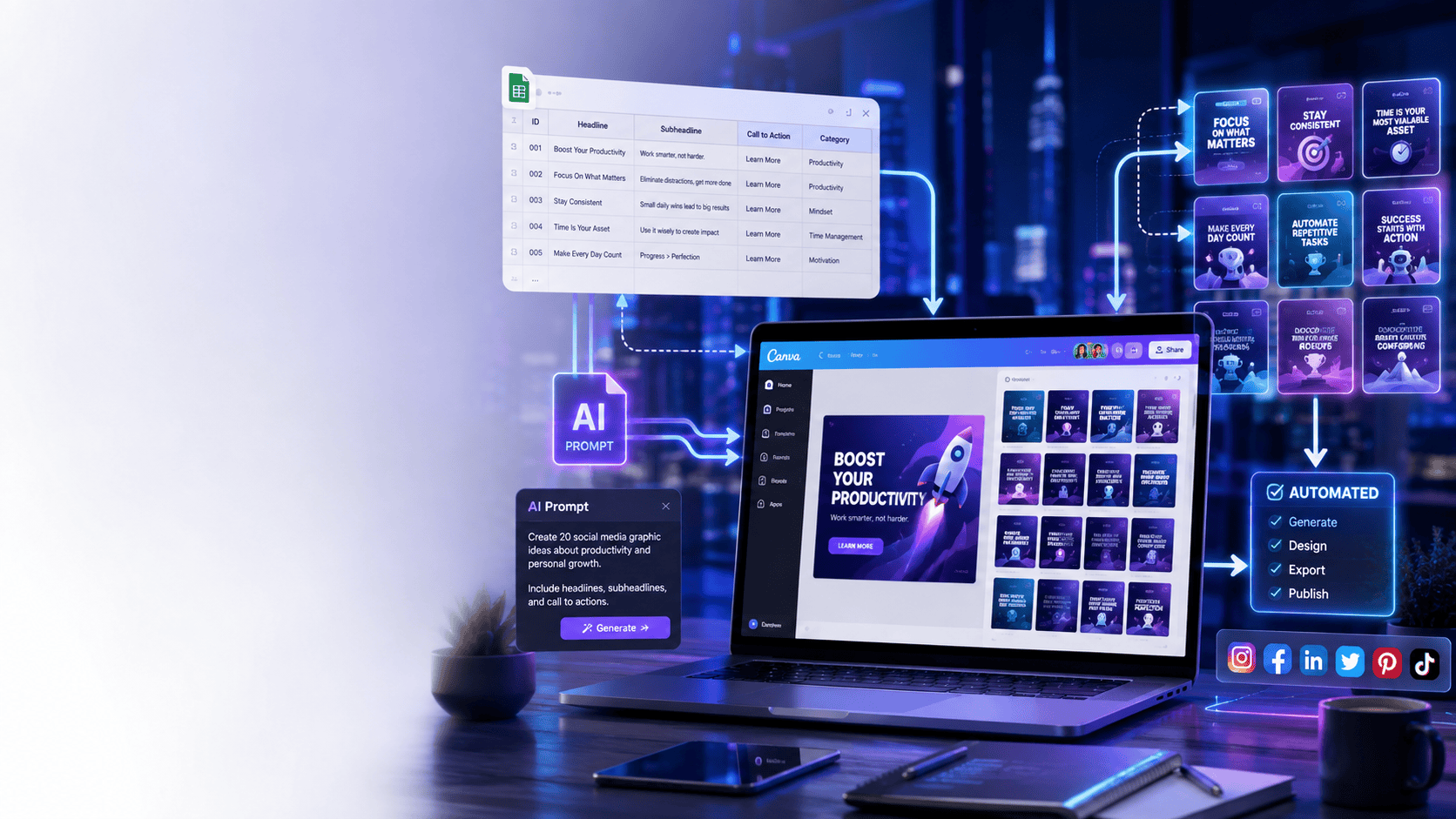
- Social media scheduling
AI helps businesses target the right audience with the right message at the right time.
5. Sales Forecasting
AI predicts future sales using historical data and market trends.
Businesses can:
- Estimate future demand
- Plan inventory
- Optimize pricing
- Allocate budgets
- Improve revenue forecasting
Better predictions reduce financial risks.
6. Human Resource Management
HR departments increasingly rely on AI to streamline hiring and employee management.
Applications include:
- Resume screening
- Candidate matching
- Employee onboarding
- Performance analysis
- Training recommendations
- Workforce planning
AI significantly reduces administrative work for HR professionals.
7. Supply Chain Optimization
Manufacturers and retailers use AI to improve supply chain efficiency.
AI helps businesses:
- Forecast demand
- Monitor inventory
- Optimize warehouse operations
- Track shipments
- Prevent stock shortages
- Reduce waste
The result is lower costs and faster delivery.
8. AI in Finance
Financial teams use AI to:
- Detect fraud
- Analyze expenses
- Automate bookkeeping
- Generate financial reports
- Monitor cash flow
- Predict financial risks
AI minimizes human errors while improving financial accuracy.
9. Content Creation
AI assists businesses by generating:
- Blog articles
- Product descriptions
- Email newsletters
- Marketing copy
- Video scripts
- Social media posts
While human editing remains important, AI significantly reduces content production time.
10. Predictive Maintenance
Manufacturing companies use AI to predict equipment failures before they happen.
Benefits include:
- Less downtime
- Reduced maintenance costs
- Longer equipment lifespan
- Improved production efficiency
AI monitors machine performance using sensors and alerts technicians when maintenance is required.
Benefits of AI for Business Productivity
Businesses adopting AI experience numerous advantages.
Increased Efficiency
Tasks that previously took hours can now be completed in minutes.
Cost Reduction
Automation reduces labor costs and operational expenses.
Better Decision-Making
AI provides real-time insights backed by data instead of guesswork.
Higher Accuracy
AI minimizes errors in calculations, reporting, and data processing.
Improved Customer Experience
Personalized recommendations and faster support increase customer satisfaction.
Employee Satisfaction
Employees spend less time on repetitive work and more time on meaningful projects.
Industries Successfully Using AI
Almost every industry benefits from AI.
Healthcare
- Patient scheduling
- Medical imaging
- Diagnosis assistance
- Administrative automation
Retail
- Personalized shopping
- Inventory management
- Customer recommendations
- Demand forecasting
Banking
- Fraud detection
- Loan approvals
- Risk assessment
- Customer service
Manufacturing
- Predictive maintenance
- Quality control
- Robotics
- Production optimization
Education
- Personalized learning
- Automated grading
- Student performance analysis
- Virtual tutors
Logistics
- Route optimization
- Delivery prediction
- Warehouse automation
- Fleet management
Challenges of AI Adoption
Although AI offers enormous benefits, businesses should consider potential challenges.
Data Privacy
Organizations must protect customer information and comply with privacy regulations.
Initial Investment
Implementing AI systems requires financial investment and employee training.
Employee Training
Workers need new skills to collaborate effectively with AI technologies.
Integration
Older software systems may require upgrades before AI can be fully implemented.
Best Practices for Using AI in Business
To maximize productivity, businesses should:
- Identify repetitive tasks suitable for automation.
- Choose AI tools that integrate with existing systems.
- Train employees to use AI effectively.
- Continuously monitor AI performance.
- Maintain strong cybersecurity measures.
- Keep humans involved in strategic decisions.
- Use AI ethically and transparently.
Future of AI in Business
AI will continue evolving rapidly over the next decade.
Emerging trends include:
- Autonomous business operations
- AI-powered digital employees
- Hyper-personalized customer experiences
- Advanced predictive analytics
- Intelligent cybersecurity
- Voice-driven business applications
- AI-assisted strategic planning
Businesses that embrace these innovations early will likely outperform competitors.
Frequently Asked Questions
How does AI increase business productivity?
AI automates repetitive tasks, analyzes data quickly, improves decision-making, enhances customer service, and reduces operational costs, allowing employees to focus on high-value work.
Can small businesses benefit from AI?
Yes. Affordable AI tools help small businesses automate marketing, customer support, accounting, scheduling, and content creation without requiring large budgets.
Which industries use AI the most?
Healthcare, finance, retail, manufacturing, logistics, education, and marketing are among the industries with the highest AI adoption.
Does AI replace employees?
AI primarily automates repetitive tasks rather than replacing workers. It enables employees to focus on creative, strategic, and customer-facing responsibilities.
What are the biggest benefits of AI?
The biggest benefits include increased efficiency, cost savings, better decision-making, improved accuracy, enhanced customer experiences, and higher productivity.
Conclusion
Artificial Intelligence has become a powerful productivity tool for modern businesses. By automating routine tasks, improving decision-making, enhancing customer service, and providing valuable insights, AI enables organizations to operate more efficiently and remain competitive in a rapidly changing market.
Whether you’re running a startup, a small business, or a large enterprise, adopting AI strategically can lead to significant improvements in productivity, profitability, and long-term growth. Companies that invest in AI today are positioning themselves for greater success in the digital economy of tomorrow.
Also read How AI Is Changing Software Development



Leave a Reply