

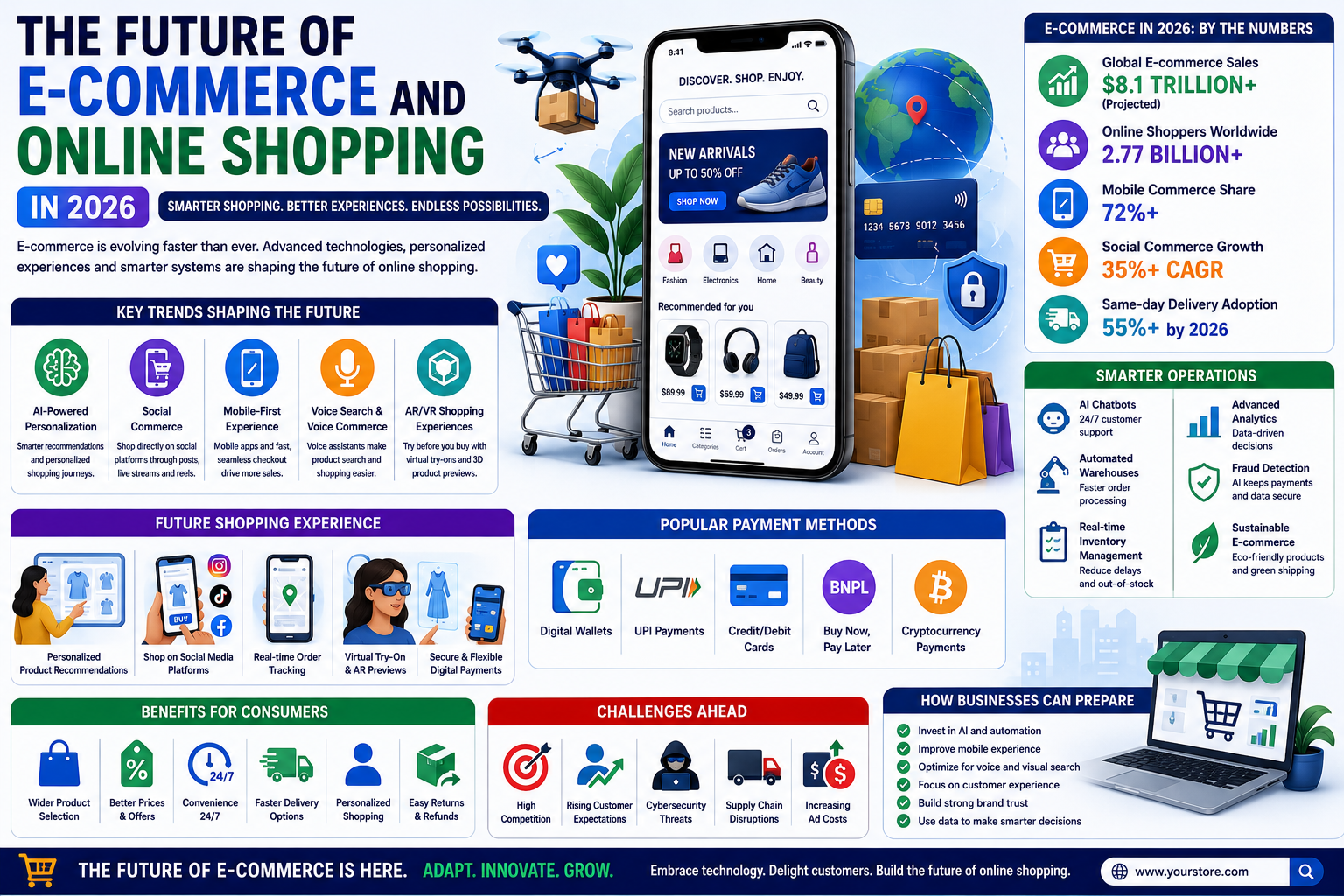
E-commerce has transformed the global shopping experience over the past decade, and in 2026, online shopping continues growing faster than ever before. Consumers now expect faster deliveries, personalized recommendations, seamless mobile experiences, and highly convenient digital payment systems.
Advancements in artificial intelligence, automation, social commerce, and smart technologies are reshaping how businesses sell products online. Modern consumers are increasingly shopping through smartphones, social media platforms, AI-powered marketplaces, and voice assistants.
From small businesses and startups to global retail brands, companies are investing heavily in digital transformation to remain competitive in the evolving online marketplace.
In this article, we will explore the future of e-commerce and online shopping in 2026, major industry trends, technological innovations, and how businesses can adapt to the future of digital retail.
Growth of E-Commerce
Online shopping has become a normal part of everyday life worldwide.
Why E-Commerce Continues Growing
Several factors are driving e-commerce expansion:
- Increased smartphone usage
- Faster internet access
- Digital payment adoption
- Social media influence
- AI-powered personalization
- Global shipping improvements
Consumers now prefer convenient shopping experiences that save time and offer more product choices.
AI-Powered Shopping Experiences
Artificial intelligence is one of the biggest forces shaping online shopping.
Personalized Product Recommendations
AI systems analyze customer behavior to recommend products based on:
- Browsing history
- Purchase patterns
- Search activity
- Personal preferences
Personalization improves customer satisfaction and increases sales conversions.
AI Shopping Assistants
Virtual shopping assistants help customers:
- Find products quickly
- Compare prices
- Receive buying recommendations
- Track orders
- Answer customer questions
AI chatbots now provide 24/7 customer support for online stores.
Rise of Social Commerce
Social media platforms are becoming powerful shopping destinations.
What Is Social Commerce?
Social commerce allows users to purchase products directly through social media apps.
Popular platforms include:
- TikTok
- YouTube
Consumers can now discover and buy products without leaving the platform.
Influencer-Driven Shopping
Influencers continue playing a major role in online buying decisions.
Consumers trust:
- Product reviews
- Demonstrations
- Creator recommendations
- Live shopping sessions
Influencer marketing is becoming more integrated into e-commerce strategies.
Mobile Commerce Dominates Online Shopping
Most online shopping now happens on smartphones.
Why Mobile Commerce Is Growing
Consumers prefer mobile shopping because it offers:
- Convenience
- Faster checkout
- Easy payment methods
- Shopping anytime and anywhere
Businesses now prioritize mobile-first website designs and apps.
Voice Search and Voice Commerce
Voice assistants are changing how consumers search for products.
Voice Shopping Trends
Consumers increasingly use voice commands to:
- Search products
- Reorder items
- Compare prices
- Track deliveries
Voice commerce is expected to grow significantly as smart devices become more common.
Faster Delivery and Logistics Innovation
Delivery speed has become a major competitive factor in e-commerce.
Modern Delivery Expectations
Consumers now expect:
- Same-day delivery
- Real-time tracking
- Flexible delivery options
- Faster shipping
Businesses invest heavily in logistics technology to improve customer satisfaction.
Automation in Warehousing
AI-powered robots and automation systems help companies:
- Process orders faster
- Reduce errors
- Improve inventory management
- Increase warehouse efficiency
Automation is transforming supply chain operations globally.
Augmented Reality Shopping Experiences
Augmented reality is improving online shopping experiences.
How AR Helps Customers
AR technology allows users to:
- Try products virtually
- Preview furniture in homes
- Test makeup digitally
- Visualize clothing styles
This reduces uncertainty and improves customer confidence before purchasing.
Subscription-Based E-Commerce Models
Subscription shopping continues gaining popularity.
Examples of Subscription Services
- Beauty boxes
- Meal kits
- Streaming services
- Software subscriptions
- Fashion memberships
Recurring subscription models provide businesses with predictable revenue streams.
Sustainable E-Commerce Trends
Consumers are increasingly prioritizing sustainability.
Eco-Friendly Shopping Trends
Customers now look for:
- Sustainable packaging
- Ethical sourcing
- Eco-friendly products
- Carbon-neutral shipping
Businesses adopting sustainable practices gain stronger customer trust.
Digital Payments and Fintech Integration
Online payment systems continue evolving rapidly.
Popular Payment Methods in 2026
Consumers use:
- Digital wallets
- UPI payments
- Contactless payments
- Cryptocurrency options
- Buy now, pay later services
Faster and more secure payments improve the online shopping experience.
Cybersecurity in E-Commerce
As online shopping grows, cybersecurity becomes increasingly important.
E-Commerce Security Challenges
Businesses face risks such as:
- Payment fraud
- Data breaches
- Phishing attacks
- Identity theft
Modern Security Solutions
Online stores now use:
- AI-powered fraud detection
- Two-factor authentication
- Data encryption
- Secure payment gateways
Customer trust depends heavily on strong security systems.
Importance of Customer Experience
Customer experience has become a key success factor in e-commerce.
Businesses Focus On
- Fast website performance
- Easy navigation
- Personalized shopping
- Responsive support
- Hassle-free returns
Positive experiences increase customer loyalty and repeat purchases.
AI-Powered Marketing for E-Commerce
Artificial intelligence is transforming digital marketing strategies.
AI Marketing Features
Businesses use AI for:
- Product recommendations
- Email personalization
- Ad targeting
- Customer segmentation
- Sales predictions
AI improves marketing efficiency and conversion rates.
Challenges Facing E-Commerce Businesses
Despite rapid growth, e-commerce businesses also face challenges.
High Competition
Online markets are highly competitive across nearly every niche.
Businesses must focus on:
- Branding
- Customer experience
- SEO
- Marketing strategies
Rising Advertising Costs
Digital advertising costs continue increasing on major platforms.
Customer Retention
Acquiring customers is easier than maintaining long-term loyalty.
Businesses must provide consistent value and trust.
Future Trends in E-Commerce
The future of e-commerce will continue evolving rapidly.
Major Future Trends
- AI-powered stores
- Virtual reality shopping
- Drone deliveries
- Automated warehouses
- Hyper-personalized experiences
- Voice-first shopping
- Smart retail ecosystems
Technology will continue reshaping how consumers interact with online stores.
How Small Businesses Can Compete in 2026
Small businesses can still succeed in competitive e-commerce markets.
Effective Strategies
Build Strong Branding
Unique branding helps businesses stand out.
Focus on Niche Markets
Targeting specific audiences improves conversions.
Invest in SEO
Organic traffic reduces advertising dependency.
Use Social Media Effectively
Social commerce drives visibility and engagement.
Offer Excellent Customer Service
Strong support builds trust and loyalty.
Benefits of E-Commerce for Businesses
Global Reach
Businesses can sell products worldwide.
Lower Operational Costs
Online stores often cost less than physical retail locations.
Better Customer Insights
Digital analytics provide valuable customer behavior data.
Scalability
Online businesses can scale faster using digital systems.
Conclusion
The future of e-commerce and online shopping in 2026 is driven by artificial intelligence, mobile commerce, social shopping, automation, and personalized customer experiences. Consumers expect convenience, speed, security, and seamless digital interactions while shopping online.
Businesses that embrace AI tools, optimize customer experiences, invest in mobile-first strategies, and adapt to emerging technologies will continue succeeding in the rapidly evolving digital marketplace.
As technology advances further, e-commerce will become even more integrated into everyday life, transforming how people discover, evaluate, and purchase products worldwide.












Leave a Reply