

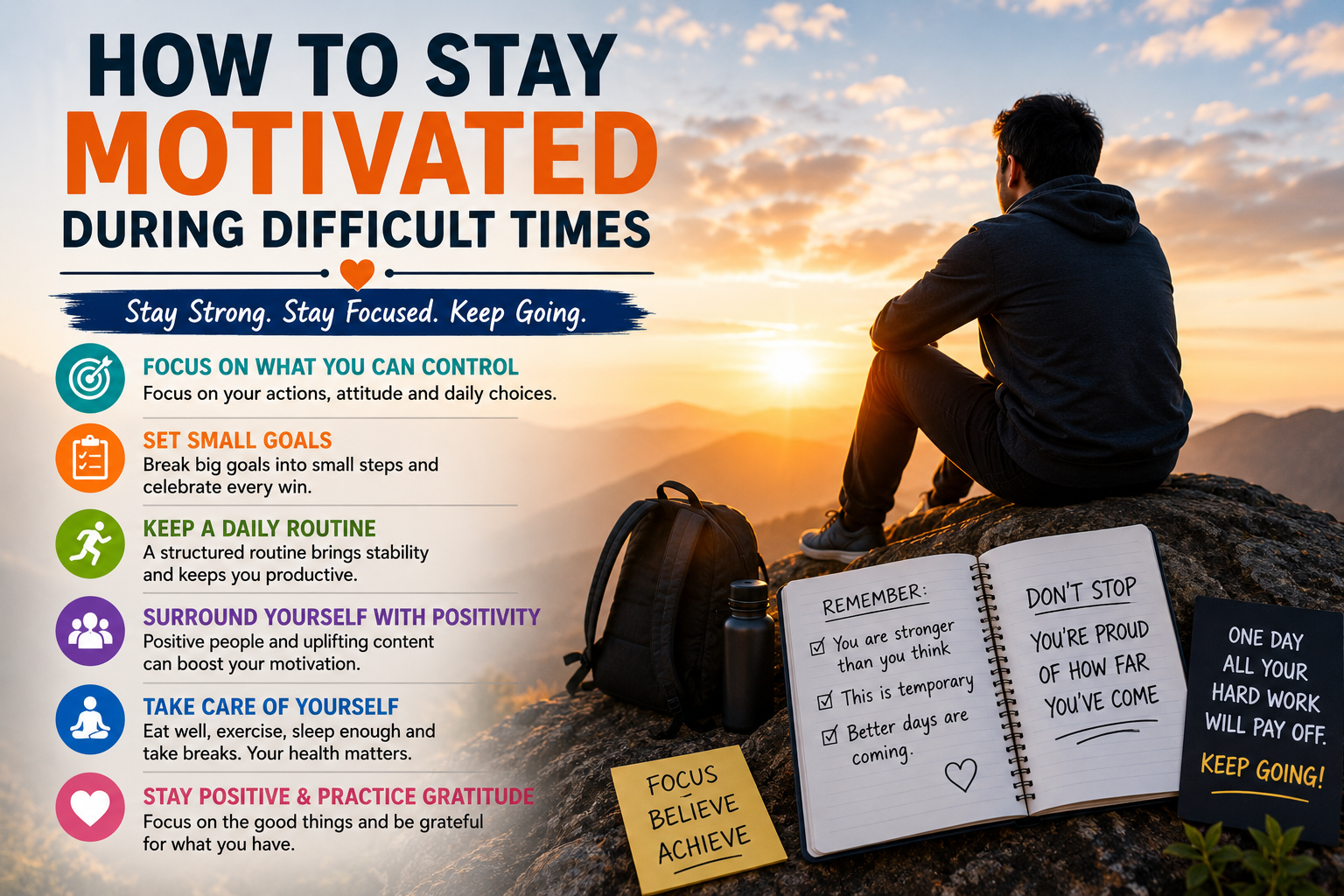
Life is full of challenges. Whether you’re facing personal struggles, career setbacks, financial difficulties, health concerns, or unexpected obstacles, staying motivated during difficult times can feel overwhelming. When things don’t go as planned, it’s easy to lose focus, confidence, and the drive to keep moving forward.
However, motivation isn’t something that appears only when circumstances are perfect. In fact, some of the most successful people develop their strongest motivation during periods of hardship. Learning how to stay motivated during difficult times can help you overcome obstacles, build resilience, and continue progressing toward your goals.
In this article, we’ll explore practical strategies to maintain motivation even when life gets tough.
Why Motivation Matters During Challenging Times
Motivation acts as the fuel that keeps us moving forward. During difficult periods, motivation helps you:
- Maintain a positive outlook
- Continue working toward your goals
- Build resilience and mental strength
- Reduce feelings of helplessness
- Improve productivity and focus
- Create opportunities for growth and learning
Without motivation, challenges can seem much larger than they actually are. With the right mindset, however, obstacles can become valuable learning experiences.
1. Accept That Difficult Times Are Temporary
One of the most important things to remember is that challenges do not last forever. Every difficult situation eventually changes.
Instead of thinking:
“This will never get better.”
Try saying:
“This is a temporary phase, and I can work through it.”
Accepting the temporary nature of setbacks helps reduce anxiety and keeps you focused on finding solutions rather than dwelling on problems.
2. Focus on What You Can Control
Many people become overwhelmed because they spend too much energy worrying about things beyond their control.
Instead, focus on:
- Your actions
- Your attitude
- Your daily habits
- Your effort
- Your responses to challenges
When you concentrate on what you can control, you regain a sense of purpose and direction.
3. Set Small, Achievable Goals
During difficult times, large goals can feel intimidating.
Break your objectives into smaller tasks that are easier to accomplish.
For example:
Instead of:
“I need to completely rebuild my career.”
Start with:
- Update your resume
- Apply for one job daily
- Learn a new skill
- Attend networking events
Small victories create momentum and help restore confidence.
4. Maintain a Daily Routine
A structured routine provides stability during uncertain periods.
A productive daily routine might include:
- Waking up at a consistent time
- Exercising
- Planning your day
- Completing priority tasks
- Spending time on personal development
Even simple routines can create a sense of normalcy and help maintain motivation.
5. Celebrate Small Wins
Many people only celebrate major achievements while ignoring small accomplishments.
However, progress is built through small steps.
Examples of small wins include:
- Completing a difficult task
- Learning something new
- Maintaining a healthy habit
- Staying productive despite challenges
Recognizing these victories helps boost morale and encourages continued effort.
6. Surround Yourself with Positive Influences
The people around you can significantly affect your mindset.
Seek support from:
- Family members
- Friends
- Mentors
- Colleagues
- Positive online communities
Supportive relationships provide encouragement, perspective, and emotional strength during difficult periods.
7. Practice Gratitude Daily
Gratitude helps shift your focus from what is missing to what is already present in your life.
Each day, write down three things you are grateful for.
Examples:
- Good health
- Supportive family
- Learning opportunities
- A safe home
- Personal strengths
Regular gratitude practice can improve mood and increase resilience.
8. Avoid Comparing Yourself to Others
Social media often creates unrealistic expectations about success and happiness.
Remember that everyone faces challenges, even if they don’t share them publicly.
Instead of comparing yourself to others:
- Focus on your own progress
- Track personal improvements
- Celebrate your unique journey
Your only competition should be the person you were yesterday.
9. Take Care of Your Physical Health
Physical well-being directly impacts mental motivation.
Get Enough Sleep
Aim for 7–9 hours of quality sleep each night.
Benefits include:
- Better focus
- Improved mood
- Higher energy levels
- Enhanced decision-making
Exercise Regularly
Physical activity releases endorphins that naturally improve mood and reduce stress.
Even a 20-minute walk can make a noticeable difference.
Eat Nutritious Foods
A balanced diet provides the energy and nutrients needed to stay productive and mentally strong.
10. Limit Negative Information
Constant exposure to negative news and stressful content can reduce motivation.
Consider:
- Limiting news consumption
- Taking breaks from social media
- Following positive and educational content
Protecting your mental environment helps maintain optimism and focus.
11. Learn from Challenges
Every difficult situation contains valuable lessons.
Ask yourself:
- What can I learn from this experience?
- How can this challenge help me grow?
- What skills am I developing?
Viewing obstacles as opportunities for growth can transform your perspective and strengthen motivation.
12. Visualize Success
Visualization is a powerful motivational tool used by athletes, entrepreneurs, and successful professionals.
Spend a few minutes each day imagining:
- Achieving your goals
- Overcoming obstacles
- Living the life you desire
Visualization helps reinforce positive thinking and keeps your goals fresh in your mind.
13. Read Inspirational Stories
Learning about people who overcame adversity can provide hope and motivation.
Many successful individuals faced:
- Business failures
- Financial difficulties
- Personal setbacks
- Rejection and criticism
Their stories demonstrate that challenges are often stepping stones to success.
14. Be Patient with Yourself
Difficult times can create pressure and frustration.
Remember:
- Progress takes time
- Recovery is not always linear
- Some days will be harder than others
Treat yourself with patience and self-compassion as you work through challenges.
15. Remember Your Purpose
When motivation fades, reconnect with your “why.”
Ask yourself:
- Why did I start this journey?
- What goals am I working toward?
- Who benefits from my success?
A strong sense of purpose can help you stay committed even during difficult circumstances.
The Power of Resilience
Resilience is the ability to recover from setbacks and continue moving forward despite adversity.
You can strengthen resilience by:
- Maintaining a positive mindset
- Learning from failures
- Seeking support when needed
- Staying flexible and adaptable
The more resilient you become, the easier it will be to stay motivated through life’s challenges.
Final Thoughts
Difficult times are an inevitable part of life, but they do not define your future. Staying motivated during challenges requires a combination of positive habits, realistic goals, resilience, and self-care.
Focus on what you can control, celebrate small victories, maintain healthy routines, and remember that every obstacle carries an opportunity for growth. While motivation may fluctuate, consistent action and a positive mindset can help you continue moving forward.
By applying these strategies, you can build the strength and determination needed to overcome adversity and achieve long-term success, no matter what challenges come your way.









Leave a Reply