

Quantum computing is one of the most revolutionary technologies of the 21st century. While traditional computers have transformed the way we live and work, quantum computers promise to solve complex problems that are currently impossible for even the most powerful supercomputers. From medical research and artificial intelligence to cybersecurity and financial modeling, quantum computing has the potential to reshape numerous industries.
In this article, we will explore what quantum computing is, how it works, its advantages, real-world applications, challenges, and future prospects.
What Is Quantum Computing?
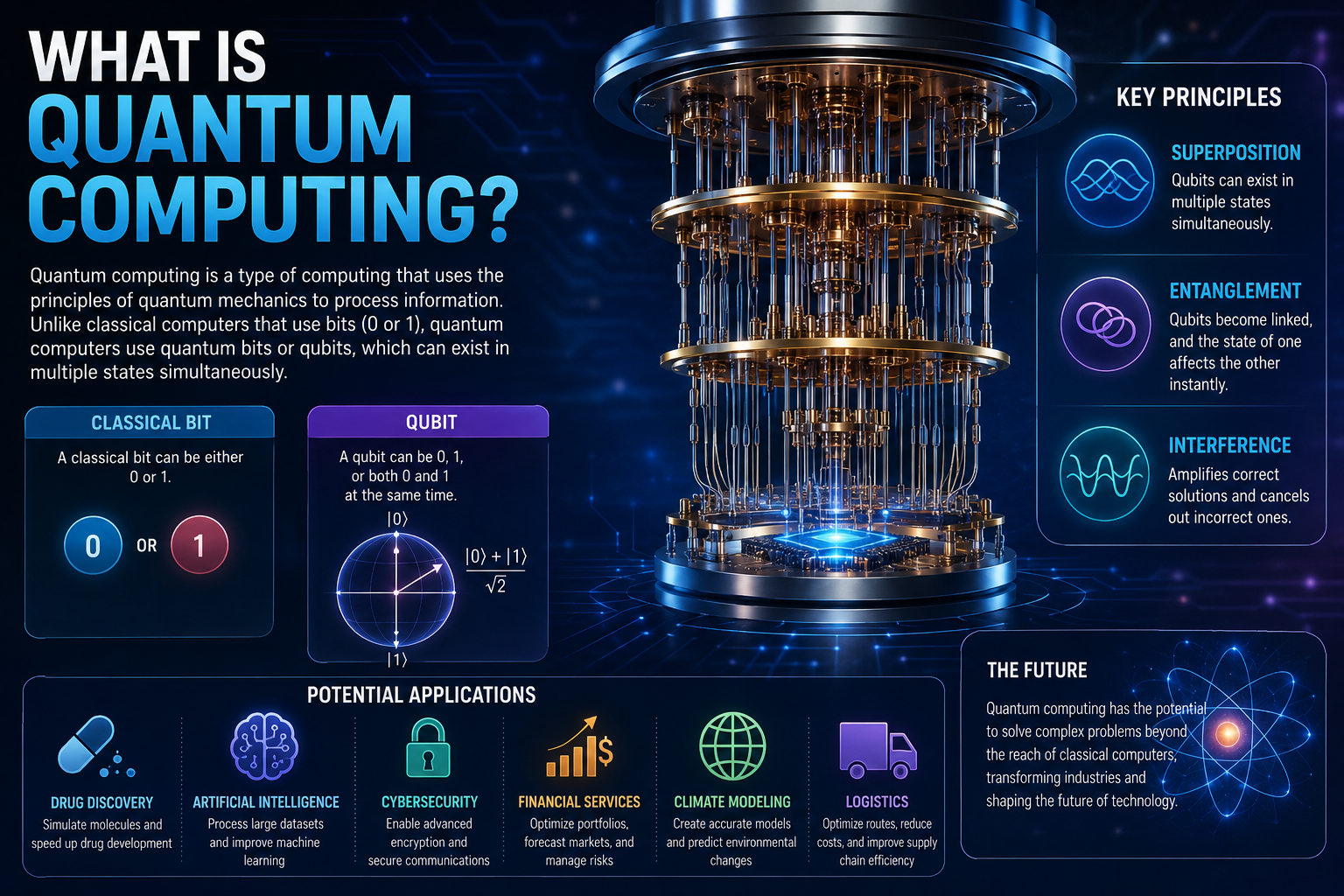
Quantum computing is a type of computing that uses the principles of quantum mechanics to process information. Unlike classical computers, which use bits represented as either 0 or 1, quantum computers use quantum bits (qubits) that can exist in multiple states simultaneously.
This unique capability allows quantum computers to perform many calculations at the same time, making them significantly more powerful for certain types of problems.
Quantum computing is based on the laws of quantum physics, which govern the behavior of particles at the atomic and subatomic levels.
How Traditional Computers Work
Before understanding quantum computing, it is important to know how traditional computers operate.
Classical computers use:
- Bits
- Logic gates
- Binary code (0s and 1s)
Every operation performed by a traditional computer is based on combinations of these binary values. While modern computers are incredibly powerful, they face limitations when solving highly complex problems involving massive datasets or countless possible outcomes.
How Quantum Computers Work
Quantum computers use qubits instead of classical bits.
A qubit can be:
- 0
- 1
- Both 0 and 1 simultaneously
This phenomenon is called superposition.
Quantum computers also leverage another important principle called entanglement, where qubits become interconnected, allowing information to be shared instantly between them.
These properties enable quantum systems to explore multiple solutions simultaneously rather than one at a time.
Key Principles of Quantum Computing
1. Superposition
Superposition allows qubits to exist in multiple states simultaneously.
For example:
- A classical bit = 0 or 1
- A qubit = 0, 1, or both at the same time
This significantly increases computational power.
2. Entanglement
Entanglement occurs when two or more qubits become linked.
When one qubit changes state, the connected qubit responds instantly, regardless of distance. This enables faster information processing and more efficient calculations.
3. Quantum Interference
Quantum interference helps amplify correct solutions while reducing incorrect ones during computations.
This increases the probability of obtaining accurate results.
Advantages of Quantum Computing
Massive Processing Power
Quantum computers can evaluate numerous possibilities simultaneously, making them ideal for solving complex problems.
Faster Problem Solving
Tasks that may take classical computers years could potentially be solved by quantum computers in minutes or hours.
Improved Optimization
Quantum computing can optimize:
- Supply chains
- Transportation routes
- Manufacturing processes
- Financial portfolios
Enhanced Scientific Research
Researchers can simulate molecules and chemical reactions more accurately, accelerating discoveries in medicine and materials science.
Real-World Applications of Quantum Computing
Healthcare and Drug Discovery
Quantum computers can simulate molecular interactions at unprecedented levels.
Benefits include:
- Faster drug development
- Personalized medicine
- Disease modeling
- Improved treatment strategies
Artificial Intelligence and Machine Learning
Quantum computing can enhance AI by:
- Processing large datasets faster
- Improving pattern recognition
- Accelerating machine learning algorithms
Cybersecurity
Quantum computers may both challenge and strengthen cybersecurity.
Applications include:
- Quantum encryption
- Secure communications
- Advanced cryptographic systems
Financial Services
Banks and financial institutions can use quantum computing for:
- Risk analysis
- Fraud detection
- Portfolio optimization
- Market forecasting
Climate Modeling
Quantum systems can help scientists create more accurate climate models to understand environmental changes and predict weather patterns.
Logistics and Transportation
Businesses can optimize:
- Delivery routes
- Fleet management
- Supply chain operations
- Traffic flow systems
Quantum Computing vs Classical Computing
| Feature | Classical Computing | Quantum Computing |
|---|---|---|
| Data Unit | Bit | Qubit |
| State | 0 or 1 | 0, 1, or both |
| Processing | Sequential | Parallel |
| Speed | Limited for complex tasks | Extremely fast for certain problems |
| Technology | Mature | Emerging |
| Applications | Everyday computing | Advanced scientific and industrial challenges |
Challenges Facing Quantum Computing
Despite its promise, quantum computing faces several obstacles.
Qubit Stability
Qubits are extremely sensitive to environmental disturbances.
Even slight temperature changes or electromagnetic interference can cause errors.
Error Correction
Quantum systems require sophisticated error correction methods to maintain reliable calculations.
High Costs
Building and maintaining quantum computers is expensive due to specialized hardware and cooling systems.
Limited Accessibility
Quantum computing technology is still in its early stages and is primarily available through research institutions and major technology companies.
Leading Companies in Quantum Computing
Several organizations are investing heavily in quantum technology, including:
- IBM Quantum
- Google Quantum AI
- Microsoft Quantum
- Intel Quantum Computing
- D-Wave Systems
These organizations are working to make quantum computing more practical and accessible.
The Future of Quantum Computing
Experts believe quantum computing will become increasingly important over the next decade.
Future developments may include:
- Breakthrough medical discoveries
- More advanced AI systems
- Enhanced cybersecurity solutions
- Improved climate prediction models
- Revolutionary industrial optimization
Although quantum computers are unlikely to replace classical computers entirely, they will complement them by handling specialized tasks that require immense computational power.
Tips for Learning Quantum Computing
If you’re interested in exploring this field, consider learning:
- Basic quantum mechanics
- Linear algebra
- Computer science fundamentals
- Quantum algorithms
- Programming languages such as Python
- Quantum frameworks like Qiskit
Starting with these fundamentals can help build a strong foundation in quantum computing.
Conclusion
Quantum computing represents a major leap forward in computational technology. By harnessing the principles of quantum mechanics, quantum computers can solve certain problems far more efficiently than traditional computers. While the technology is still evolving, its potential impact on healthcare, finance, artificial intelligence, cybersecurity, and scientific research is enormous.
As advancements continue, quantum computing may become one of the most transformative innovations of the modern era, opening doors to discoveries and solutions that were previously beyond human reach.
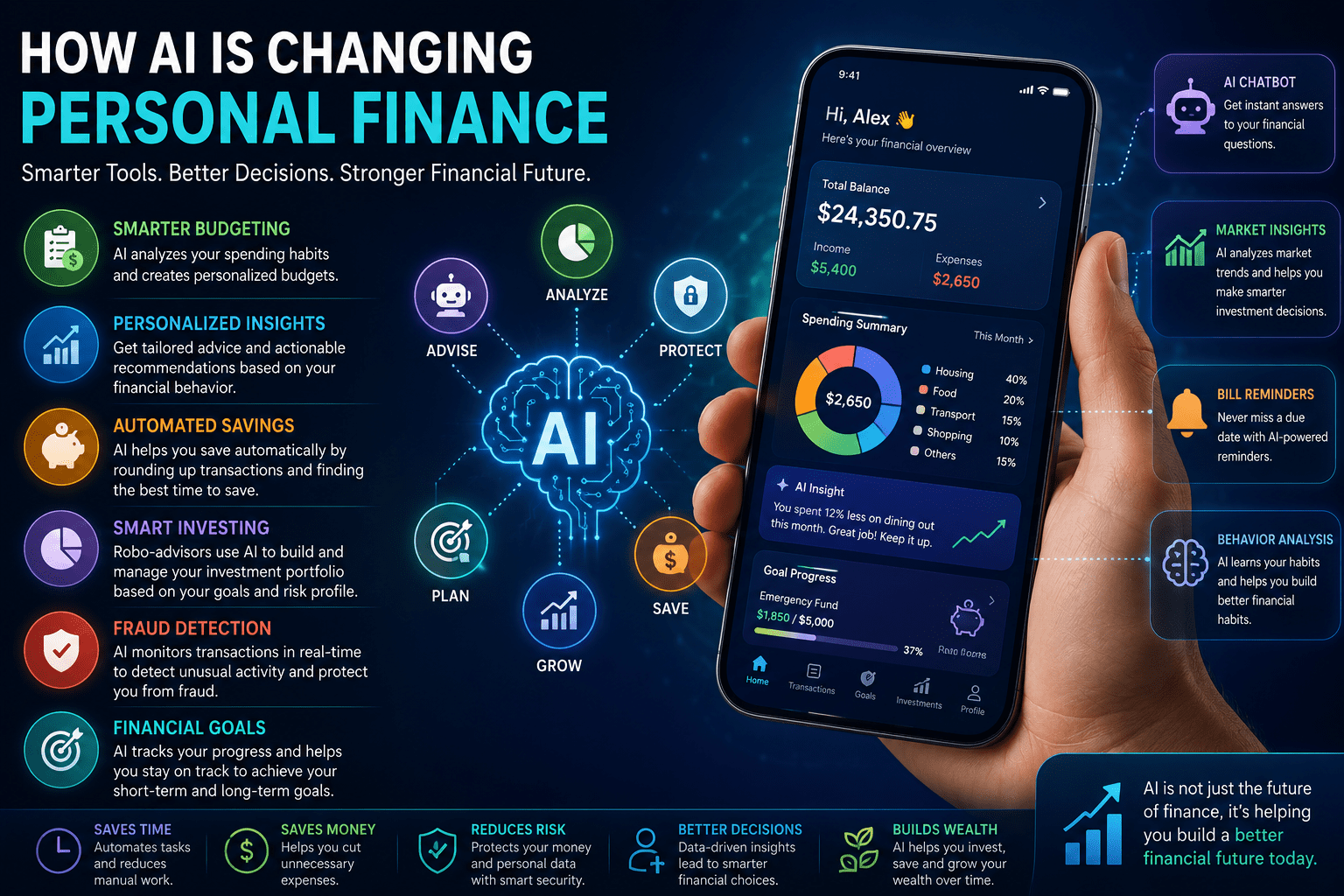
Also read How AI Is Changing Personal Finance





Leave a Reply