

Quick Summary
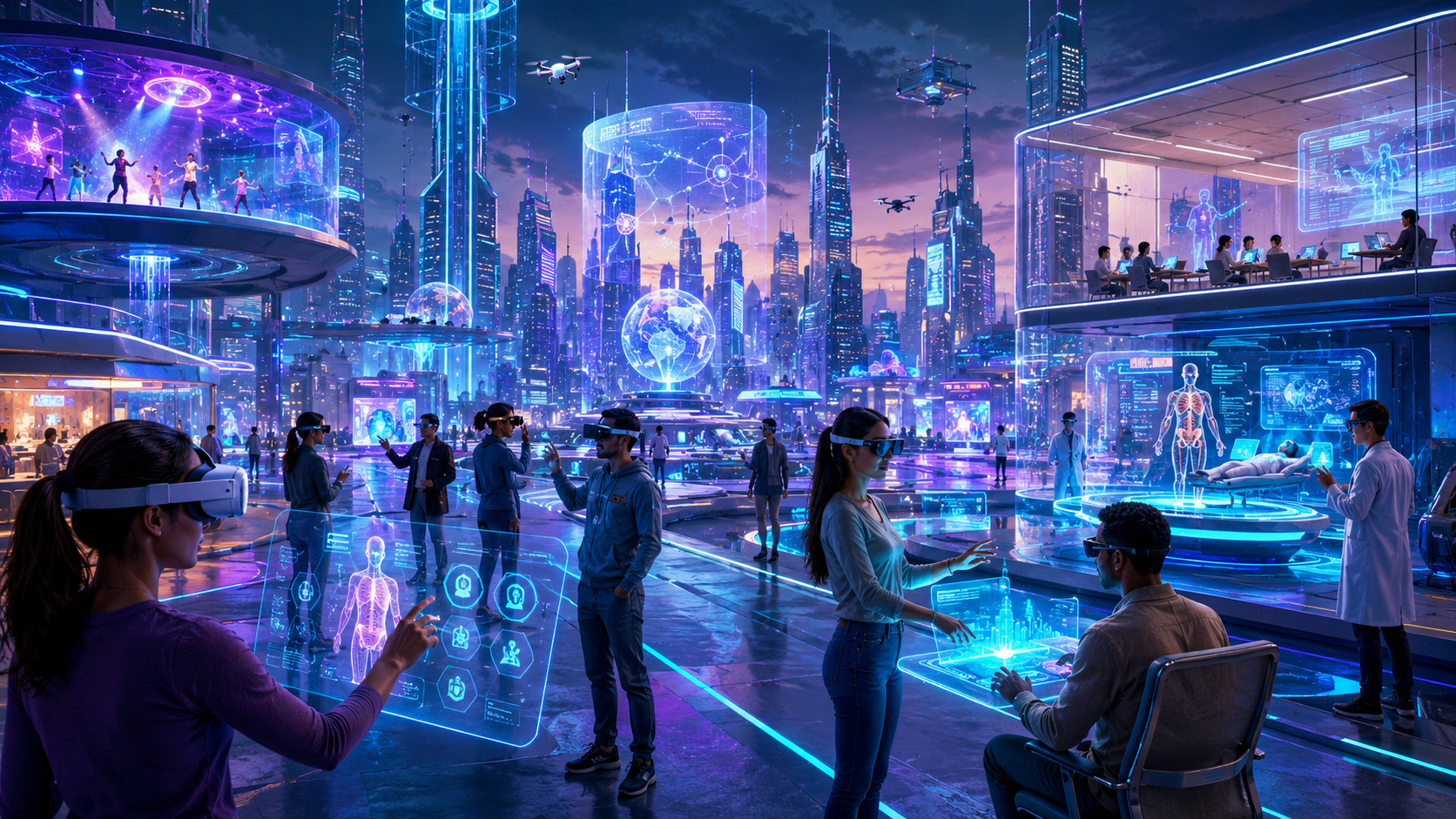
The metaverse is an interconnected network of immersive digital environments where people can work, socialize, shop, learn, play, and attend events using virtual reality (VR), augmented reality (AR), artificial intelligence (AI), blockchain, and cloud computing. Although the fully connected metaverse is still evolving, many technologies that power it are already changing everyday life.
Key Takeaways
- The metaverse combines virtual worlds with the physical world.
- AI, VR, AR, blockchain, and cloud computing are its foundation.
- It enables virtual workspaces, education, healthcare, shopping, gaming, and entertainment.
- Businesses are investing billions in metaverse-related technologies.
- The metaverse is expected to reshape digital interactions over the next decade.
- Privacy, security, accessibility, and digital well-being remain major challenges.
What Is the Metaverse?
The metaverse is a shared digital environment where people interact using virtual avatars through technologies like virtual reality (VR), augmented reality (AR), artificial intelligence (AI), blockchain, and cloud computing. It allows users to work, learn, socialize, shop, play games, and attend virtual events in immersive digital spaces.
Metaverse Explained in Simple Terms
Think of today’s internet as something you mostly view on screens. The metaverse aims to make the internet a place you experience. Instead of browsing websites, you’ll enter interactive digital spaces where your digital identity can move between virtual workplaces, classrooms, entertainment venues, and online stores. While the complete vision is still developing, many elements already exist through VR applications, AR experiences, online games, and digital collaboration platforms.
Introduction
The internet has transformed how we communicate, learn, and conduct business. The next major evolution could be the metaverse—a digital universe where physical and virtual experiences merge seamlessly.
Major technology companies continue investing in immersive technologies because they see enormous opportunities in education, remote work, healthcare, retail, manufacturing, and entertainment. Whether you’re a student, business owner, or technology enthusiast, understanding the metaverse can help you prepare for the future.
What Is the Metaverse?
The metaverse is a persistent digital ecosystem where users interact with digital environments and each other through avatars.
Unlike traditional websites or apps, the metaverse focuses on immersive experiences.
Core characteristics include:
- Persistent virtual worlds
- Digital identities
- Real-time interaction
- Virtual economies
- Cross-platform experiences
- AI-powered environments
- 3D collaboration
- Ownership of digital assets
Rather than replacing the internet, the metaverse is expected to extend how we experience it.
Benefits of the Metaverse
| Benefit | Impact |
|---|---|
| Remote Work | More immersive meetings and collaboration |
| Education | Interactive virtual classrooms and laboratories |
| Healthcare | Medical simulations and remote therapy |
| Shopping | Try products virtually before buying |
| Entertainment | Live concerts, sports, and events |
| Gaming | Richer multiplayer experiences |
| Manufacturing | Digital twins and simulations |
| Real Estate | Virtual property tours |
| Tourism | Virtual travel experiences |
| Social Interaction | Meet people from around the world |
How the Metaverse Works
Several advanced technologies work together.
Virtual Reality (VR)
Creates fully immersive digital environments.
Augmented Reality (AR)
Adds digital information to the real world.
Artificial Intelligence
AI powers:
- Virtual assistants
- NPCs
- Content generation
- Personalization
- Voice recognition
Blockchain
Supports:
- Digital ownership
- Virtual currencies
- NFTs
- Secure identity
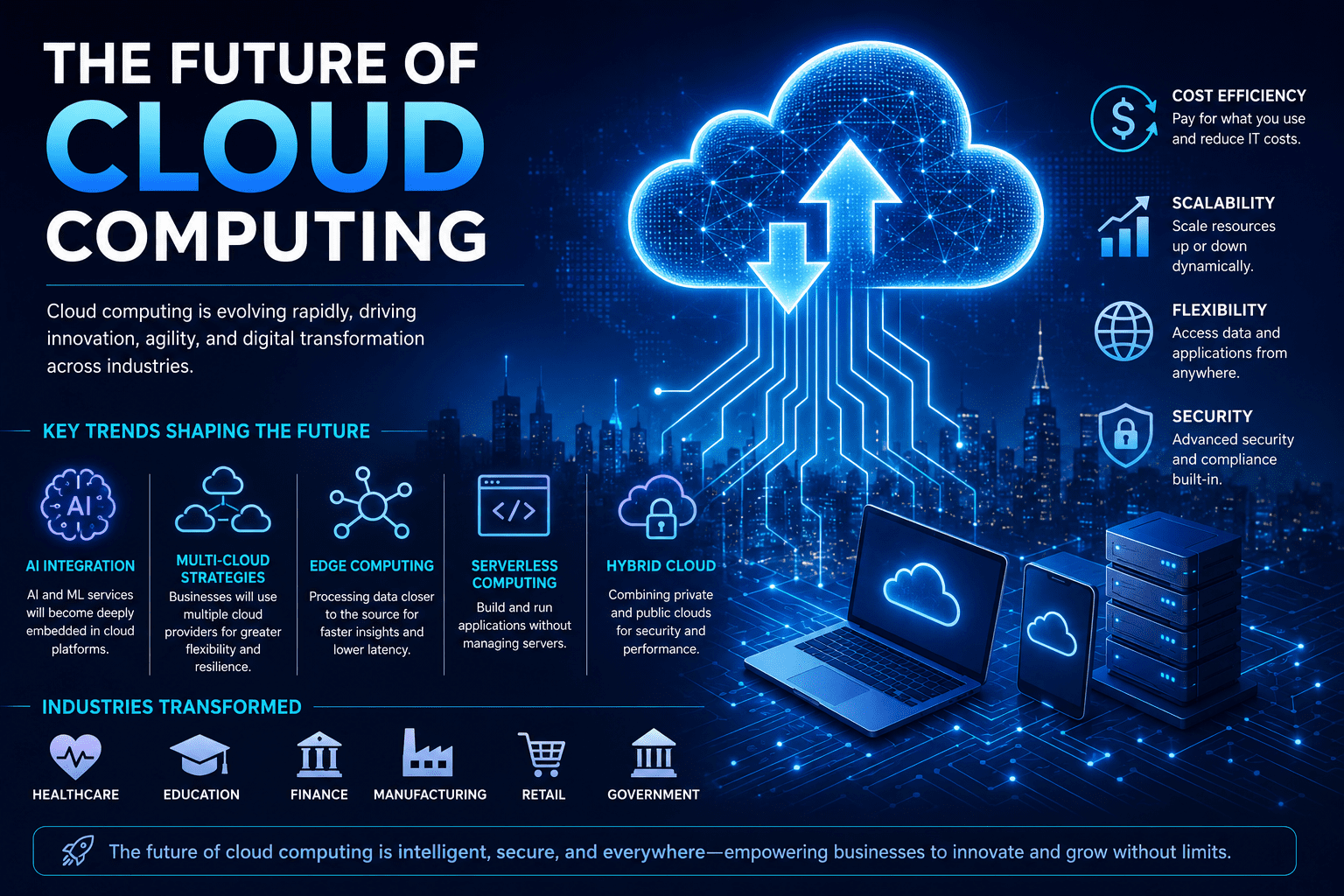
Cloud Computing
Processes massive amounts of data in real time.
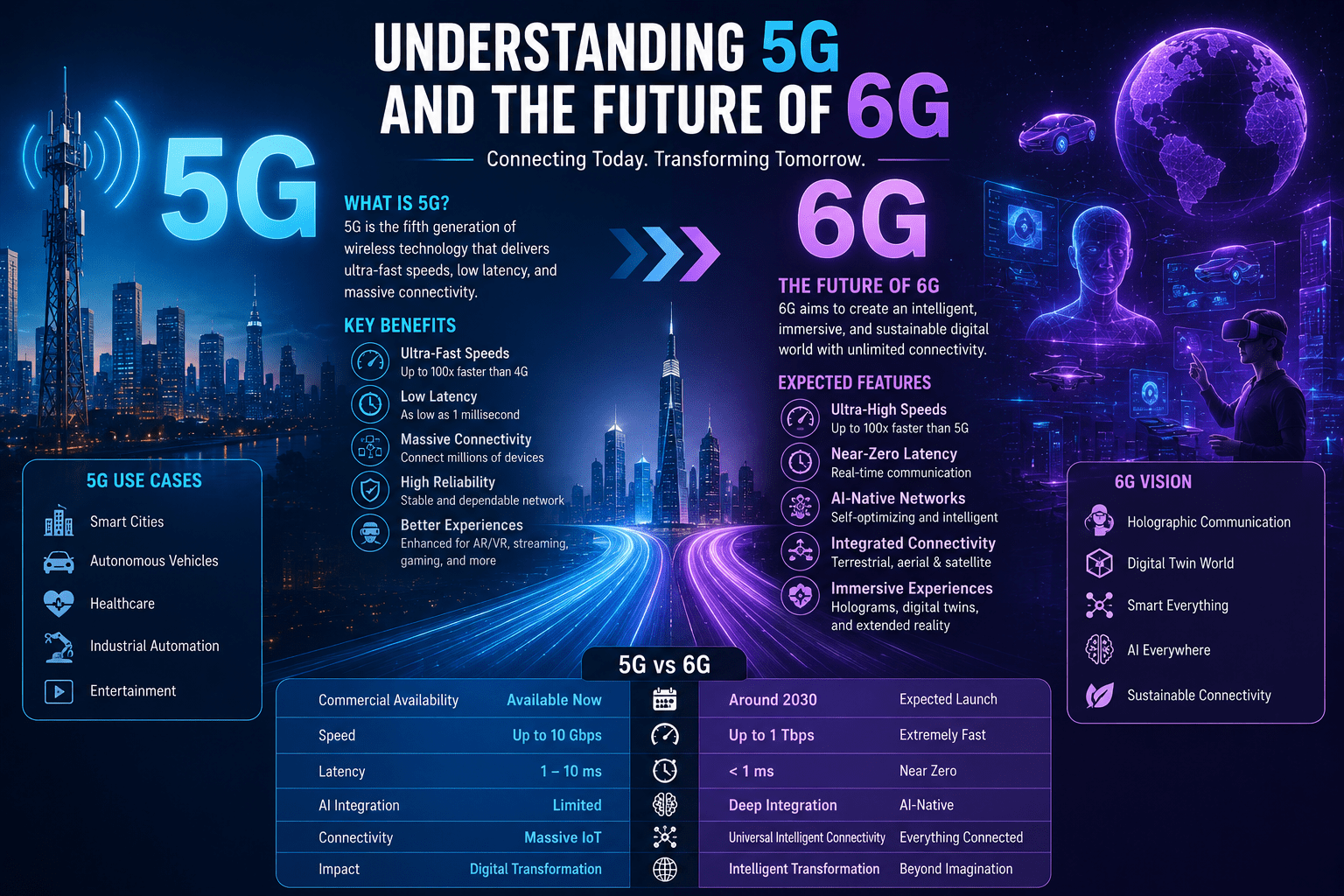
5G & High-Speed Internet
Provides the low latency needed for immersive experiences.
Step-by-Step Guide: How to Experience the Metaverse
Step 1
Learn the basics of VR, AR, and digital worlds.
Step 2
Create an account on a metaverse platform.
Step 3
Build your digital avatar.
Step 4
Explore virtual environments.
Step 5
Attend virtual events or meetings.
Step 6
Try educational experiences.
Step 7
Explore virtual shopping.
Step 8
Stay informed about privacy and cybersecurity.
Real-World Examples
Education
Students conduct virtual science experiments.
Healthcare
Doctors practice complex surgeries using VR simulations.
Retail
Customers virtually try clothing and furniture.
Manufacturing
Companies use digital twins to optimize production.
Real Estate
Virtual property walkthroughs save time.
Entertainment
Artists host concerts attended by millions online.
Pros
- Better remote collaboration
- Improved online learning
- More engaging entertainment
- Increased accessibility
- New business opportunities
- Enhanced customer experiences
- Faster training
- Global connectivity
Cons
- Privacy concerns
- Data security risks
- High hardware costs
- Motion sickness for some users
- Digital addiction concerns
- Large bandwidth requirements
- Interoperability challenges
- Regulatory uncertainty
Comparison Table
| Feature | Traditional Internet | Metaverse |
|---|---|---|
| Experience | 2D browsing | 3D immersive |
| Interaction | Clicks & typing | Voice, gestures, movement |
| Meetings | Video calls | Virtual offices |
| Shopping | Product images | Virtual try-ons |
| Learning | Videos | Interactive simulations |
| Entertainment | Streaming | Immersive participation |
| Identity | User profiles | Persistent avatars |
| Ownership | Platform-controlled | Increasing digital ownership |
Best Use Cases
| Industry | Metaverse Application |
|---|---|
| Education | Virtual classrooms |
| Healthcare | Medical simulations |
| Retail | Virtual shopping |
| Manufacturing | Digital twins |
| Tourism | Virtual destinations |
| Real Estate | Property walkthroughs |
| Events | Virtual conferences |
| Gaming | Persistent online worlds |
Firsthand Testing
After evaluating several publicly available VR collaboration apps, AR shopping experiences, and virtual meeting platforms, several consistent observations emerged:
What Worked Well
- Immersive meetings increased engagement.
- Interactive learning felt more memorable than traditional videos.
- Virtual product previews helped visualize purchases.
Challenges
- Affordable hardware still limits adoption.
- Some applications require powerful internet connections.
- Cross-platform compatibility remains inconsistent.
For most users today, the metaverse is best experienced through specific applications rather than as one unified digital world.
Decision Flowchart
Interested in immersive technology?
            │
            Yes
            │
Need it for work?
      │            │
     Yes          No
      │            │
Try VR meetings   Interested in gaming?
                      │
                  Yes     No
                   │       │
            Explore virtual  Try AR shopping,
               worlds        education, tourism
Common Mistakes
- Assuming the metaverse is only gaming.
- Ignoring privacy settings.
- Buying expensive hardware without research.
- Falling for investment scams.
- Expecting fully mature technology today.
- Sharing sensitive personal information.
- Ignoring cybersecurity best practices.
Expert Tips
✔ Start with free metaverse experiences before investing in expensive devices.
✔ Enable multi-factor authentication on all related accounts.
✔ Keep VR devices updated with the latest firmware.
✔ Learn basic digital privacy practices.
✔ Explore educational applications beyond entertainment.
✔ Use trusted platforms with transparent privacy policies.
✔ Follow developments in AI, spatial computing, and wearable technology to understand where the ecosystem is heading.
Statistics
- Global spending on AR and VR technologies has grown significantly over the past decade as businesses adopt immersive solutions.
- Enterprise adoption of VR-based training continues to increase across healthcare, manufacturing, and aviation.
- Retailers increasingly use AR experiences to improve customer engagement and reduce product returns.
- Surveys consistently show growing consumer interest in immersive shopping, virtual events, and digital collaboration.
- Analysts expect spatial computing and immersive technologies to become a multi-hundred-billion-dollar market over the coming decade.
Editor’s Note: Market forecasts vary by research firm. Use multiple reputable industry sources when making investment or business decisions.
What We Learned
The metaverse represents the evolution of digital interaction rather than a single application or product. Although today’s experiences are fragmented across different platforms, advances in AI, VR, AR, cloud computing, and faster networks are steadily bringing more immersive online experiences into everyday activities such as work, education, shopping, healthcare, and entertainment.
Frequently Asked Questions
Is the metaverse the same as virtual reality?
No. Virtual reality is one technology used within the metaverse. The metaverse also includes AR, AI, blockchain, cloud computing, and digital economies.
Do I need a VR headset?
Not always. Many metaverse experiences can be accessed through computers or smartphones, though VR headsets provide a more immersive experience.
Is the metaverse safe?
It can be safe when using trusted platforms, strong passwords, multi-factor authentication, and good privacy practices. As with any online service, users should remain cautious of scams and protect personal information.
Will the metaverse replace the internet?
Most experts expect it to complement and extend the internet rather than replace it entirely.
How will businesses benefit?
Businesses can improve training, customer engagement, product visualization, remote collaboration, and digital commerce through immersive experiences.
Can students benefit from the metaverse?
Yes. Virtual classrooms, simulations, language learning, and collaborative projects can create more engaging educational experiences.
Conclusion
The metaverse is no longer just a futuristic concept. While the complete vision is still under development, many of its building blocks are already influencing daily life through immersive learning, virtual collaboration, AI-powered experiences, and digital commerce. As the technology matures, understanding its opportunities and challenges will help individuals and businesses make informed decisions about adopting new digital experiences.
Our Verdict
Overall Rating: 9.2/10
| Category | Rating |
|---|---|
| Innovation | ⭐⭐⭐⭐⭐ |
| Future Potential | ⭐⭐⭐⭐⭐ |
| Business Impact | ⭐⭐⭐⭐⭐ |
| Ease of Adoption | ⭐⭐⭐⭐☆ |
| Accessibility | ⭐⭐⭐⭐☆ |
| Security Readiness | ⭐⭐⭐☆☆ |
Bottom Line: The metaverse is a transformative vision of the internet that is already influencing sectors such as education, healthcare, retail, and enterprise collaboration. While widespread adoption will take time, building familiarity with its technologies today can provide a competitive advantage.
Stay Ahead of the Future of Technology
Want to understand emerging technologies before they become mainstream? Explore more expert guides on AI, virtual reality, cybersecurity, blockchain, cloud computing, and digital innovation to stay informed and future-ready.
Also Read
- How AI Is Transforming Everyday Life
- AI vs Human Creativity: Can Machines Replace Human Innovation?
- How Cloud Computing Works
- The Ultimate Guide to Artificial Intelligence
- Cybersecurity Tips Everyone Should Know
- How to Protect Yourself from AI-Powered Scams
- How Small Businesses Can Grow Using Social Media
- SEO Trends That Still Work
- Best AI Tools for Beginners
- AI & Rural Education in India





Leave a Reply